
New Delhi: The Federation of Indian Chambers of Commerce and Industry (FICCI) began its high-level conference on the Union Budget 2026–27 at Federation House, New Delhi, with a strong focus on trade, macroeconomic stability, and reform continuity.
The conference brought together senior government officials, policymakers, and industry leaders to discuss how the Budget positions India amid global economic uncertainty.
FICCI President Anant Goenka set the tone by describing the current moment as a “Goldilocks phase” for India—an environment marked by low macroeconomic risks, policy stability, and renewed global engagement.
Parliament Budget Session: Lok Sabha adjourned till 3 pm after uproar over Rahul Gandhi’s speech
According to him, a stable Union Budget combined with major trade agreements has created ideal conditions for growth, with private enterprises responding positively.
The India–US trade agreement emerged as the central theme of the conference. Anant Goenka termed the deal a “significant reset” in bilateral economic ties, thanking Prime Minister Narendra Modi and U.S. President Donald Trump for steering negotiations forward.
He highlighted that the proposed reduction of U.S. reciprocal tariffs on Indian goods to 18 per cent could materially improve export competitiveness, particularly for sectors like apparel, leather, gems and jewellery, and marine products.
However, the most important highlight of the conference came during the response to Dynamite News, when clarity was sought on whether tariffs had been reduced from 50 per cent to 18 per cent, or from the reciprocal 25 per cent to 18 per cent—and whether the deal has been formally signed.
FICCI, along with senior officials from the Ministry of Finance including Anupam Prakash (Joint Secretary, Customs, CBIC) and Pankaj Jindal (Joint Secretary, CBDT), stated that they are awaiting formal notification from the Department of Commerce.
They emphasized that the final contours of the deal, including exact tariff reductions and implementation timelines, will only be clear once official documentation is issued.
Prasenjit Singh, Member (Legislation), CBDT, reiterated that the guiding principle of the Budget remains “Sabka Saath, Sabka Vikas, Sabka Vishwas, Sabka Prayas.” He underlined that the government’s tax and legislative approach aims to balance equity with competitiveness, ensuring a level playing field for businesses.
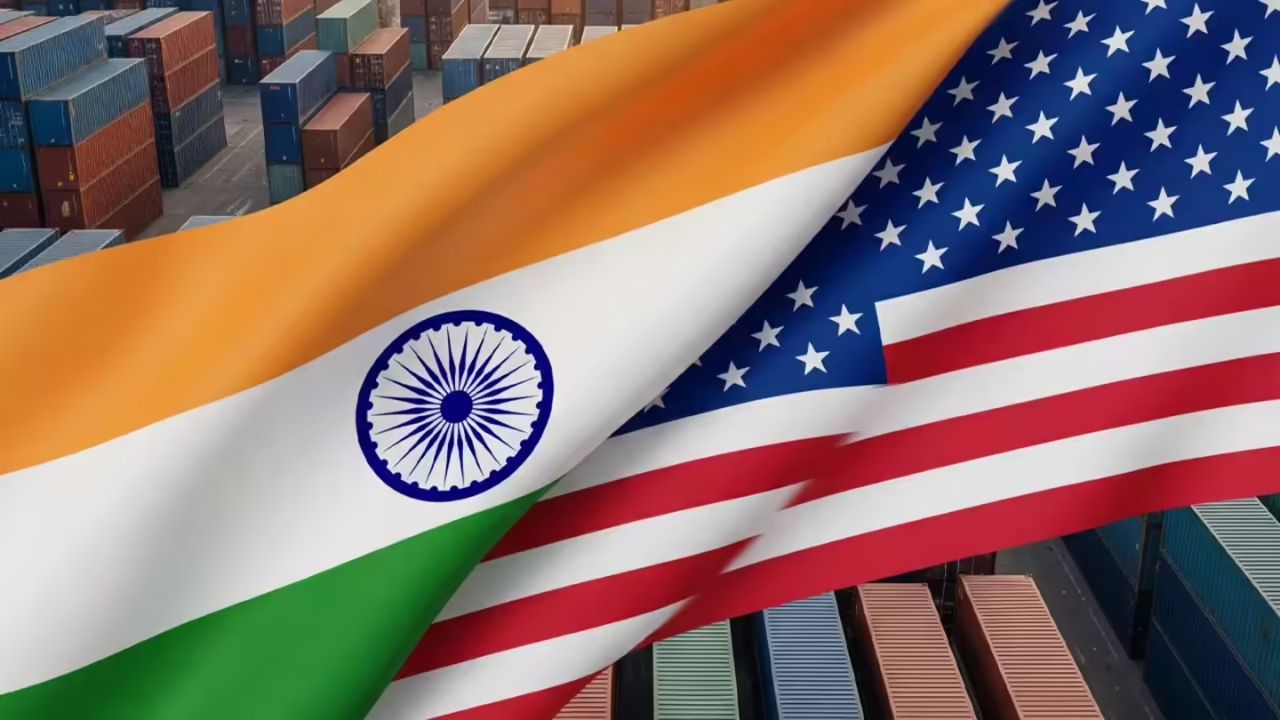
Trump Announces India-US Trade Agreement, Cuts Tariffs on Indian Goods
Arvind Shrivastava, Secretary, Department of Revenue, added that the structural tax reforms announced in the Budget are deep and long-term, designed to build a stable and credible tax ecosystem over time.
V. Vualnam, Secretary, Department of Expenditure, highlighted the government’s commitment to fiscal discipline, moderate inflation, and adherence to the fiscal deficit glide path. He noted that disciplined resource allocation has placed India in a strong position despite global volatility.
Anuradha Thakur, Secretary, Department of Economic Affairs, urged industry to actively leverage the opportunities created by the Budget. She stressed that sustained dialogue between government and industry will be critical to driving economic momentum.
M. Nagaraju, Secretary, Department of Financial Services, flagged a key social challenge: while NPS and Atal Pension Yojana together have 9.2 crore enrolments, nearly 33 crore workers remain outside formal pension systems. He called for greater awareness and participation to ensure financial self-reliance in old age.
India-US Tariff Deal sparks jump in Stock Market; Sensex and Nifty surge
Overall, the FICCI Union Budget 2026–27 conference reflected strong confidence in India’s macroeconomic direction, reform continuity, and global trade ambitions.
Yet, the final impact of the India–US trade deal hinges on formal notifications and clarity on tariff reductions, making this the most closely watched development emerging from the discussions.
New Delhi: The Federation of Indian Chambers of Commerce and Industry (FICCI) began its high-level conference on the Union Budget 2026–27 at Federation House, New Delhi, with a strong focus on trade, macroeconomic stability, and reform continuity.
The conference brought together senior government officials, policymakers, and industry leaders to discuss how the Budget positions India amid global economic uncertainty.
FICCI President Anant Goenka set the tone by describing the current moment as a “Goldilocks phase” for India—an environment marked by low macroeconomic risks, policy stability, and renewed global engagement.
Parliament Budget Session: Lok Sabha adjourned till 3 pm after uproar over Rahul Gandhi’s speech
According to him, a stable Union Budget combined with major trade agreements has created ideal conditions for growth, with private enterprises responding positively.
The India–US trade agreement emerged as the central theme of the conference. Anant Goenka termed the deal a “significant reset” in bilateral economic ties, thanking Prime Minister Narendra Modi and U.S. President Donald Trump for steering negotiations forward.
He highlighted that the proposed reduction of U.S. reciprocal tariffs on Indian goods to 18 per cent could materially improve export competitiveness, particularly for sectors like apparel, leather, gems and jewellery, and marine products.
However, the most important highlight of the conference came during the response to Dynamite News, when clarity was sought on whether tariffs had been reduced from 50 per cent to 18 per cent, or from the reciprocal 25 per cent to 18 per cent—and whether the deal has been formally signed.
FICCI, along with senior officials from the Ministry of Finance including Anupam Prakash (Joint Secretary, Customs, CBIC) and Pankaj Jindal (Joint Secretary, CBDT), stated that they are awaiting formal notification from the Department of Commerce.
They emphasized that the final contours of the deal, including exact tariff reductions and implementation timelines, will only be clear once official documentation is issued.
Prasenjit Singh, Member (Legislation), CBDT, reiterated that the guiding principle of the Budget remains “Sabka Saath, Sabka Vikas, Sabka Vishwas, Sabka Prayas.” He underlined that the government’s tax and legislative approach aims to balance equity with competitiveness, ensuring a level playing field for businesses.
Trump Announces India-US Trade Agreement, Cuts Tariffs on Indian Goods
Arvind Shrivastava, Secretary, Department of Revenue, added that the structural tax reforms announced in the Budget are deep and long-term, designed to build a stable and credible tax ecosystem over time.
V. Vualnam, Secretary, Department of Expenditure, highlighted the government’s commitment to fiscal discipline, moderate inflation, and adherence to the fiscal deficit glide path. He noted that disciplined resource allocation has placed India in a strong position despite global volatility.
Anuradha Thakur, Secretary, Department of Economic Affairs, urged industry to actively leverage the opportunities created by the Budget. She stressed that sustained dialogue between government and industry will be critical to driving economic momentum.
M. Nagaraju, Secretary, Department of Financial Services, flagged a key social challenge: while NPS and Atal Pension Yojana together have 9.2 crore enrolments, nearly 33 crore workers remain outside formal pension systems. He called for greater awareness and participation to ensure financial self-reliance in old age.
India-US Tariff Deal sparks jump in Stock Market; Sensex and Nifty surge
Overall, the FICCI Union Budget 2026–27 conference reflected strong confidence in India’s macroeconomic direction, reform continuity, and global trade ambitions.
Yet, the final impact of the India–US trade deal hinges on formal notifications and clarity on tariff reductions, making this the most closely watched development emerging from the discussions.


