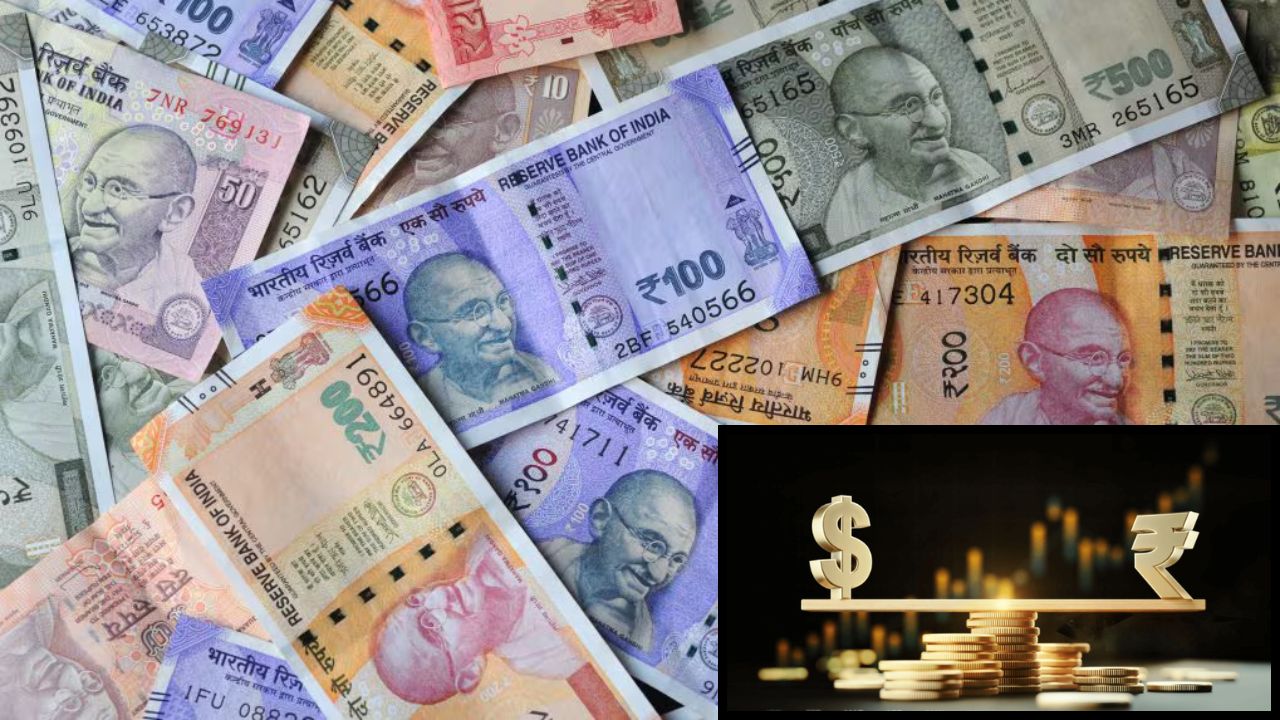
The rupee closed at 89.63 yesterday.
New Delhi: The Indian rupee, after opening the day on a slightly positive note, pared its gains to end lower against the US dollar. At the interbank foreign exchange, the rupee began trading at 89.56 per dollar and reached an intra-day high of 89.51, showing a temporary gain of 12 paise from the previous session. However, by the close of trading, the domestic currency weakened to 89.79, reflecting a decline of 16 paise. The previous day, the rupee had settled at 89.63.
The slide in the rupee is largely attributed to continued capital withdrawals by foreign investors, especially in the run-up to the holiday season. Analysts noted that this risk-averse sentiment among global investors has placed additional pressure on the domestic currency. Alongside foreign fund outflows, a strong demand for US dollars from bullion importers further strained the rupee, limiting its ability to sustain early gains.
Indian Markets Rally: Sensex up 116, Nifty crosses 26,200 on strong domestic demand
The Reserve Bank of India recently announced several measures to support liquidity and stabilize the currency, including USDINR swaps and Open Market Operations. Despite these interventions, forex traders observed that the initiatives did not significantly boost market sentiment. The gap between dollar supply and demand remains wide, leaving the rupee under pressure even after central bank actions. Analysts suggest that while the spot USDINR pair is expected to maintain an upward trajectory above the 89.00 mark, the 90.30 level continues to act as a strong resistance for further gains.
On the global front, the dollar index, which measures the greenback's strength against a basket of six major currencies, was trading slightly lower at 97.81. Meanwhile, Brent crude oil, a key global benchmark, rose by 0.22 percent to $62.52 per barrel in futures trading. Rising oil prices increase import costs and add pressure to the rupee, further weighing on market sentiment.
Gold prices rise for third day ahead of Christmas in India; Check rates here
Impact on Domestic Markets
The weakness in the rupee also coincided with a decline in domestic equity markets. The BSE Sensex fell 116.14 points to close at 85,408.70, while the Nifty 50 index dropped 35.05 points to 26,142.10. Foreign Institutional Investors continued their selling trend, offloading equities worth Rs 1,794.80 crore on Tuesday, reflecting ongoing risk aversion and caution among global investors.
The Reserve Bank of India has taken steps to inject liquidity into the banking system amid the market volatility. On Tuesday, the central bank announced plans to purchase government securities worth Rs 2 lakh crore and conduct a $10 billion buy/sell dollar-rupee swap auction. This follows recent OMO purchase auctions of Rs 1 lakh crore and a USD/INR buy/sell swap of $5 billion for a three-year tenor. These measures aim to stabilize currency and liquidity, though market reactions suggest additional support may be needed in the near term.

