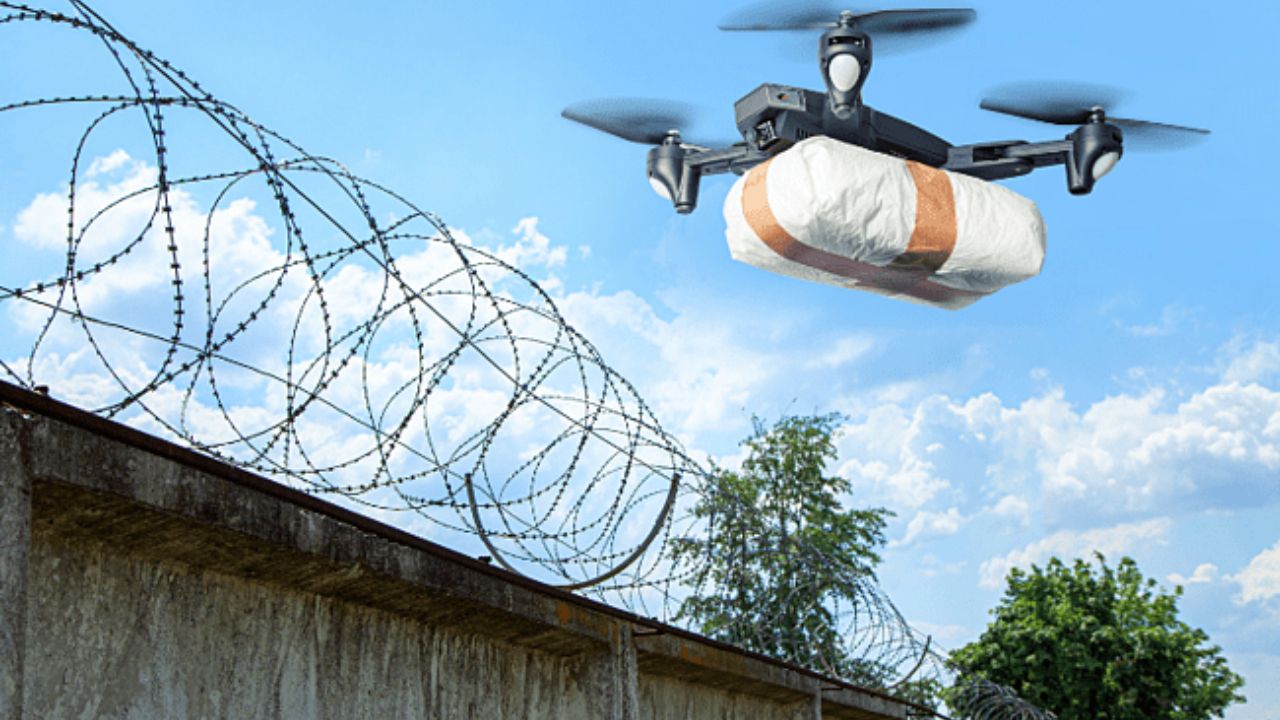
Drone drug smuggling surges nearly 100-fold in India (Img-Pinterest)
New Delhi: India’s fight against drug trafficking has entered a new and more complex phase, with smugglers increasingly using drones to push narcotics across borders. According to the Narcotics Control Bureau’s 2025 annual data, released by Union Home Minister Amit Shah, drone-based drug smuggling cases have witnessed an alarming surge over the past five years.
The NCB report recorded 305 drone-related drug smuggling incidents in 2025, leading to the seizure of 468 kilograms of narcotics. Punjab emerged as the worst-affected state, accounting for 298 of the 305 cases, making it the biggest hotspot for drone-enabled drug trafficking in the country.
Security agencies believe that drones are being used extensively to smuggle high-purity heroin, methamphetamine and other narcotics across the India-Pakistan border. The scale of the problem has grown sharply since 2021, when only three such cases were reported, marking a nearly 100-fold rise in drone-linked smuggling incidents.
The report also flagged a significant increase in the diversion and misuse of pharmaceutical drugs between 2021 and 2025. Punjab has seen large-scale seizures of codeine-based cough syrup, with 8.95 lakh bottles recovered. Other commonly misused drugs include buprenorphine, tramadol and alprazolam.
Apart from drones, courier and postal channels continue to remain a major challenge for enforcement agencies. While the number of such cases remained steady at 174, authorities seized 972 kilograms of narcotics through mail and courier routes.
The NCB also intensified its crackdown on clandestine synthetic drug laboratories. In 2025, the agency dismantled 30 illegal manufacturing units and arrested 102 people. The report said several facilities in Maharashtra, Rajasthan and Madhya Pradesh were involved in producing mephedrone, ephedrine and illegal psychotropic pills.
Foreign nationals have also figured prominently in trafficking cases. The NCB arrested 747 foreign nationals, including 203 from Nepal, 146 from Nigeria and 97 from Myanmar.
The agency has now shifted focus from seizure-based action to financial investigations targeting drug cartels. In 2025, financial probe cases rose to 1,356, while cartel assets worth Rs 836 crore were frozen - a sharp jump from Rs 164.93 crore five years ago.
The report underlines that drug trafficking networks are becoming more technologically advanced and financially sophisticated, forcing enforcement agencies to adopt stronger surveillance, intelligence and financial-tracking strategies.

