The Ghaziabad triple suicide has exposed troubling layers of family complexity, isolation, and emotional distress. Diaries left behind by three minor sisters raise questions about parenting, absence of maternal bonds, online obsession, and the silent struggles that preceded the tragedy.

Chilling details emerge in Ghaziabd's triple suicide case
New Delhi: The nation woke up on Tuesday morning to a perplexing, horrific, and baffling case in Ghaziabad, where three minor sisters allegedly jumped from their ninth-floor apartment, reportedly driven by an extreme obsession with Korean culture.
As investigators continue to piece together events leading up to the incident, an eight-page diary and a brief suicide note addressed to their father have raised more dreaded questions than answers about parenting, isolation, and emotional distress.
The calm of early morning at Bharat City society in Sahibabad was shattered when residents discovered the sanguine-soaked bodies of three young girls below a residential building.
Preliminary investigations reveal that the doors were locked inside and no forced entry was found; the girls had jumped one after another, indicating no immediate external interference, from their ninth-floor flat.
Investigations soon turned to the family environment. The girls, living with their father, Chetan Kumar, a stockbroker reportedly facing heavy financial debt, were half-siblings. Kumar has three wives—Sujata, Heena, and Tina—who are biological sisters.
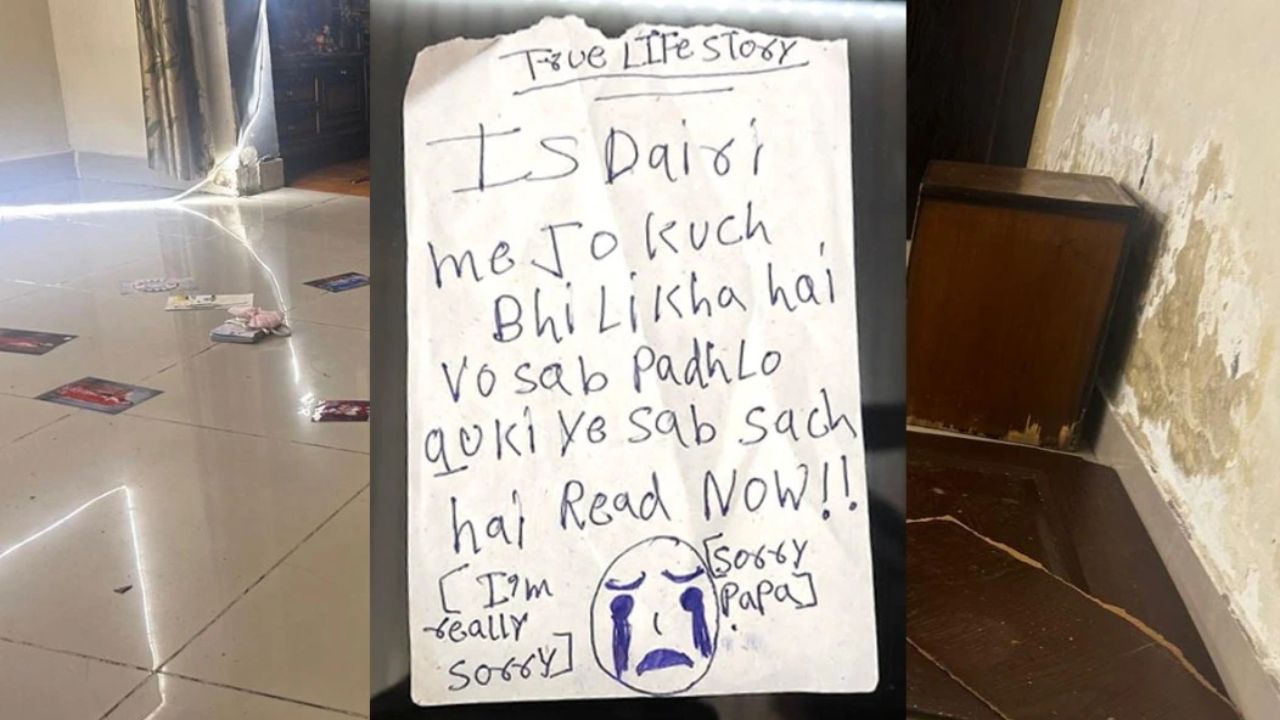
Sisters’ Note Highlights Mental Strain and Cultural Clash
Each woman has children with him, adding layers of complexity to the household. Adding more to the complexity, police also confirmed that Kumar’s former live-in partner died in 2015 after falling from a rooftop, a case later ruled as suicide.
A handwritten note recovered from the room simply read “Sorry Papa,” urging him to read their diary. Notably, the eight-page diary did not mention their mother or mothers. Police believe this suggests the sisters were emotionally closer to their father, which may explain why the note was addressed solely to him.
The diary reveals that the girls were deeply immersed in Korean pop culture, including K-pop music, dramas, and online content. They expressed anger toward their father for opposing these interests, especially after he allegedly took away and sold one of their mobile phones. The girls wrote about feeling misunderstood and emotionally trapped, suggesting that Korean culture had become an escape from their reality.
Police confirmed that the sisters had not attended school since the Covid-19 pandemic and were not being homeschooled. They had little interaction with other children and spent most of their time confined indoors. Disturbing phrases scribbled on their walls—such as “I am very, very alone”—point to profound loneliness and social withdrawal.
Some diary entries mention “beatings” and suggest that death felt preferable to continued punishment. However, the diary does not clearly identify who inflicted this alleged physical discipline. There are also references to family tensions involving a younger sibling and distress over discussions of marriage, though details remain vague.
Ghaziabad girls’ suicide note exposes struggle between Korean passion and family expectations
As the investigation continues, authorities are trying to understand how family dynamics, isolation, lack of schooling, and emotional dependency on online content may have contributed to the tragedy. Experts and parents alike are urging caution against drawing premature conclusions, emphasizing the need for a thorough and sensitive investigation.


