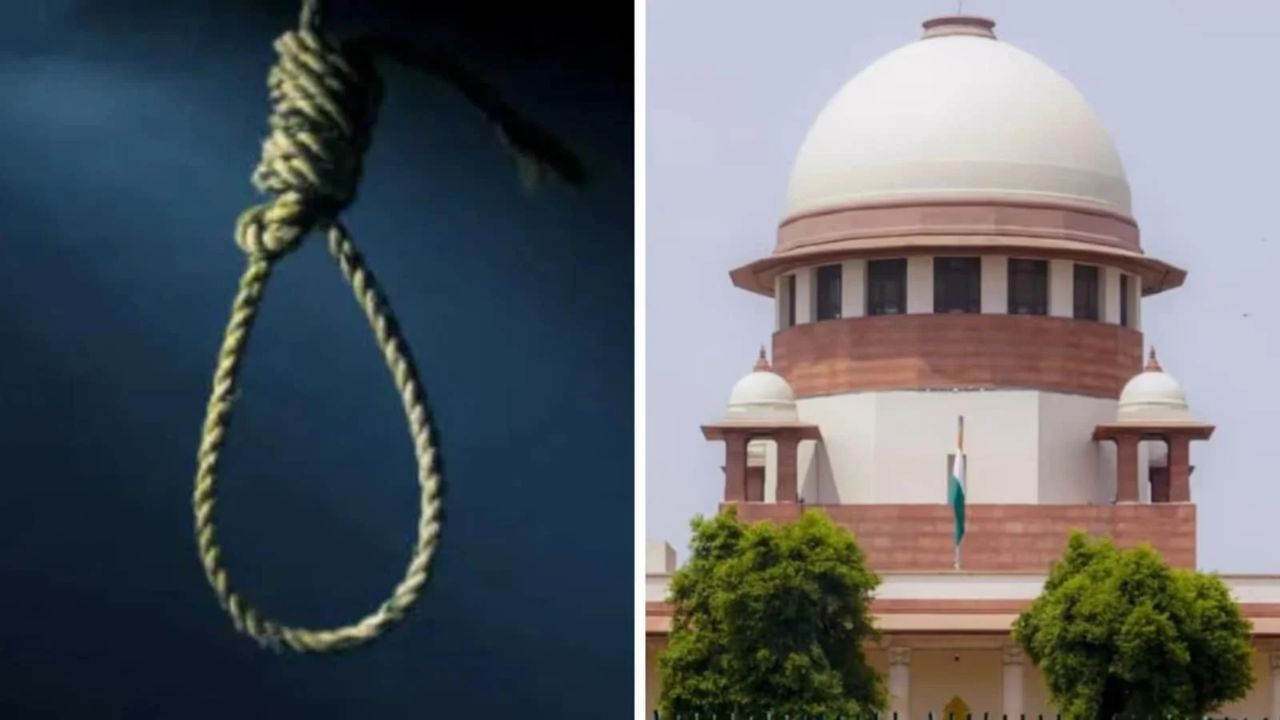
Supreme Court’s Big Decision On Death Penalty (Img: X)
New Delhi: The Supreme Court has refused to remove hanging as the method of executing death sentences in India but said the issue can be reconsidered in the future if new scientific or medical evidence proves that another method causes less pain and better protects the dignity of death row prisoners.
A bench of Justice Vikram Nath and Justice Sandeep Mehta rejected a plea seeking to replace hanging with alternative methods such as lethal injection, shooting, electrocution or gas chamber execution.
The petition was filed by senior advocate Rishi Malhotra, who challenged the existing legal provision that mandates hanging for carrying out death sentences. Under Section 354(5) of the Code of Criminal Procedure, a person sentenced to death is executed by being “hanged by the neck till he is dead”.
The petitioner argued that hanging may cause prolonged physical suffering and violates the right to die with dignity under Article 21 of the Constitution.
The Supreme Court observed that there was no sufficient reason to reconsider its earlier judgment that upheld hanging as a valid method of execution. The court said it was not convinced that the previous decision required a larger bench review.
However, the bench clarified that the matter is not permanently closed. If future scientific, medical or other evidence shows that circumstances have changed, the constitutional validity of the method can be examined again.
The Supreme Court also allowed the Centre to constitute an expert committee to study whether alternative execution methods could reduce pain and protect the dignity of prisoners sentenced to death.
The proposed panel may include experts from fields such as:
The committee would examine whether methods like lethal injection or other alternatives are more humane compared to hanging.
During the hearing, concerns were also raised about lethal injection, which is used in several countries, including the United States. Experts pointed out that the method has faced criticism due to complications and failed executions in some cases.
The court noted that changes in science and technology can influence constitutional interpretation and future discussions on execution methods.
With the dismissal of the plea, hanging will remain the official method of carrying out death sentences in India.
However, the Supreme Court has kept the possibility open for a future review if credible evidence establishes that another method can reduce suffering while maintaining the dignity of death row prisoners.
Location : New Delhi
Published : 18 August 2026, 1:00 PM IST
Topics : death penalty law India death penalty method hanging death sentence India SC on hanging method Supreme Court death penalty

