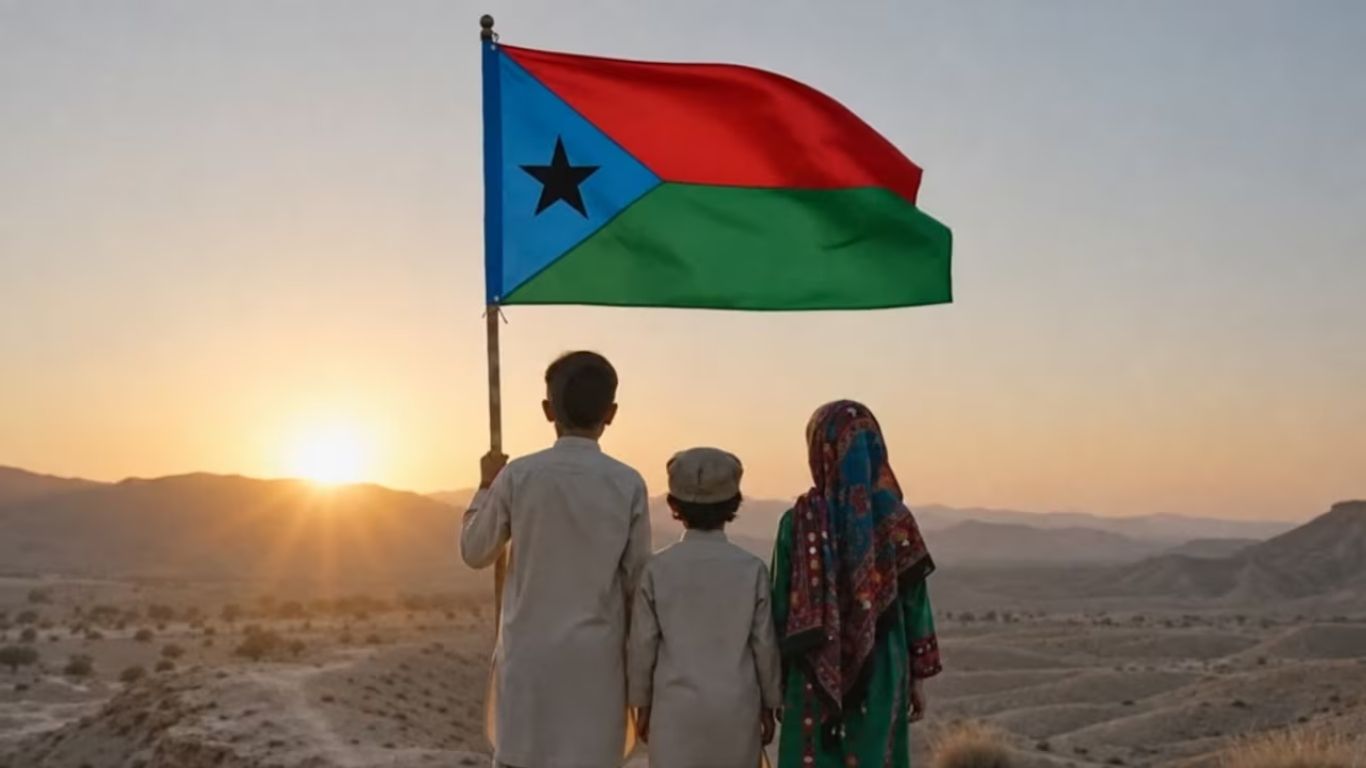
Baloch Jashn-e-Azadi (Img: Google)
New Delhi: On Tuesday, Baloch nationalists celebrated 'Jashn-e-Azadi' (Independence Day) in Pakistan's Balochistan province. Reports indicate that local residents celebrated despite restrictions imposed by the Pakistani administration to halt the events and the suspension of internet and mobile services in several areas.
Baloch nationalists view Balochistan's 1948 merger with Pakistan as a forced occupation and have long opposed it.
According to IANS, human rights activist and Baloch leader Mir Yar Baloch alleged that communication services were disrupted and security force deployments were increased in several areas of Balochistan, including Kalat, Quetta, and Khuzdar.
He claimed on X (formerly Twitter) that aerial surveillance was conducted alongside heightened security around military installations and police stations. According to him, despite these restrictions, people celebrated independence in various areas.
Due to the internet shutdown, it is taking time for photos and videos of the celebrations to emerge. The Baloch leader expressed gratitude, particularly to India, for raising the voice of the people of Balochistan on the global stage.
UBA claims responsibility for blowing up a bridge: According to local media, the United Baloch Army (UBA) has claimed responsibility for blowing up a bridge in the Kachhi district using explosives.
According to 'The Balochistan Post', UBA spokesperson Mazar Baloch claimed that the organization's fighters targeted the bridge at Sabri on Sanni Road, near Dhadar. The organization described the act as a move to disrupt the movement and logistics of the Pakistan Army.
According to ANI, the World Bank has warned Pakistan regarding the utilization of funds allocated for flood relief in Balochistan. According to a report by Dawn, the bank has expressed serious concern over the decision to divert funds—originally intended for building resilient homes for flood-affected families—to other infrastructure projects.
The bank states that this move could exacerbate the hardships faced by families already grappling with an economic crisis. According to the World Bank, 84 percent of the scheme's beneficiaries fall into the ‘ultra-poor’ or ‘vulnerable’ categories, with approximately 28 percent earning less than $30 per month.
A large number of the beneficiaries are tenants and daily-wage laborers. The bank noted that due to limited access to savings and formal credit, these families have a very low capacity to recover following a natural disaster.
Balochistan, Pakistan’s largest province, spans approximately 43.6 percent of the country's total area. Despite being rich in gas, gold, copper, oil, and other minerals, it remains one of the country's most underdeveloped and impoverished provinces.
Its coastline, stretching about 770 kilometers, and the Gwadar Port are of immense strategic importance. Available data indicates a poverty rate of around 47 percent in the region, whereas Pakistan's national poverty rate was reported at 28.9 percent for 2024–25.

