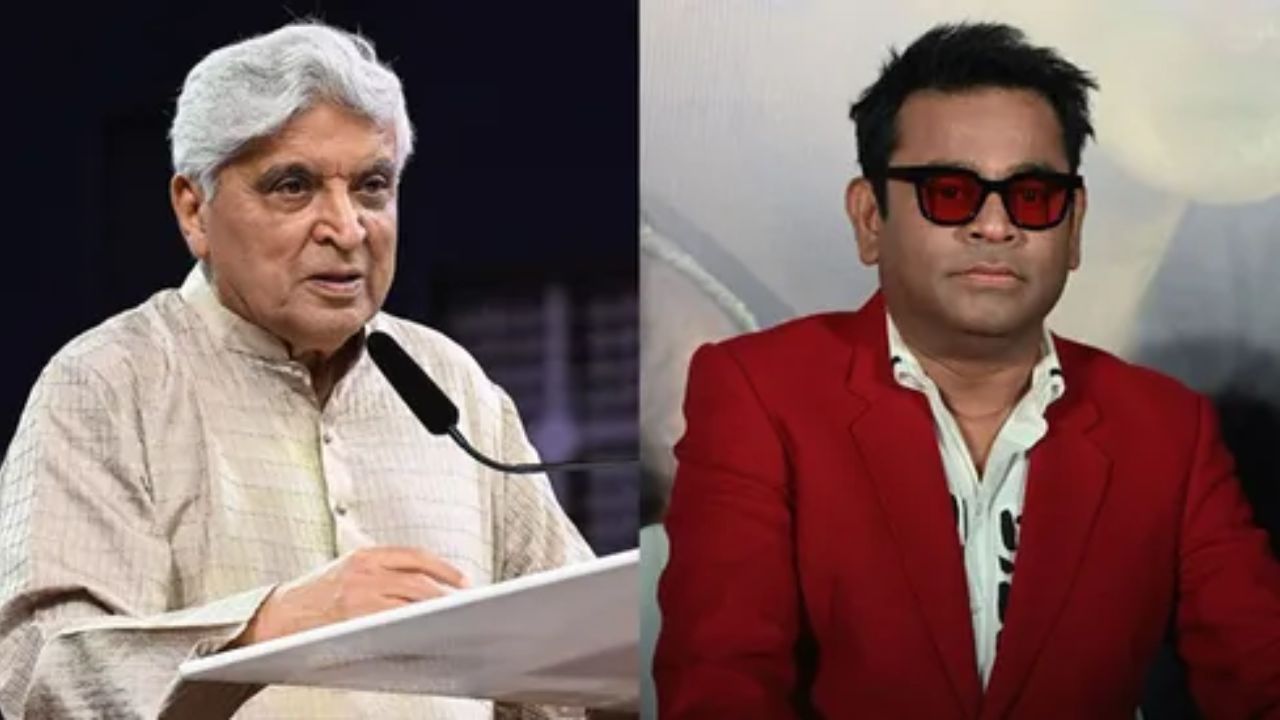
Javed Akhtar’s Past Views Go Viral Amid AR Rahman Controversy
New Delhi: Following Oscar-winning composer AR Rahman's recent statement, veteran lyricist and screenwriter Javed Akhtar is once again in the news. In a recent interview, Rahman hinted that "communal reasons" may be behind his lack of work in the Hindi film industry over the past few years. Following this statement, Javed Akhtar's old thoughts and comments are resurfacing on social media.
Javed Akhtar clarified on this issue that he never felt like a victim of such discrimination in his career. He has always been vocal about his views and beliefs. Javed Akhtar, who claims to be an atheist, has faced questions before, especially when he wrote devotional songs.
Music composer AR Rahman’s ex-wife undergoes emergency surgery
In an old interview, Javed Akhtar said that he was even called a "hypocrite" for writing devotional songs despite being an atheist. Citing examples, he said that songs like "O Palanhare" from Lagaan and "Pal Pal Hai Bhari" from Swades are part of his writing.
He said, "I can even write aartis for Ram and Krishna. This has all been a part of my upbringing."
Javed Akhtar explained that he grew up in the Awadh region, where the Ganga-Jamuni culture was evident. He said that despite being born into a Muslim family, festivals like Ramlila, Krishna Leela, and Basant Panchami were a natural part of his life.
In his words, "On Basant Panchami, we used to wear yellow clothes. Everyone celebrated festivals. It was all very normal."
Javed Akhtar attends trailer launch of docuseries ‘Angry Young Man’
He specifically mentioned Lucknow's culture, saying that the shared heritage there was unique, but that atmosphere no longer seems the same.
Meanwhile, AR Rahman stated in an interview that his work in Hindi cinema has decreased over the past eight years. He hinted at a shift in the balance of power in the industry, with creative people losing control, which may also have a "communal angle."
This entire controversy has once again sparked debate about cultural inclusivity, creative freedom, and the changing social climate in Indian cinema.

