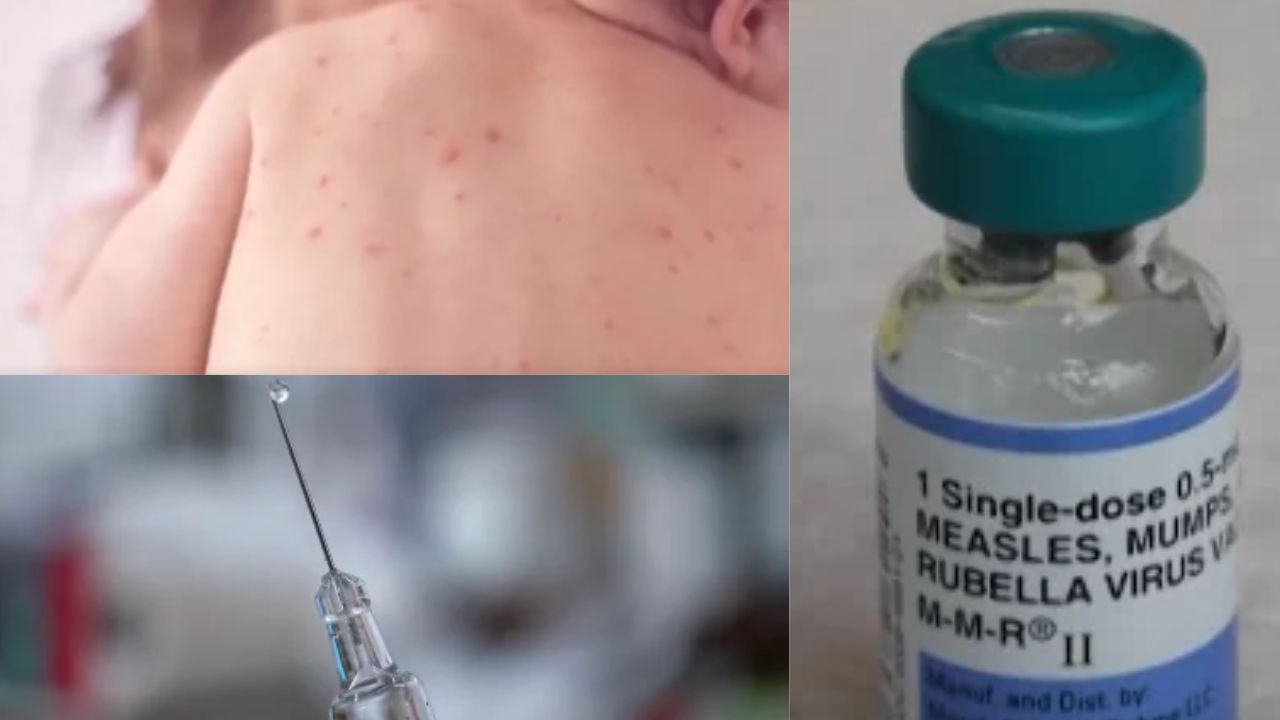
America's measles outbreak approaches 6,000 cases, raising fresh concerns over declining vaccination coverage. (Img: X)
Washington: The United States is confronting a significant public health setback after measles transmission was declared endemic in the country once again, ending a 27-year period during which the disease had remained eliminated through sustained vaccination efforts.
On November 17, 2026, an arm of the World Health Organisation (WHO) confirmed that endemic measles transmission had been re-established in the US. The development marks a reversal of the country's measles elimination status, first achieved in 2000, and raises concerns about the consequences of declining immunisation coverage.
The scale of the resurgence is reflected in this year's figures. Measles cases have been reported across 45 states, with 10 associated deaths recorded in 2026. This stands in stark contrast to the three measles-related deaths reported collectively between 2000 and 2025.
The resurgence has been attributed to several converging factors, including the spread of misinformation about vaccines, interruptions to routine childhood immunisation during the Covid-19 pandemic and growing public scepticism towards vaccination. Concerns have also emerged over the federal government's approach to vaccine policy under President Donald Trump.
US Health Secretary Robert F Kennedy Jr, who has previously expressed scepticism about vaccines, has faced criticism over measures perceived as weakening confidence in established immunisation programmes. These include support for religious exemptions from school vaccination requirements and an executive order encouraging pharmaceutical manufacturers to separate the combined measles, mumps and rubella (MMR) vaccine into individual shots.
Measles is among the most contagious infectious diseases and spreads through the air. Initial symptoms generally include fever, followed by a characteristic skin rash. However, the infection can lead to serious complications, including pneumonia and inflammation of the brain.
Children below five years of age are particularly vulnerable. Approximately one in six children in this age group who contract measles may require hospitalisation. Adults infected with the disease also face a substantial risk of complications.
The consequences can extend beyond the immediate infection. Measles can cause what medical experts describe as 'immune amnesia', a phenomenon in which the infection damages immune memory and reduces antibodies developed against other pathogens. This can leave affected individuals more susceptible to other illnesses for years. Infants infected before their first birthday also face the risk of developing a rare but fatal neurological condition later in life.
The US had made considerable progress against measles following the development of a vaccine in the 1960s. A sustained national immunisation effort gathered momentum in the 1990s, particularly after Congress established a permanent federal programme to provide free childhood vaccinations. By the end of that decade, widespread transmission had been brought under control, allowing the country to achieve elimination status.
However, the current outbreak indicates that those gains are increasingly vulnerable. Cases have spread across several states, with a significant proportion of counties in Pennsylvania and Wisconsin reporting infections. Transmission chains in Utah and Arizona have also been linked to an outbreak that originated in Texas more than a year ago.
Public health experts have warned that reversing the trend could prove considerably more difficult than the original elimination campaign. Unlike the situation in the 1990s, when vaccination efforts could largely concentrate on children, adults now account for approximately 40 per cent of reported cases.
The financial and administrative burden of containing the disease is also substantial. Health authorities must identify infected individuals, trace their contacts, establish immunity status, recommend isolation where necessary and organise targeted vaccination campaigns. Such operations can cost an average of $43,000 per measles case.
The challenge has been compounded by staffing losses at the Centres for Disease Control and Prevention (CDC). According to the American Federation of Government Employees, the agency has lost around 30 per cent of its workforce since March 2025, potentially limiting its ability to coordinate and support state-level containment efforts.
State health departments have consequently been developing their own guidance, while professional medical organisations have begun conducting specialised training sessions and webinars to help doctors identify and manage measles infections. Many practising physicians have had little direct experience treating the disease because it had remained largely absent from the country's healthcare landscape for decades.
Although the White House announced an additional $100 million allocation in August towards tackling measles and other vaccine-preventable diseases, questions remain over whether the resources will be sufficient to reverse the outbreak.
Kennedy subsequently reiterated his recommendation for MMR vaccination on November 17 and expressed the administration's intention to restore the country's measles elimination status.
The renewed outbreak demonstrates how decades of public health progress can be undone when vaccination coverage weakens and confidence in scientific interventions erodes. Restoring elimination status will require sustained immunisation efforts, effective public health coordination and renewed public trust in vaccines.
The worsening outbreak claimed another young life on November 20, when Virginia health authorities reported the state's first measles-associated death of 2026. The victim was a child aged between zero and four years who had tested positive for the infection. The Virginia Department of Health withheld further information, including the child's vaccination status, citing the family's privacy.
The development has intensified concerns over the vulnerability of young children amid declining immunisation coverage. Virginia has reported 220 measles cases so far in 2026, according to state health department data available as of November 19. Of these, 40 infections involved children aged zero to four, while another 75 were recorded among children between five and 12 years of age.
Vaccination records indicate that 179 of the reported cases involved unvaccinated individuals, while the vaccination status of 39 patients remained unknown. Only two infections were reported among vaccinated individuals.
The outbreak has been particularly pronounced in Virginia's central region. Buckingham County has emerged as the state's worst-affected area, with 127 reported infections, while neighbouring Charlotte County has recorded another 34 cases.
The national situation has also deteriorated sharply. According to the US Centres for Disease Control and Prevention (CDC), the country recorded 5,838 measles cases as of November 19, taking infections above the 5,000 mark for the first time since 1991. The figures underline the scale of the resurgence and the mounting pressure on state and federal health authorities.
Pennsylvania remains the worst-affected state, reporting 1,631 infections and 326 hospitalisations as of November 20. The state has also recorded its eighth measles-associated death. Wisconsin has reported two fatalities, while New York has confirmed its first measles-associated child death.
The CDC has confirmed six measles-associated deaths nationally in 2026, although its federal reporting does not identify the individual states where the fatalities occurred. Differences between state-level and federal mortality figures have also drawn attention following a change in the CDC's reporting methodology.
Earlier this year, the agency shifted towards using mortality information from the National Center for Health Statistics rather than relying on figures reported directly by state health departments. This change has contributed to discrepancies between state and federal death counts, complicating the interpretation of the national outbreak's mortality burden.
The rising infection numbers have prompted renewed calls for vaccination, including from health officials in Hawaii, who have urged residents to strengthen immunisation coverage following the country's loss of measles elimination status.

