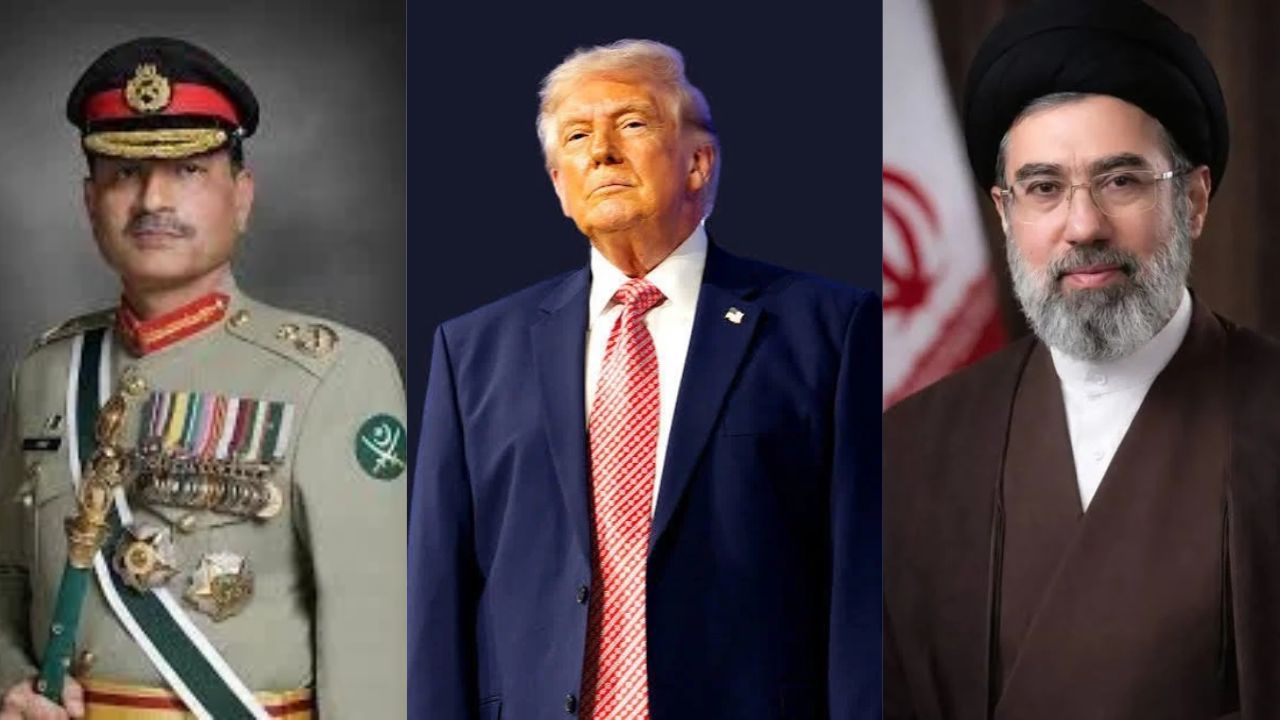
Pakistan Army Chief Field Marshal Asim Munir set to travel to Tehran amid growing tensions between the United States and Iran.
Islamabad: Pakistan Army Chief Field Marshal Asim Munir is set to travel to Tehran amid growing tensions between the United States and Iran, with Islamabad making a fresh diplomatic push to revive stalled peace efforts. The high-level visit has drawn global attention as Pakistan attempts to play a larger role in easing the escalating West Asia crisis.
The visit comes at a time when US-Iran negotiations have reached a standstill following renewed military tensions, economic pressure and disagreements over regional security issues. Munir’s Tehran trip is being viewed as a strategic diplomatic move aimed at strengthening communication channels and exploring possibilities for dialogue.
Pakistan Army Chief Asim Munir will visit Tehran on Monday with a high-level delegation to hold discussions with Iranian leadership on bilateral relations, regional security and ongoing geopolitical developments.
Iran’s Foreign Ministry announced the visit, stating that the discussions will focus on strengthening cooperation between Pakistan and Iran while supporting efforts aimed at maintaining regional peace and stability.
The visit has gained significance as Islamabad continues its efforts to bring Washington and Tehran back to the negotiating table after previous diplomatic initiatives failed to achieve a breakthrough.
Pakistan has not officially disclosed detailed information about the agenda of Munir’s visit, but the timing of the trip has increased speculation over Islamabad’s broader diplomatic strategy in the region.
Pakistan has been attempting to position itself as a mediator between the United States and Iran amid one of the most sensitive geopolitical conflicts in the world.
Islamabad had earlier played a role in facilitating an interim understanding between Washington and Tehran, with Pakistan signing the arrangement as a guarantor. The agreement was aimed at creating a window for high-level negotiations to reduce tensions. However, the diplomatic process suffered a setback after relations between the two sides deteriorated further and military strikes resumed.
Following the collapse of talks, Pakistan continued diplomatic engagement to encourage both countries to return to negotiations and avoid further escalation. Earlier this month, Pakistan Interior Minister Mohsin Naqvi visited Tehran and held discussions with Iranian President Masoud Pezeshkian and Foreign Minister Abbas Araghchi as part of Islamabad’s peace efforts.
The timing of Asim Munir’s Tehran visit makes it strategically important. The region is facing multiple challenges, including military tensions, economic sanctions, energy security concerns and uncertainty over future US-Iran relations.
For Pakistan, maintaining stability in West Asia is economically and strategically important due to its regional security interests, trade links and energy requirements. Iran, meanwhile, is facing increasing pressure from international sanctions and restrictions affecting its economy, exports and financial connectivity. The visit could provide Pakistan an opportunity to strengthen bilateral ties with Tehran while presenting itself as a key diplomatic player in the region.
One of the biggest concerns in the ongoing US-Iran confrontation is the situation around the Strait of Hormuz, a crucial global energy route.
The strategic waterway connects the Persian Gulf with international shipping routes and plays a major role in global oil and gas transportation. Any prolonged instability in the region could impact energy prices, shipping costs and international markets.
The conflict has already created uncertainty in global energy supply chains, increasing concerns among economies dependent on Gulf energy exports. A diplomatic breakthrough between the US and Iran could help reduce market risks, while further escalation could create wider economic consequences.
Iran is under increasing economic pressure due to international sanctions and restrictions affecting its financial and trade sectors. Iranian leadership has supported diplomatic engagement as a way to move beyond prolonged uncertainty, while hardline voices within the country have warned against regional cooperation with efforts aimed at increasing pressure on Tehran.
The country’s economy has faced challenges linked to reduced foreign investment, trade limitations and pressure on energy exports. Any future agreement with Washington could have major implications for Iran’s economic recovery and regional position.
The diplomatic situation has become more complicated after US President Donald Trump warned of tougher economic measures against Iran if negotiations fail to produce results. The possibility of additional sanctions has increased concerns about further confrontation between Washington and Tehran.
Analysts believe that diplomatic initiatives by regional countries, including Pakistan, could become increasingly important if tensions continue to rise.
Munir’s Tehran visit reflects Pakistan’s attempt to balance its relationships with regional powers while protecting its own strategic and economic interests. Islamabad has historically maintained ties with both Gulf countries and Iran, despite complex regional rivalries.
The challenge for Pakistan remains to promote dialogue without becoming directly involved in broader geopolitical disputes between major powers. The visit is also being watched in the context of Pakistan’s recent regional engagements and its efforts to expand its diplomatic influence.
The key question remains whether Pakistan’s mediation efforts can help restart stalled negotiations or whether tensions will continue to escalate. With energy markets, regional security and global economic stability linked to developments in West Asia, Munir’s Tehran mission could become an important moment in the ongoing US-Iran crisis.

