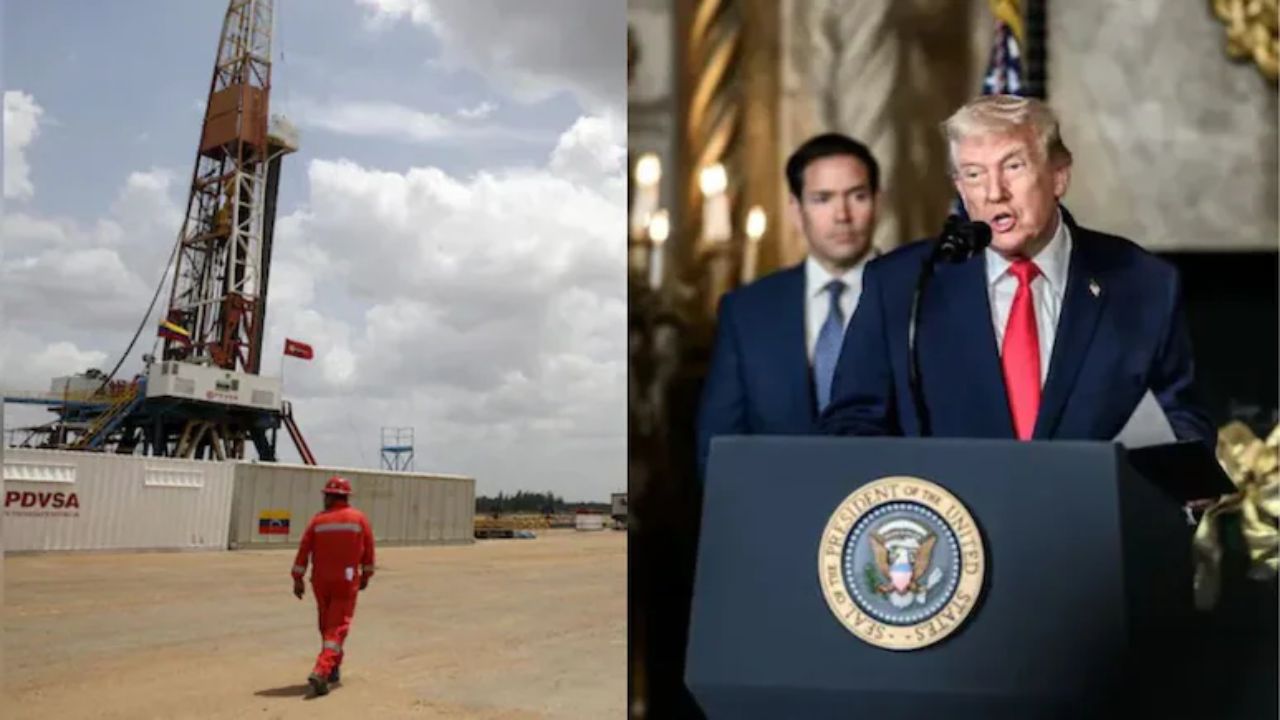
US set to take control of Venezuela's oil reserves
Washington: In a dramatic escalation of tensions, the United States has taken control of Venezuela’s government and vast oil assets following a large‑scale military operation that resulted in the capture of President Nicolás Maduro and his wife.
US President Donald Trump told media that Washington will oversee Venezuela’s oil reserves and energy infrastructure as part of a broader strategy he says will be “very profitable.”
During the operation, which followed intensified U.S. strikes on Venezuelan territory, Maduro was removed from Caracas and transported to the United States, where he faces federal charges, including drug trafficking. The U.S. government has framed the mission as part of its ongoing war on drugs and narco‑terrorism enforcement.
Will Trump levy a 500% tariff on India? How will this impact the Indian economy?
President Trump said Washington could maintain direct oversight of Venezuela “for years,” telling The New York Times that U.S. companies will rebuild the country’s degraded oil infrastructure. He suggested that revenues from Venezuelan oil sales could help reduce global oil prices and generate funds for both Venezuelans and Americans.
Venezuela is estimated to hold more than 300 billion barrels of crude oil, one of the largest reserves globally, yet produces only a fraction due to dilapidated facilities. That has made the country’s reserves a strategic prize, and the U.S. plans to market and sell oil from storage and future production under its control.
After Venezuela, India, China and Brazil in US crosshairs as Trump clears 500% tariff sanctions bill
Interim President Delcy Rodríguez, whose government has cooperated with U.S. officials, supports opening the oil sector to American firms. However, Caracas has reported casualties from the U.S. assault and denounced the action as a violation of international law. Venezuela’s Interior Minister claimed about 100 people were killed during the operation, and a week of mourning was declared.
International reactions have been mixed, with critics questioning the legality and long‑term impact of U.S. control over another sovereign state’s oil and political future.
With control over Venezuelan oil exports, the U.S. could dramatically reshape global energy markets and geopolitical alignments in Latin America. The Trump administration asserts that oil revenues will be handled in ways that benefit the Venezuelan people, despite ongoing debates over sovereignty and international norms.

