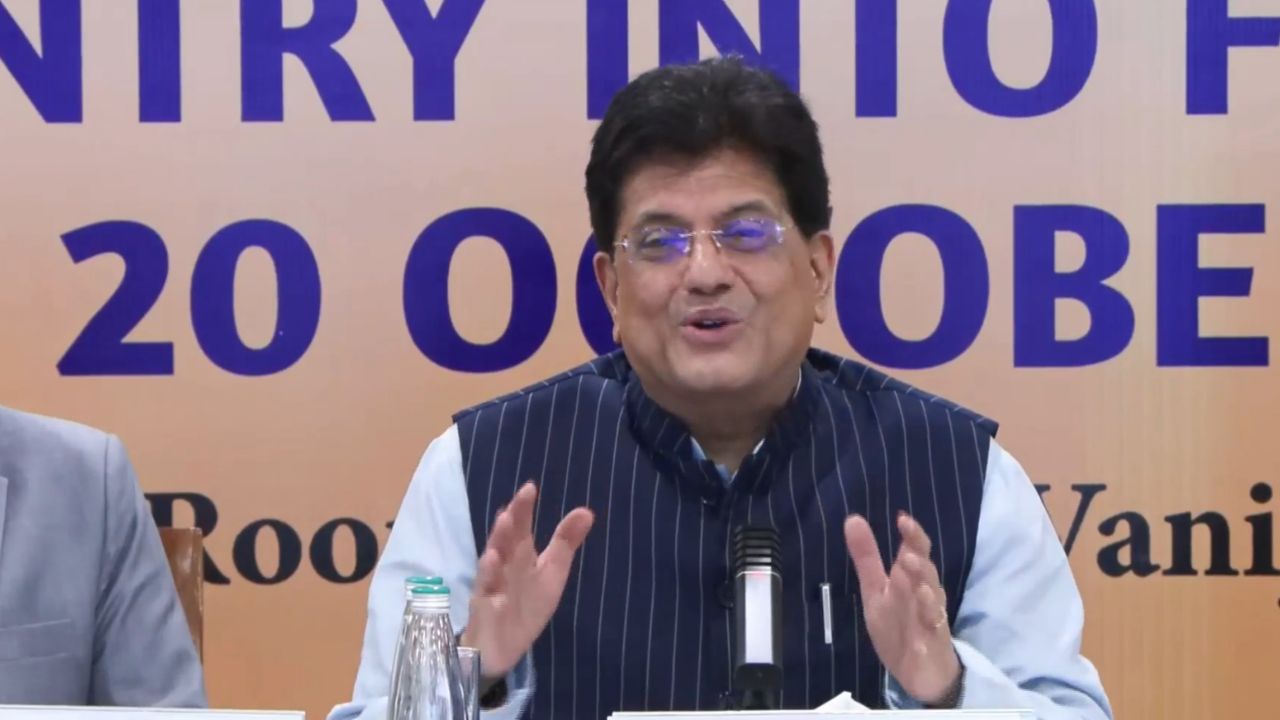
India-New Zealand FTA Opens Markets, Targets Trade Growth (Img: X)
New Delhi: India and New Zealand’s free trade agreement (FTA) will come into force on October 20, opening up new opportunities for exporters, farmers, manufacturers and professionals. Commerce and Industry Minister Piyush Goyal has set a target of doubling bilateral trade in goods and services to NZ$7 billion, or approximately Rs 35,000 crore, by 2030.
The target will require annual compounded growth of around 18%, a significant jump from the approximately $2.4 billion in bilateral trade recorded in 2024-25. Goyal said the agreement would give businesses in both countries greater opportunities to expand trade and investment.
“We have agreed to work towards doubling bilateral trade in goods and services to New Zealand $7 billion or approximately Rs 35,000 crore by 2030, which is barely four years away, so we are looking at 18 percent compounded annual growth rate, which gives our businesses ambitious growth to target,” Goyal said.
The minister described the timing of the agreement as auspicious, with the pact taking effect on Vijay Dashami and Dussehra.
“India, New Zealand FTA coming into force on the day of Vijay Dashami and Dussehra on October 20, we will start tomorrow, and this will augur well for the future,” Goyal said.
Also Read: India Rejects OIC’s Kashmir Resolution, Says Pakistan Is Misusing the Organisation
The free trade agreement provides Indian exporters with 100% duty-free access to the New Zealand market. Labour-intensive sectors such as textiles, leather and footwear, along with engineering goods and advanced manufacturing, are expected to benefit. Smaller businesses, micro, small and medium enterprises (MSMEs), women entrepreneurs and artisans could also find new customers.
"Our labour-intensive sectors, including leather, footwear and textiles, as well as our engineering and advanced manufacturing sectors, can reach new customers and explore new avenues for growth," Goyal said.
The FTA is expected to create export opportunities for Indian fruits, vegetables, coffee, spices, cereals and processed food products. Goyal said the agreement would also support farmers through investment, improved agricultural practices and stronger value chains.
At the same time, safeguards have been included for sensitive domestic sectors, including dairy and products such as onions, chana, peas, corn, almonds and sugar.
"For our farmers, the agreement creates new opportunities with appropriate safeguards. The agreement protects sensitive sectors such as dairy and agricultural products like onions, chana, peas, corn, almonds, sugar, among others," Goyal said.
Also Read: Tiger Shroff Firing Case: Three Suspects Planned Nepal Escape Via Delhi, Says Kota SP
The two countries have also agreed to establish centres of excellence for apples, kiwifruit and honey to improve productivity and farmers’ incomes. The arrangement is intended to encourage knowledge-sharing and better agricultural practices.
The agreement is expected to facilitate $20 billion in investments into India across manufacturing, infrastructure, agriculture and innovation. It also opens avenues for cooperation in high-technology products, education and research.
India’s pharmaceutical and medical device sectors could benefit from streamlined regulatory processes. Meanwhile, Indian professionals and students will gain access to a dedicated quota of 5,000 Temporary Employment Entry visas and expanded post-study work pathways in New Zealand.
“A successful FTA must be balanced, reciprocal and mutually beneficial for both the partners,” Goyal said.
New Zealand Trade and Investment Minister Todd McClay said the agreement’s entry into force marked the beginning of a longer process, with its success depending on how effectively businesses use the opportunities available.
“But our work does not end with the entry into force. The success of the agreement will ultimately be measured by the opportunities it creates and the extent to which businesses use it. Effective implementation will therefore be essential,” McClay said.
He added that both governments would need to remain engaged to address practical challenges during implementation.
The agreement was signed in New Delhi on April 27 by Goyal and McClay. Negotiations began in March 2025 and concluded on December 22, 2025, after five formal rounds of talks.
In an early example of the pact being used, JCB India is dispatching its first consignment to New Zealand under the FTA on October 19. The construction equipment manufacturer is shipping a machine designed and built at its Pune facility, Goyal said.

