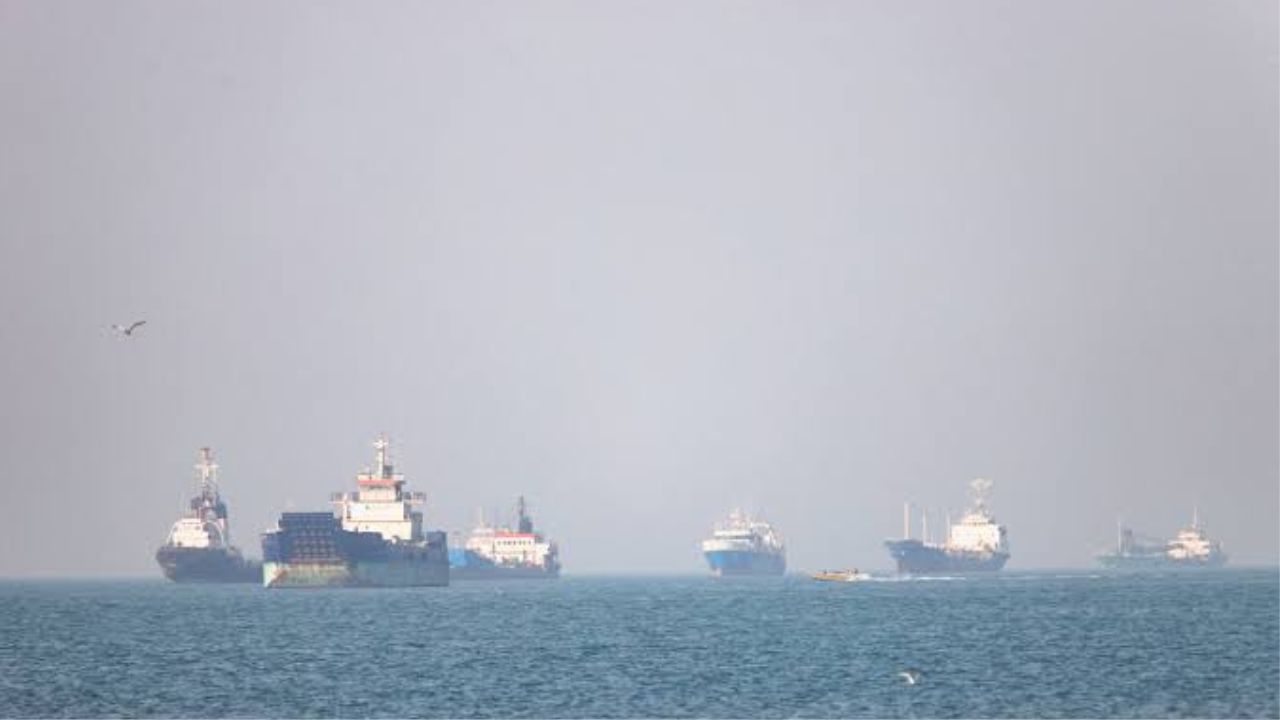
Iranian warship patrols near Strait of Hormuz as Indian tanker HAANA faces reported warning
Tehran: An Iranian warship reportedly warned Indian oil tanker HAANA while it attempted to cross the southern route of the Strait of Hormuz, triggering fresh concerns over maritime security and global shipping movement in one of the world’s most important energy corridors.
The reported incident comes amid rising tensions in the Persian Gulf, where uncertainty over shipping routes, Iran-US friction and fears of disruption to global oil supplies have put international vessels on high alert.
According to local media reports in Iran, Indian tanker HAANA was attempting to pass through the southern route of the Strait of Hormuz, also known as the Oman Corridor, when it was approached by a large Iranian naval vessel. The report claimed that the tanker changed its course and moved away after receiving a warning from the Iranian warship.
However, there has been no independent confirmation of the incident from Indian authorities, the tanker operator or international maritime security organisations.
The Strait of Hormuz is considered one of the most strategically important waterways in the world. Located between Iran and Oman, the narrow sea passage connects the Persian Gulf with the Arabian Sea and plays a crucial role in global energy transportation.
A significant portion of the world’s crude oil and liquefied natural gas shipments passes through this route every year. Any disruption in shipping activity around Hormuz can have a direct impact on global fuel prices, energy markets and international trade.
For India, which imports a large quantity of crude oil to meet domestic energy demand, the security of shipping routes through the Persian Gulf remains a major economic concern.
The reported encounter involving HAANA happened at a time when tensions between Iran and the United States have increased pressure on commercial shipping in the region.
The Strait of Hormuz has become a key flashpoint, with Iran warning against unrestricted movement of vessels through certain routes while accusing foreign powers of increasing instability in the region.
Shipping companies operating in the Persian Gulf have been monitoring developments closely due to concerns over naval activity, security threats and possible delays in cargo movement.
The southern route of the Strait of Hormuz, known as the Oman Corridor, has gained attention as an alternative passage for ships attempting to avoid the main shipping lane.
Reports suggest that Iran and Oman have been discussing arrangements related to navigation through the waterway, including a temporary shipping corridor and measures to improve maritime safety. The discussions have become important after several vessels reduced operations in the area because of growing security concerns.
Iran has linked the future of shipping activity through the Strait of Hormuz with broader diplomatic developments involving the United States. Tehran has repeatedly raised concerns over sanctions, restrictions on Iranian ports and economic pressure.
Iranian officials have indicated that maritime access and regional security cannot be separated from ongoing political negotiations. The uncertainty has increased concerns among energy-importing nations and global shipping operators.
The reported warning to Indian tanker HAANA has highlighted the challenges faced by commercial vessels travelling through conflict-sensitive maritime zones. Any prolonged disruption in the Strait of Hormuz could affect crude oil transportation costs, insurance premiums for ships and global energy supply chains.
For Indian consumers, a sustained crisis in the region could potentially influence fuel prices and transportation expenses if global oil markets face further pressure.
The claim regarding the Iranian warship warning Indian tanker HAANA is currently based on reports from Iranian media sources. Indian authorities have not confirmed any confrontation involving the tanker, and there is no indication of a dispute between India and Iran.
The incident is being viewed in the context of wider regional tensions and the ongoing struggle to maintain safe commercial navigation through one of the world’s busiest energy routes. Global markets and shipping companies are closely watching developments around the Strait of Hormuz as tensions continue in the Middle East.
The key questions remain whether shipping restrictions will increase, how Iran’s discussions with regional partners progress and whether international vessels can continue operating safely through the waterway.
The HAANA incident has once again highlighted how a single maritime development in the Persian Gulf can create ripple effects across global energy markets, trade networks and economic stability.

