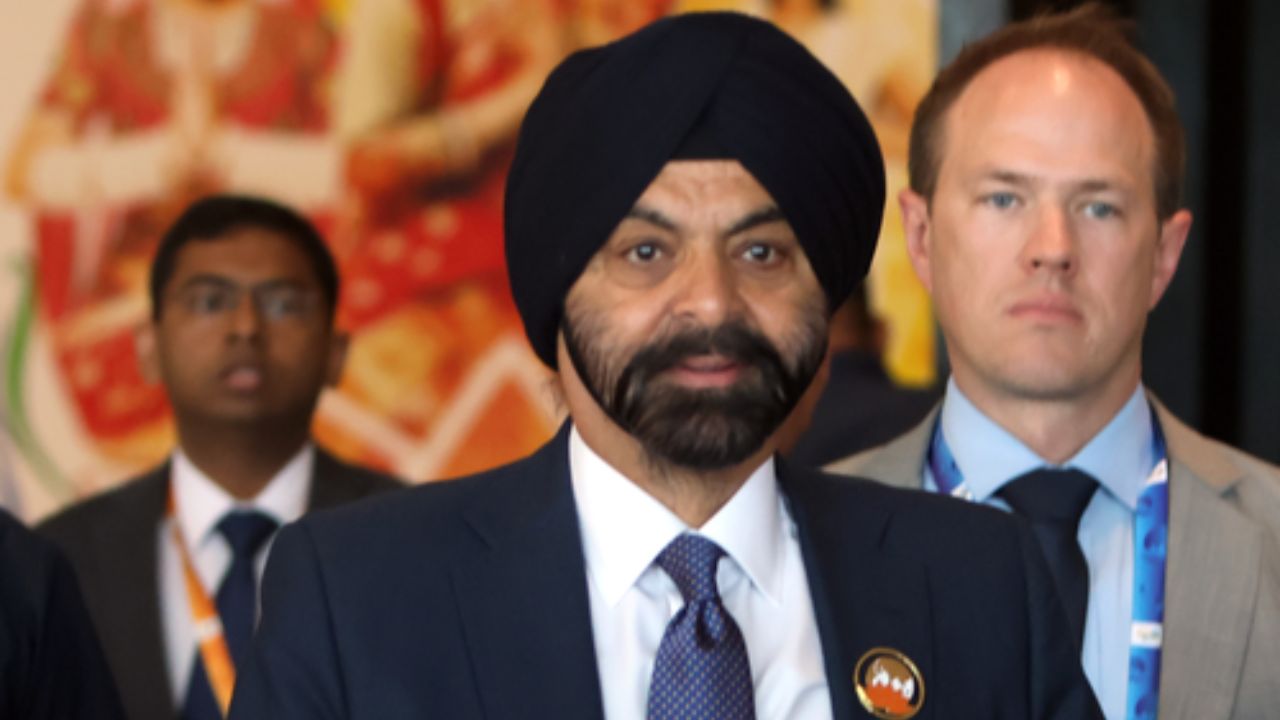
Ajay Banga Flags Global Growth Risks Amid Rising Geopolitical Tensions
Washington: The global economy is facing increasing pressure amid escalating conflicts in the Middle East and ongoing crises like the Ukrainian war. Ajay Banga warned that if these conflicts continue for a long time, they could severely impact global growth, inflation, and weaken economies. He made this statement during his address at the Atlantic Council.
According to Ajay Banga, global GDP growth, previously estimated at between 2.8 and 3 percent, could fall by one percent in extreme circumstances. Inflation could also rise by up to two percent, placing additional burdens on ordinary people.
He stated that emerging markets, already grappling with debt and financial pressures, will be more impacted, although developed countries will also be affected.
The conflict in the Middle East is also impacting global supply chains. The potential for disruptions has increased, particularly in critical sectors like energy, fertilizers, and chemicals. Many countries in Asia and Africa depend on these resources, which could further impact their economic situation.
The World Bank has begun preparing financial assistance to help affected countries. According to Ajay Banga, liquidity assistance of $20 to $25 billion could be provided in the near future, which could increase to $60 to $70 billion within six months.
He explained that this strategy is inspired by the emergency financial measures developed during the COVID-19 pandemic.
Ajay Banga warned governments against making financial decisions during a temporary crisis that could increase their debt burden in the long term. He said that instead of providing widespread subsidies, they should focus on targeted and limited assistance.
Ajay Banga also expressed concern about energy security amid rising geopolitical tensions. He said that countries should make balanced use of various sources of energy, such as gas, nuclear, and renewable energy, to ensure stable supply and meet future challenges.
Ajay Banga also noted that the world is currently facing multiple crises, including the war in Ukraine, the Gaza conflict, and the situation in the Middle East. All these factors have made the global economic environment more volatile, which could increase challenges in the future.

