New Zealand PM Christopher Luxon has hailed the India FTA as a game-changer for jobs and exports, but sharp criticism from his own foreign minister has exposed deep cracks within the ruling coalition.
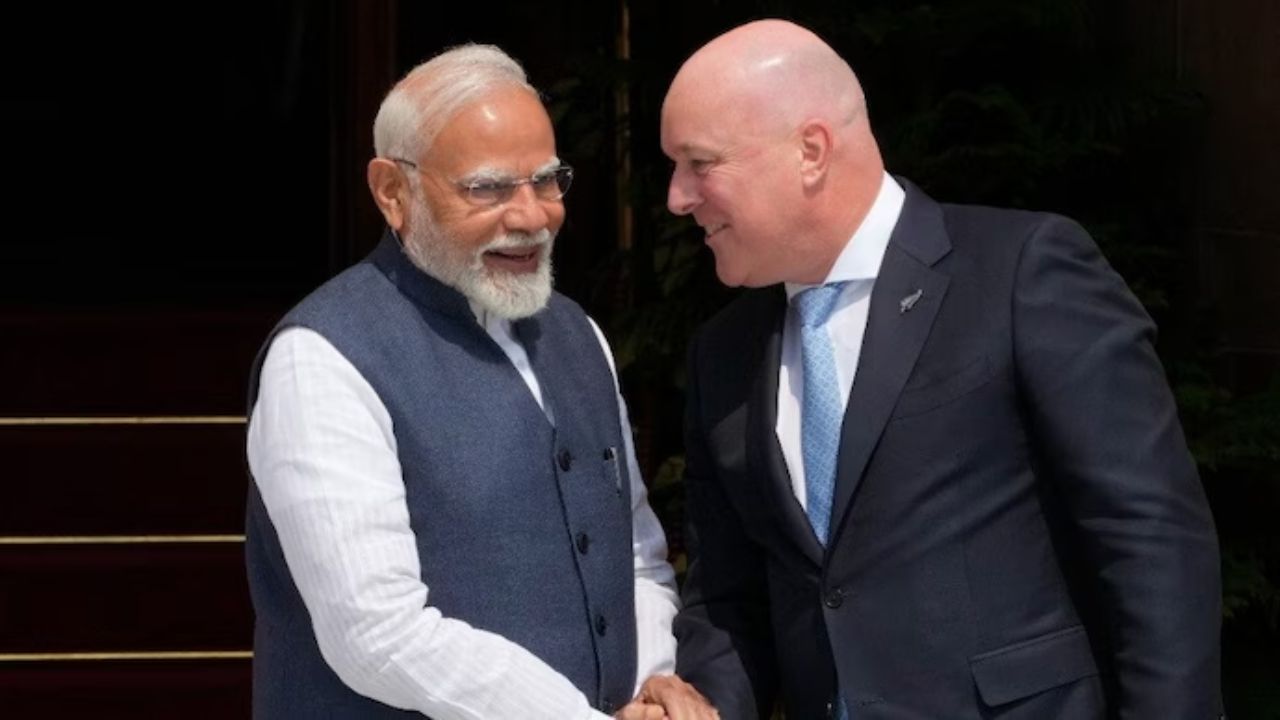
Prime Minister Modi with his New Zealand counterpart Christopher Luxon
Wellington: New Zealand Prime Minister Christopher Luxon has strongly defended his government’s newly announced Free Trade Agreement (FTA) with India, calling it a transformative step for the country’s economic future. Luxon said the deal fulfilled a key election promise and would deliver tangible benefits such as job creation, income growth and expanded export opportunities.
“We committed to securing a Free Trade Agreement with India in our first term, and we have delivered,” Luxon said on Saturday. Emphasising the scale of the opportunity, he noted that the agreement would open New Zealand businesses to a market of nearly 1.4 billion people.
India and New Zealand announce historic Free Trade Agreement; Details here
According to the prime minister, the deal aligns with his government’s broader vision of strengthening the economy while preparing for long-term growth.
The FTA was announced earlier this week following talks between Luxon and Indian Prime Minister Narendra Modi. Both leaders said the agreement could double bilateral trade within the next five years. In addition, it is expected to lead to investments worth around $20 billion in India over the next 15 years, strengthening economic ties between the two nations.
We said we’d secure a Free Trade Agreement with India in our first term, and we’ve delivered. This landmark deal means more jobs, higher incomes and more exports by opening the door to 1.4 billion Indian consumers.
Fixing the Basics. Building the Future.
— Christopher Luxon (@chrisluxonmp) December 27, 2025
Negotiations for the agreement began in March and progressed rapidly. At the time of its announcement, both governments described the deal as a reflection of shared ambition and strong political will to deepen cooperation across trade, investment and people-to-people links.
Luxon, who met Modi in October 2025, framed the agreement as part of his government’s core agenda, summarising it as “fixing the basics and building the future.”
Despite the prime minister’s enthusiasm, the agreement has exposed clear divisions within New Zealand’s coalition government. Foreign Minister Winston Peters, leader of the New Zealand First party, has openly criticised the deal, arguing that it is “neither free nor fair.”
India on the Verge of Key Trade Agreements: Oman, New Zealand, EU and US in Focus
Peters said the agreement involved excessive concessions without sufficient returns for New Zealand. He revealed that he had personally conveyed his concerns to India’s External Affairs Minister S. Jaishankar, while stressing that his objections were policy-based and not personal.
In a detailed post on X, Peters stated that his party had warned against rushing the negotiations. He argued that the government should have used the full parliamentary term to secure a higher-quality agreement with broader political backing.
While Luxon continues to promote the FTA as a major economic win, the disagreement highlights underlying tensions within the ruling coalition, suggesting that debate over the deal’s long-term impact is far from settled.

