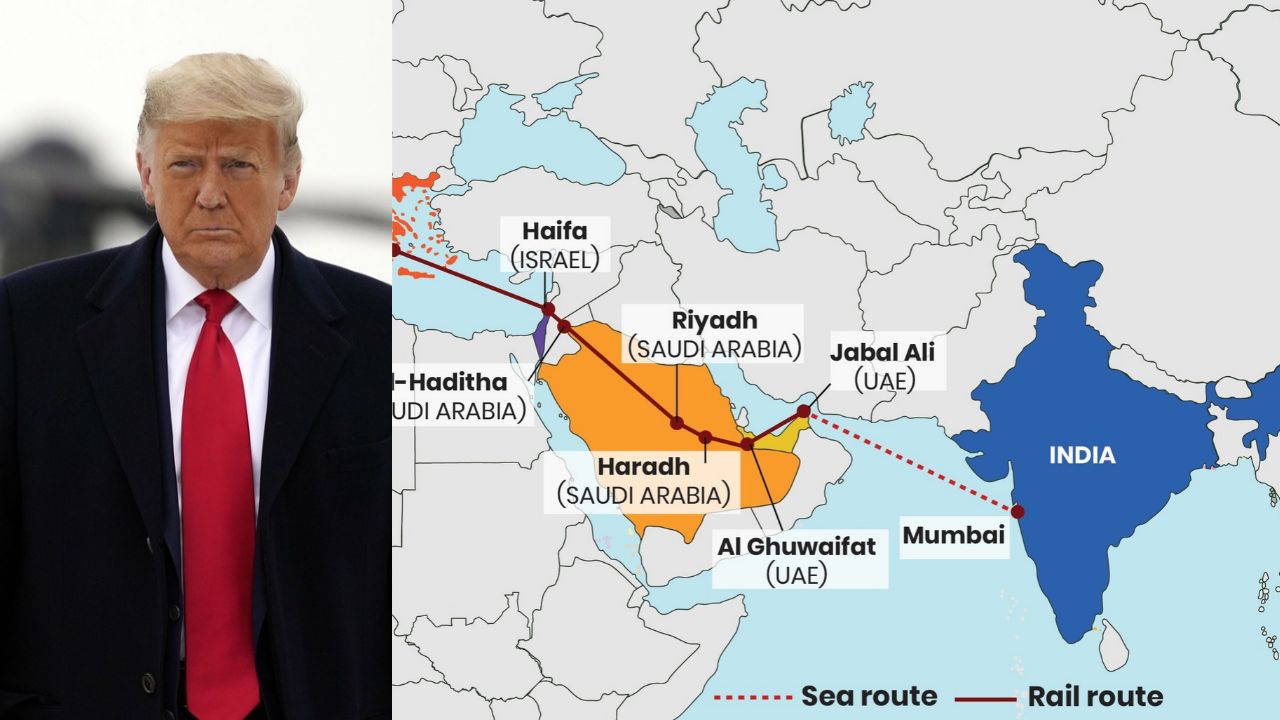
Trump backing puts India Middle East Europe Economic Corridor at the centre of global trade debate. (Img: Pinterest)
Washington DC: US President Donald Trump has thrown his support behind the India Middle East Europe Economic Corridor (IMEC) at a time when rising tensions in West Asia have intensified concerns over global energy security and the safety of major trade routes.
Addressing a multilateral meeting with Gulf Cooperation Council leaders on the sidelines of the United Nations General Assembly session in New York, Trump highlighted the need for alternative energy and trade networks that can reduce dependence on vulnerable routes affected by geopolitical conflicts.
The US backing has brought renewed attention to IMEC, a mega connectivity project that seeks to create a new economic bridge linking India, the Middle East and Europe through a combination of railways, ports, energy pipelines and digital infrastructure.
The development comes amid growing concerns over disruptions in West Asian shipping routes, particularly the Strait of Hormuz, one of the world’s most important energy transit points.
The India Middle East Europe Economic Corridor was unveiled during the G20 Summit in New Delhi in September 2023. The ambitious multinational project was announced by India, the United States, Saudi Arabia, the United Arab Emirates, France, Germany, Italy and the European Union as a long-term connectivity initiative aimed at strengthening trade links between Asia, the Middle East and Europe.
The corridor is designed to create an integrated transport network combining maritime routes, railway connectivity, energy infrastructure and digital communication systems. The project has gained strategic importance as countries seek more resilient supply chains amid increasing geopolitical uncertainty, regional conflicts and disruptions affecting traditional trade routes.
Trump’s support for IMEC comes against the backdrop of heightened tensions involving Iran and other regional players. The US President has argued that attacks and security threats affecting commercial shipping have highlighted the need to develop alternative energy transportation systems.
The Strait of Hormuz, located between Iran and Oman, is considered one of the most critical maritime chokepoints in the world because a significant share of global oil and gas shipments passes through the narrow waterway. Any prolonged disruption in the region can impact international energy prices, shipping costs and global supply chains.
The renewed focus on IMEC reflects a broader push among major economies to diversify energy routes and build infrastructure that can withstand geopolitical shocks.
The IMEC project consists of two major connectivity routes designed to link India with European markets. The eastern corridor will connect India with Gulf countries through maritime routes, with goods moving through ports and railway networks.
The western corridor will link the Gulf region with Europe through transport infrastructure, including rail and shipping connections. The planned network aims to create a faster and more efficient ship to rail transit system, reducing transportation time between India and Europe.
The project also includes proposals for energy cooperation, including clean hydrogen infrastructure and digital connectivity networks that could support future economic integration.
For India, IMEC represents a major infrastructure and geopolitical opportunity to strengthen trade connectivity with Europe and deepen economic partnerships with Gulf nations.
The corridor is expected to improve logistics efficiency, reduce transportation barriers and create new opportunities for industries involved in manufacturing, exports, energy and technology. The project is also viewed as part of the global competition to develop alternative connectivity frameworks.
While China’s Belt and Road Initiative has expanded Beijing’s infrastructure influence across several regions, IMEC represents a separate model focused on cooperation among India, Western countries and Middle Eastern partners.
However, experts have pointed out that successful implementation will depend on political stability, financial investment, security conditions and coordination between participating nations.
The latest attention on IMEC comes as West Asia faces increasing security challenges. Energy markets and international shipping networks remain sensitive to developments in the region, especially due to concerns over maritime security and possible disruptions.
The instability has encouraged countries to explore alternative routes that can ensure continuity of energy supplies and global commerce. The IMEC corridor is therefore being discussed not only as a trade project but also as a strategic infrastructure initiative connected with economic resilience and energy security.
During his UN engagements, Trump also spoke strongly about Iran while discussing ongoing tensions and diplomatic efforts. He indicated that Washington had increased economic pressure on Tehran and warned of further action if disputes were not resolved.
Iran has rejected US allegations and criticised Washington’s approach, describing such statements as political pressure. At the same time, diplomatic discussions involving international actors have continued, creating uncertainty over the future direction of US Iran relations.
Despite growing political support, the IMEC project faces several challenges before becoming fully operational. Building a multinational corridor requires large-scale investment, infrastructure development, regulatory coordination and long-term cooperation among participating countries.
Regional conflicts, security concerns and changing geopolitical alliances could influence the pace of implementation. Experts believe that the success of IMEC will depend on converting political commitments into practical infrastructure projects with clear timelines.

