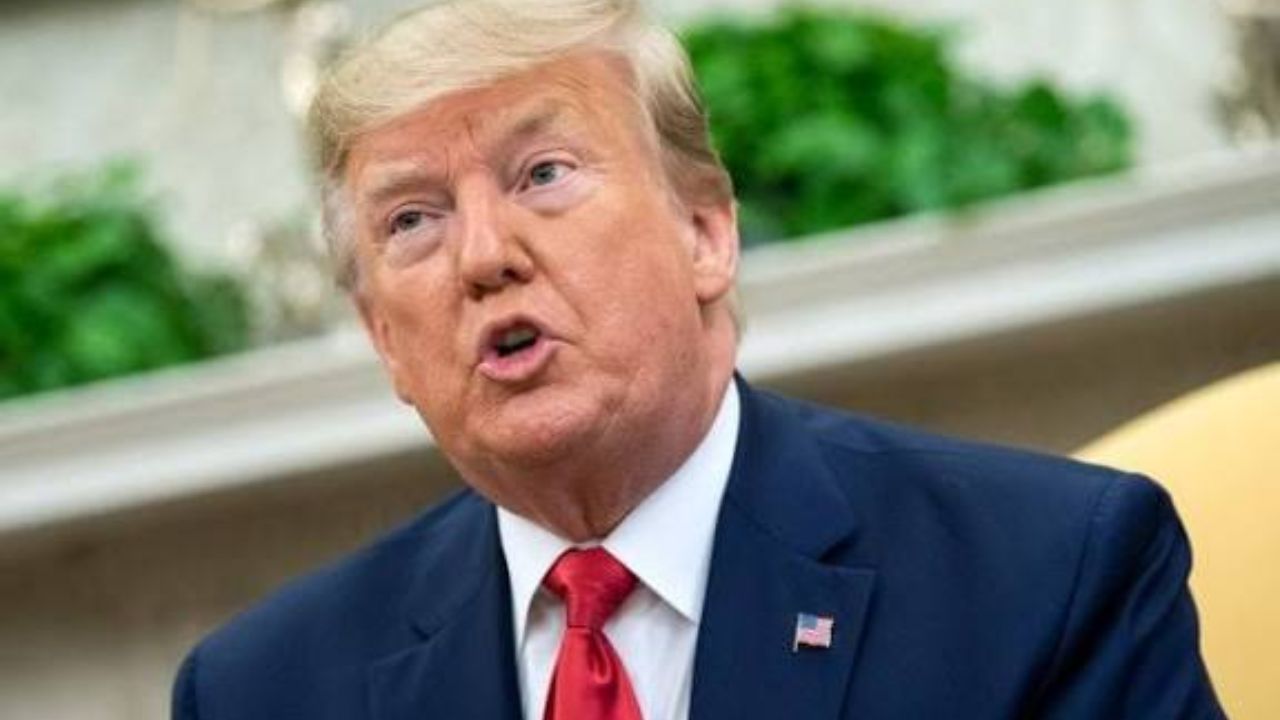
Trump Faces Rare GOP Revolt As Senate Moves To Limit Iran Powers. (Image Internet)
Washington: US President Donald Trump faced a fresh political setback on Tuesday after the US Senate approved a war powers resolution aimed at stopping his administration from continuing military action against Iran without congressional approval.
The resolution cleared the Republican-controlled Senate by a narrow 50-48 margin. Four Republican senators Susan Collins, Lisa Murkowski, Bill Cassidy and Rand Paul joined Democrats in backing the measure. Democratic senator John Fetterman, however, voted against it.
The outcome was also shaped by the absence of Republican senators Dave McCormick and Mitch McConnell. The same resolution had earlier passed the House of Representatives by 215-208, with four Republicans supporting it.
Despite the vote, the measure is unlikely to immediately change the course of the Iran issue. Administration officials have argued that concurrent resolutions do not require a president’s signature and do not carry the force of law. They also maintain that there are no active hostilities to end after the April 7 ceasefire.
Democrats, however, say the vote reflects Congress’s constitutional authority over war powers. They have indicated that legal options may be explored if the administration does not comply with what they describe as the clear will of Congress. The vote has become a political warning as much as a procedural step.
The resolution comes amid wider public unease over the Iran conflict and growing questions over whether the president can continue military operations without formal congressional approval. Critics argue that Congress never authorised an open-ended war and that any future escalation must be debated and approved by lawmakers.
The vote follows a US-Iran peace agreement signed last week by President Trump and Iranian President Masoud Pezeshkian. The deal is aimed at ending more than three months of conflict, but Iran’s nuclear programme remains the most sensitive issue.
Tehran insists its nuclear activities are peaceful. However, the International Atomic Energy Agency has raised concerns about highly enriched uranium, which can be used for weapons development. That dispute is expected to remain central to the next phase of US-Iran diplomacy.

