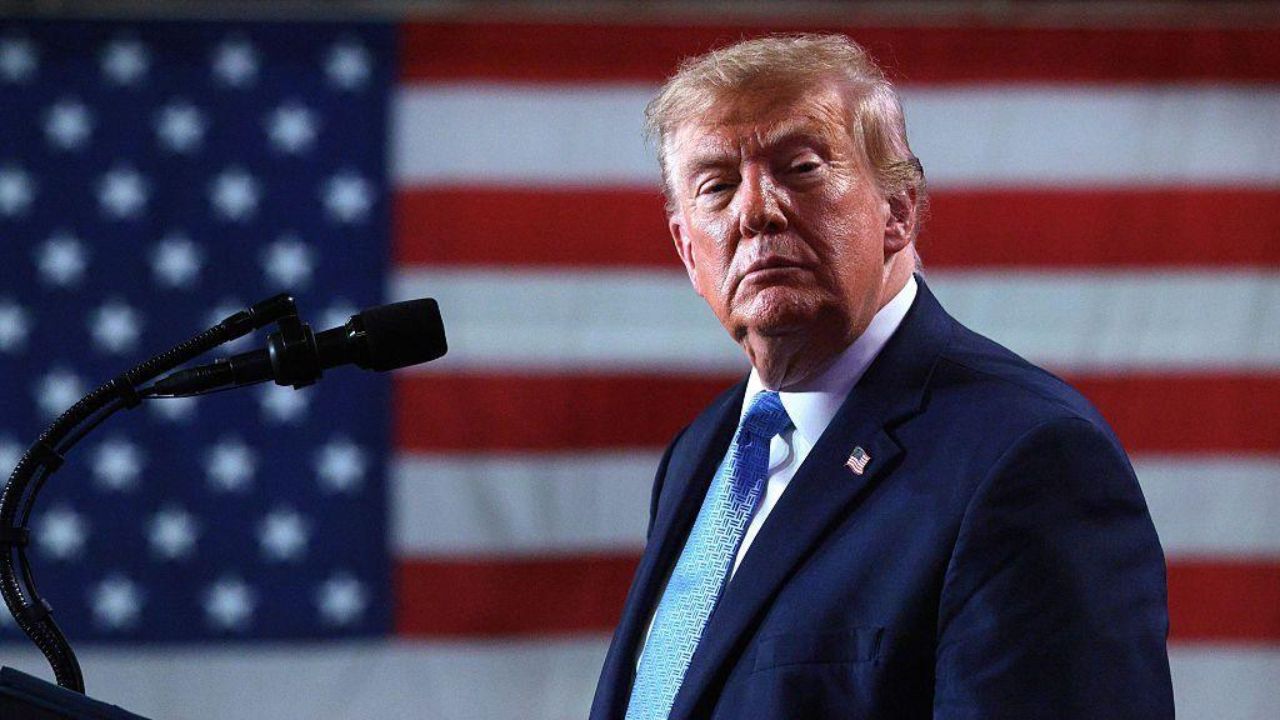
US President Donald Trump responds to the 2026 midterm election results as Democrats make significant gains across key races. (Img: X)
Washington: US President Donald Trump has indicated that he was willing to accept the outcome of the 2026 midterm elections and work with Democrats, as the opposition party made significant gains in key contests and moved closer to reshaping the balance of power in Washington. The Republican setbacks, particularly in the race for control of the House of Representatives, have emerged as a major political challenge for Trump during the first half of his presidential term.
The US President said he was prepared to accept the election results and engage with Democrats on legislative matters. His remarks came as election projections suggested that Democrats were on course to take control of the House, while also making advances in the Senate and several state-level contests.
Trump was following the election returns from the White House when he spoke to the newspaper. His comments signalled a willingness to work across party lines even as Republicans faced setbacks in closely watched races that could complicate the administration's legislative agenda over the next two years.
The midterm elections are widely regarded as a referendum on the performance of the incumbent administration. The results could influence the direction of federal policymaking, congressional oversight and the political calculations of both parties ahead of the next presidential election.
Despite indicating that he would accept the election outcome, Trump adopted a defiant tone while responding to Republican losses. In a post on his Truth Social platform, he argued that the party would have secured a landslide victory had he personally been on the ballot.
Trump also maintained that he had no regrets about endorsing candidates in key races, including South Carolina Republican Darline Graham and Texas Republican Ken Paxton. His endorsements had formed part of the broader Republican campaign strategy, with the president actively urging voters in several states to support candidates aligned with his political agenda.
During his interaction with The New York Times, Trump was monitoring the results as they came in and appeared surprised by Graham's defeat. Graham had temporarily occupied the Senate seat following the death of Senator Lindsey Graham in July, according to the reports. Trump suggested that the late senator would most likely have won the contest had he entered the race.
Meanwhile, Ken Paxton was trailing in his campaign for a Senate seat in Texas, adding to the challenges confronting Republicans in closely contested races. Democrats also secured important victories in states including Georgia, Texas, South Carolina and North Carolina, strengthening their position in the broader midterm contest.
Trump's response reflected his continued emphasis on his personal political influence within the Republican Party. During campaign rallies for Republican candidates, he had urged voters to treat the elections as a test of his presidency, even though his name was not on the ballot.
The mood inside the White House reportedly remained defiant as election results pointed towards significant Democratic advances. A White House official, speaking to Fox News correspondent Peter Doocy, argued that Trump himself had not been a candidate in the midterm elections, despite his efforts to encourage voters to view the contests as a referendum on his administration.
The official also suggested that Trump's supporters were more likely to turn out in larger numbers when the president was directly contesting an election. Defending the Republican performance, the official argued that Trump had done more to promote several party candidates than the candidates had managed through their own campaigns, while also pointing to candidate quality as a factor influencing the results.
The administration's response indicated that Trump remained determined to intensify his political confrontation with the Democratic opposition. The official suggested that the Republican president's resolve to challenge what he describes as the radical left would strengthen further irrespective of the final election outcome.
Earlier on Tuesday, Trump had also repeatedly criticised Fox News on social media, taking personal jabs at one of its hosts and accusing the network of giving excessive coverage to Democratic candidates ahead of the midterms. The criticism added another dimension to the president's reaction as the election projections increasingly favoured Democrats.
According to the White House schedule cited in reports, Trump had no public events planned for Wednesday, November 4.
Democrats appeared poised to take control of the US House of Representatives, with CNN's Decision Desk projecting a victory for the party. The shift would end the Republicans' majority in the lower chamber and give Democrats greater authority to determine the congressional agenda and scrutinise the Trump administration.
Democrats were also making gains in the Senate, moving closer to challenging Republican control of the upper chamber. However, the final balance of power in the Senate remained a key part of the election picture, with the outcome dependent on the remaining closely contested races.
A Democratic majority in the House would give the party control of congressional committees, allowing it to initiate investigations, hold hearings, demand official records and issue subpoenas as part of its oversight responsibilities. This could result in heightened scrutiny of the Trump administration's policies, executive decisions and conduct during the remainder of his term.
The potential shift in congressional leadership could also have implications for Democratic leader Hakeem Jeffries, who was positioned to become the first Black Speaker of the House if Democrats secured the majority and he won the required support in a floor vote. His elevation, however, would depend on the formal vote when the new Congress convenes.
The prospect of a Democratic-controlled House represents a significant political setback for Republicans, particularly because Trump had repeatedly encouraged voters to treat the midterm elections as an endorsement of his leadership.
A change in control of Congress would have direct consequences for the administration's ability to advance its policy priorities. If Democrats take control of both chambers, Republicans would lose their current advantage in setting the legislative agenda, making bipartisan negotiations increasingly important for the passage of major bills.
Even if Democrats secure a majority in the House and Senate, Trump would retain his constitutional veto power. This means that legislation opposed by the president could face another hurdle, requiring lawmakers to build sufficient cross-party support to overcome a presidential veto where necessary.
A Democratic majority in either chamber could also reshape the political relationship between the White House and Congress. Committee leadership, oversight proceedings, legislative negotiations and confirmation-related matters could become major areas of confrontation between the two parties.
The new Congress is scheduled to take office on January 3, 2027. Its composition will determine the legislative environment for the final two years of Trump's current term and could influence the administration's ability to implement its domestic policy agenda.
Trump's willingness to accept the midterm election results and his stated readiness to work with Democrats come amid a challenging electoral outcome for Republicans. While the president has attributed the party's setbacks partly to his absence from the ballot and defended his candidate endorsements, the Democratic gains could significantly alter Washington's political dynamics and intensify congressional scrutiny of his administration.

