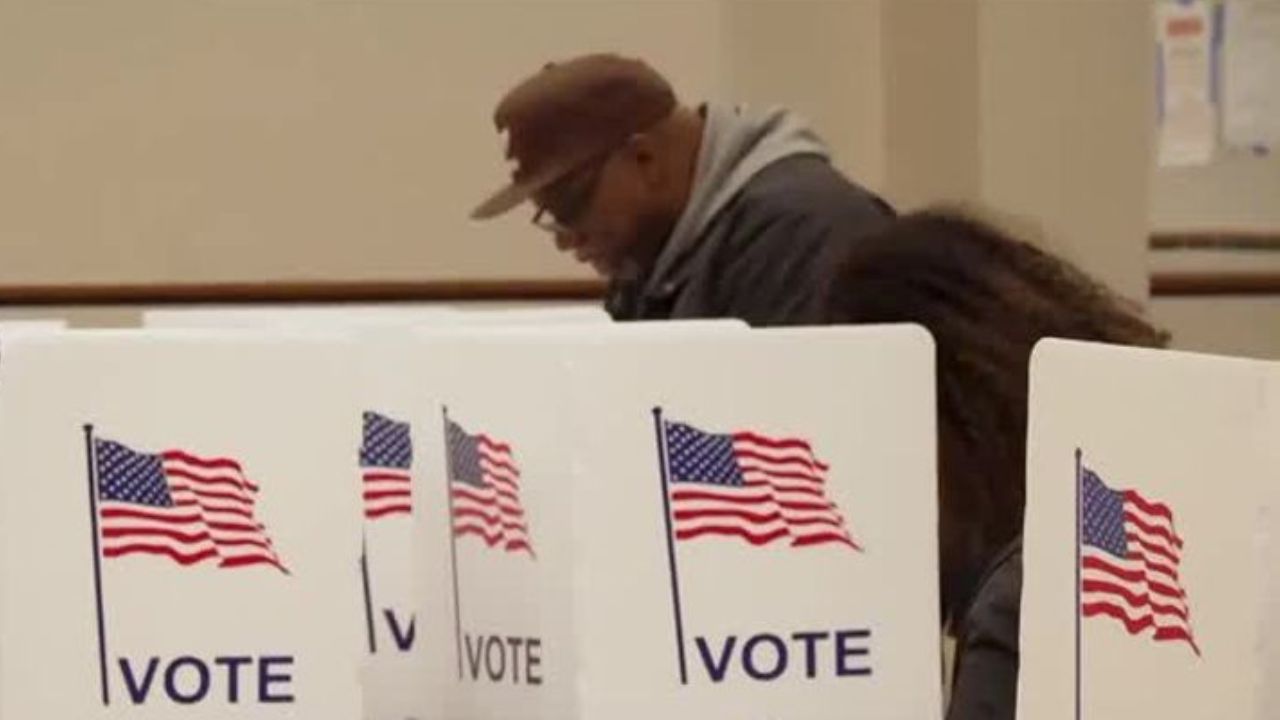
US midterms and Indian elections follow different democratic systems (Img: X)
New Delhi: As Americans vote in the 2026 midterm elections on November 3, a question often arises among Indian readers: why does an electoral defeat for the ruling party not mean that US President Donald Trump has to leave office?
The answer lies in the fundamental difference between the political and electoral systems of the two countries. In India, general elections determine which party or alliance forms the government. In the US, midterm elections decide which party controls Congress, while the president remains in office.
The differences go beyond the political consequences of an election. India and the US also have distinct arrangements for conducting polls, registering voters, casting ballots and counting votes.
India has a single constitutional authority, the Election Commission of India (ECI), which supervises the electoral process, from preparing voter lists to overseeing polling and counting. It conducts elections to the Lok Sabha and state legislative assemblies.
The US follows a decentralised system, with no single national authority responsible for conducting elections across all 50 states. Individual states administer their elections, while local officials manage polling stations and the counting process.
As a result, voting procedures can vary considerably. A voter in Texas may have to follow different rules from someone casting a ballot in California. Registration deadlines and rules governing postal ballots also differ from state to state.
In India, Lok Sabha elections determine which party or coalition will form the government at the Centre for the next five years. Voters elect Members of Parliament from their respective constituencies, and the final tally determines who has the numbers to govern.
Also Read: US Midterms: Can MAGA Republicans Block Democrats From Taking House Seats?
US midterm elections serve a different purpose. Americans are not choosing a new president but electing their representatives to Congress. This time, all 435 seats in the House of Representatives and 35 Senate seats are being contested.
The results will determine whether Trump's Republican Party retains control of Congress or the Democrats gain a majority in one or both chambers. However, even if Republicans suffer a setback, Trump's four-year presidential term will continue.
In India, Lok Sabha elections are normally held every five years, although the House can be dissolved earlier if circumstances require it. The Rajya Sabha follows a staggered election schedule, with one-third of its members retiring every two years.
The US has a more frequent election cycle for its national legislature. Members of the House of Representatives serve two-year terms, meaning all 435 seats are contested every two years.
Senators, on the other hand, serve six-year terms. Roughly one-third of the 100 Senate seats are up for election every two years. Midterm elections are held halfway through the president's four-year term, giving voters an opportunity to reshape the balance of power in Congress.
India primarily uses Electronic Voting Machines (EVMs) for its parliamentary and assembly elections. The voting process is conducted under a common framework overseen by the Election Commission of India.
Also Read: US Midterm Elections 2026: Trump’s credibility at stake, can Democrats turn the tables?
The US has no uniform voting method across the country. Depending on the state, voters can cast their ballots using voting machines, paper ballots, early voting facilities or postal ballots.
Mail-in voting is widely used in several states, although the rules governing its availability, verification and counting vary across jurisdictions.
Unlike India, where votes are generally counted on a designated day after polling concludes, the US does not always complete its counting process on Election Day.
A significant number of Americans vote by mail, and election officials must verify these ballots before including them in the final tally. However, states have different rules governing when the verification and counting process can begin.
In some states, officials are allowed to process mail-in ballots before Election Day, while others require them to wait until polling concludes. This can delay the announcement of final results, particularly in closely contested races where recounts may also be necessary.
In India, a government that loses its majority in the Lok Sabha cannot continue in office unless it secures the support of other parties and demonstrates that it commands the confidence of the House.
Also Read: US Strikes Iranian Targets Near Strait of Hormuz as Trump Faces Crucial Midterm Test
The situation is different in the US. Even if Republicans lose control of Congress in the midterm elections, Trump does not have to resign or step down. His presidential term continues independently of the election results.
However, losing control of the House or Senate could make governing considerably more difficult for his administration. Democrats, if they gain control of either chamber, would have greater influence over legislative debates, voting, and congressional investigations.
This is the central difference between the two systems: India's general elections determine who forms the government, while US midterms can change the balance of power in Congress without changing who occupies the White House.

