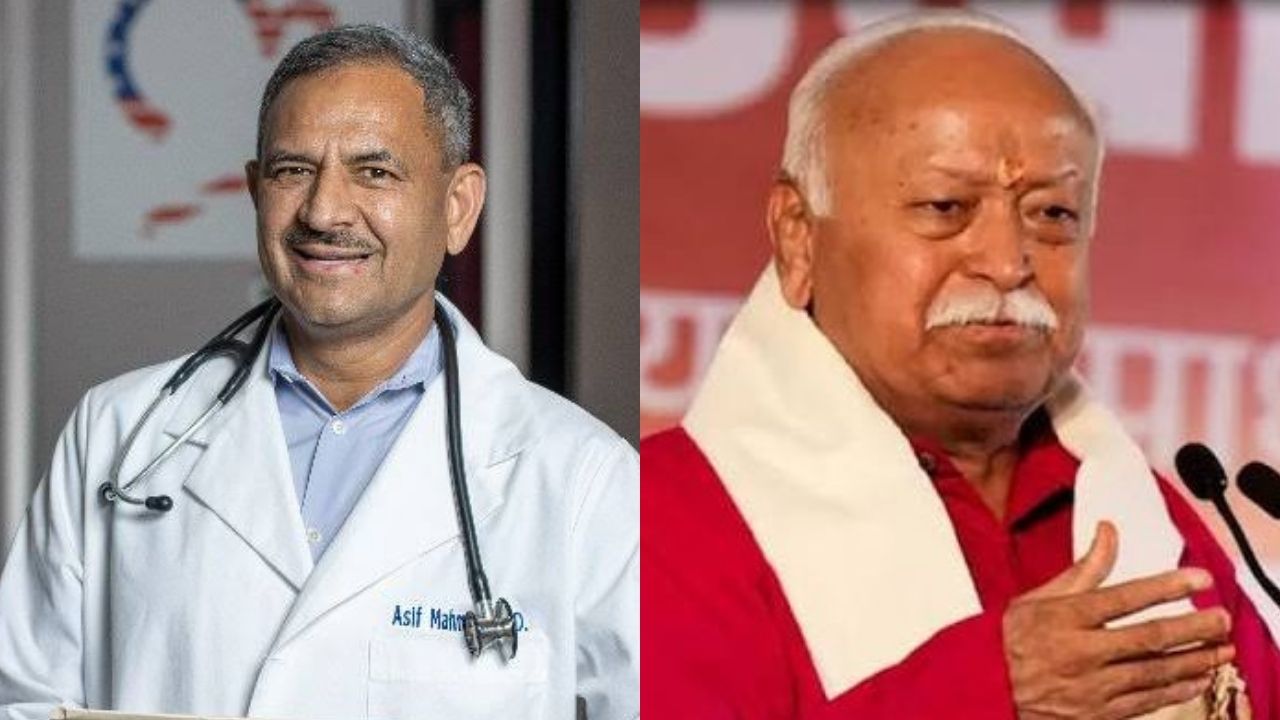
USCIRF Chair Opens Communication Channel After RSS Criticism
Washington: A major shift has emerged in the ongoing USCIRF-RSS controversy as the US Commission on International Religious Freedom (USCIRF) has expressed willingness to engage in dialogue with Rashtriya Swayamsevak Sangh (RSS) chief Mohan Bhagwat, days after calling for possible sanctions against RSS members.
USCIRF chair Dr Asif Mahmood said the organisation remains open to a direct conversation with Bhagwat if an opportunity arises. The statement comes amid a heated debate over religious freedom concerns, India’s response and Bhagwat’s ongoing US visit.
The latest development has added a new dimension to the controversy, with questions being raised over whether dialogue could change the panel’s position and reduce tensions between the two sides.
The controversy started after USCIRF, an independent bipartisan US federal advisory body, expressed concern over RSS chief Mohan Bhagwat’s visit to America and urged the US government to consider targeted sanctions against RSS members and Indian officials it linked with alleged religious freedom violations.
The commission had also suggested reviewing Bhagwat’s visa status, triggering strong reactions from Indian authorities and political circles. However, within days, USCIRF chair Asif Mahmood indicated that direct discussions could be possible and that conversations may help both sides understand each other’s positions.
The change in tone has attracted attention because the panel had earlier adopted a strong critical position against the RSS and India’s handling of religious freedom issues.
Mahmood said the purpose of USCIRF was not to create conflict but to highlight concerns related to religious freedom and human rights. He indicated that if discussions take place and concerns are addressed, the organisation could reconsider its approach.
The statement came before Mohan Bhagwat’s scheduled appearance at a New York event during his international outreach programme marking the 100th anniversary year of the RSS.
USCIRF had earlier alleged that religious freedom conditions in India were deteriorating and raised concerns about incidents involving minority communities.
The panel highlighted issues related to alleged violence, religious conversion laws, citizenship-related policies and restrictions on civil society organisations. USCIRF claimed that stronger action was needed to protect vulnerable communities.
However, the Indian government has repeatedly rejected these allegations, maintaining that India’s democratic institutions and constitutional framework provide protection to all citizens.
The Ministry of External Affairs strongly criticised USCIRF’s remarks and questioned the credibility of the organisation. MEA spokesperson Randhir Jaiswal described USCIRF as biased and alleged that the panel had repeatedly made inaccurate and provocative statements about India.
The government maintained that foreign organisations should not interfere in India’s internal matters and that legal institutions in the country are capable of addressing domestic issues.
The controversy comes during Mohan Bhagwat’s multi-country visit covering the United States, Canada and the United Kingdom. During his US visit, the RSS chief is scheduled to address the Universal Oneness Celebrations event in New York.
Organisers have described the programme as an interfaith and multicultural gathering focused on unity, dialogue and Indian cultural traditions. RSS representatives have said the event aims to bring together people from different communities and encourage conversations on social harmony.
The USCIRF controversy has triggered a wider discussion on religious freedom monitoring, international organisations and India’s image abroad. Supporters of international scrutiny argue that global bodies play an important role in highlighting human rights concerns.
Critics, however, accuse such organisations of selective criticism and interference in domestic affairs. The debate has also gained attention among the Indian diaspora in the United States as Bhagwat’s event approaches.
During his interaction, Mahmood also highlighted USCIRF’s previous criticism of religious freedom conditions in countries including Pakistan and China.
He said the organisation had repeatedly raised concerns about alleged persecution of minority communities, including Hindus, Christians, Sikhs and Ahmadiyya Muslims.
Mahmood claimed that USCIRF has consistently recommended stronger international action against countries where it believes religious freedom violations are widespread.
Bhagwat’s scheduled New York appearance has received mixed reactions. While critics have opposed the event over ideological differences, supporters have defended it as a lawful gathering protected under freedom of expression and assembly.
Community groups have advised participants to remain peaceful and avoid confrontation during the programme. The controversy increased public interest in the event and highlighted the role of diaspora communities in global political conversations. The outcome could influence future discussions between Indian organisations, international rights bodies and policymakers on religious freedom and human rights issues.

