PM Modi’s first call with Venezuela’s Acting President Delcy Rodríguez signals a push to reset and expand bilateral ties amid global energy shifts and political churn in Caracas. What does this mean for India’s strategic and oil interests?
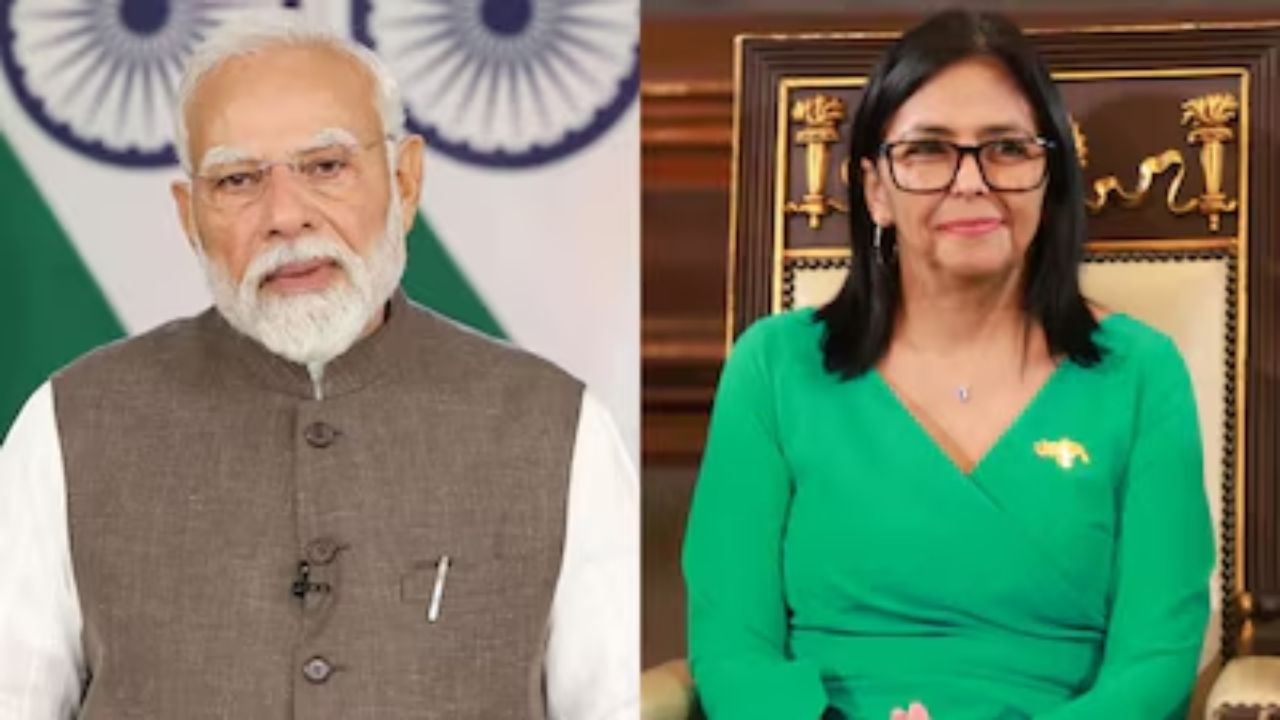
Modi on Friday spoke by phone with Venezuela’s Acting President Delcy Rodríguez
New Delhi: Prime Minister Narendra Modi on Friday spoke by phone with Venezuela’s Acting President Delcy Rodríguez, with both leaders agreeing to strengthen and expand the bilateral relationship between India and Venezuela, sources said. The conversation comes amid shifting political dynamics in Venezuela following recent developments in the South American nation.
The phone call represents the first known engagement between the Indian prime minister and Rodríguez since she assumed the role of acting president earlier this month. Rodríguez took over the leadership of Venezuela on January 5, shortly after the capture of her predecessor, Nicolás Maduro, in a U.S. military operation.
In a post on social media platform X, Modi said he had discussed ways to deepen cooperation “in all areas” and that both sides shared a vision of taking India-Venezuela relations “to new heights” going forward.
Spoke with Acting President of Venezuela, Ms. Delcy Rodríguez. We agreed to further deepen and expand our bilateral partnership in all areas, with a shared vision of taking India-Venezuela relations to new heights in the years ahead. @delcyrodriguezv
— Narendra Modi (@narendramodi) January 30, 2026
Venezuela and India have maintained diplomatic relations for decades, with India’s embassy in Caracas and Venezuela’s mission in New Delhi facilitating engagement on political and economic issues including energy cooperation. Bilateral ties have historically included collaboration in crude oil imports and hydrocarbon sector projects, which form a significant part of the relationship.
Rodríguez’s rise to acting president follows an extraordinary period in Venezuela’s political landscape, including the U.S. capture of Maduro and ongoing debates over governance and international recognition. Her assumption of the interim presidency was ordered by Venezuela’s Supreme Tribunal of Justice after Maduro’s detention abroad.
Although details of the conversation were limited to statements on deepening ties, the leaders’ engagement signals India’s intent to continue dialogue and explore opportunities across sectors such as trade, energy, and diplomatic collaboration. Observers note that such contacts may also reflect India’s broader interest in Latin America and its energy resources.
The call takes place against a backdrop of intense geopolitical developments. Following Maduro’s capture, international reactions and internal changes in Venezuela have drawn global attention, with Rodríguez steering the country through a transitional phase. How India and Venezuela navigate this evolving environment will be watched by diplomatic and economic stakeholders in both countries.

