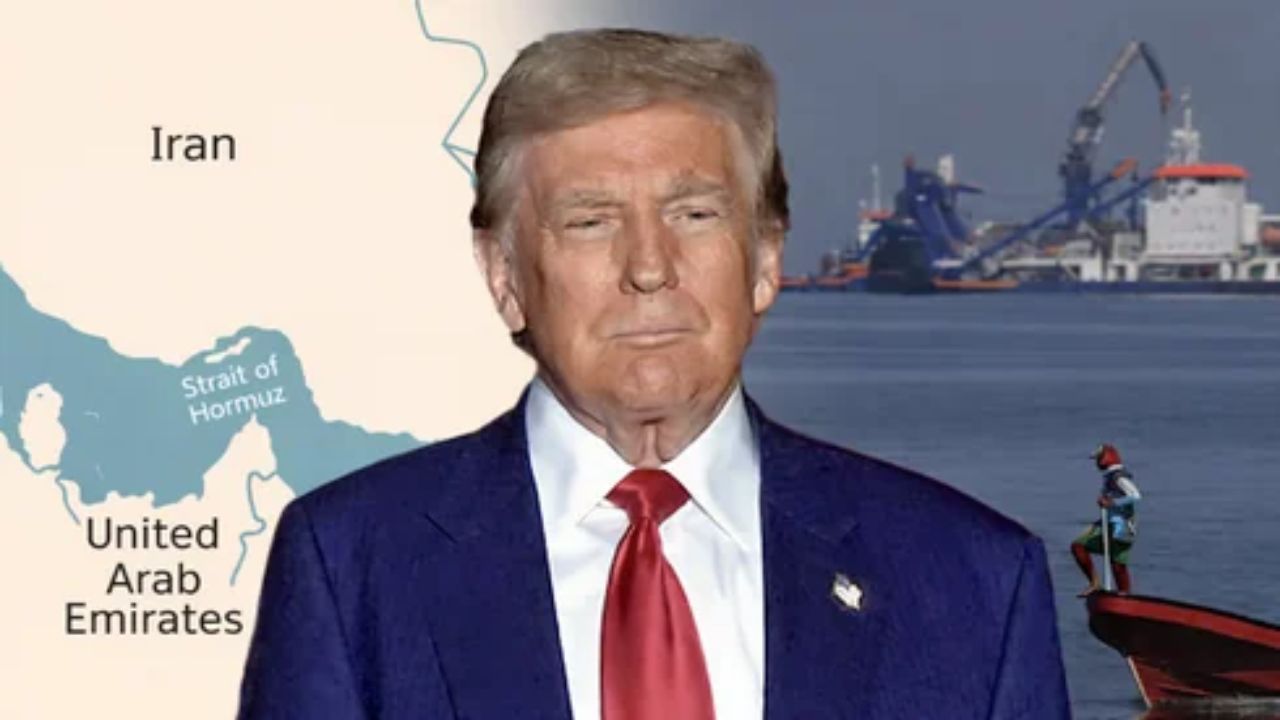
US military begins its blockade of Iranian ports (Img: Internet)
Washington: The United States military on Monday began enforcing a blockade on all Iranian ports and coastal areas, marking a sharp escalation in tensions across the Gulf region. The move follows an order by US President Donald Trump aimed at pressuring Tehran to agree to Washington’s terms after recent talks failed.
The blockade, implemented by US Central Command, targets vessels entering or leaving Iranian ports along the Persian Gulf and the Gulf of Oman. Officials said the restrictions would be applied across the board, regardless of a ship’s nationality.
LPG Crisis: 15 Indian vessels stranded in Strait of Hormuz after US naval blockade move
The development comes just days after ceasefire negotiations between the US and Iran in Pakistan broke down without an agreement. The two sides had earlier announced a temporary truce to ease hostilities in the region.
However, tensions quickly resurfaced after Washington moved forward with the blockade plan. Analysts warn that the action could undermine the already fragile ceasefire and push the region closer to renewed confrontation.
Iran has responded with strong warnings, signalling that it may retaliate if its maritime access continues to be restricted. Officials in Tehran stated that security in the Persian Gulf and the Gulf of Oman must be shared, adding that no port in the region would remain safe if tensions escalate further.
The situation has already begun affecting global shipping patterns. Maritime data indicates a sharp decline in vessel movement through the Strait of Hormuz, one of the world’s most critical oil transit routes.
Since the ceasefire announcement earlier this month, only about 40 commercial ships have crossed the strait, compared to the usual daily average of 100 to 135 vessels before the conflict intensified. Shipping companies are increasingly cautious, with many reassessing routes amid rising risks.
Hormuz Tensions Peak: Trump Announces Blockade, Iran Hits Back, China Steps In
Despite the blockade, US Central Command clarified that ships travelling between non-Iranian ports would still be allowed to pass through the strait, stopping short of a complete shutdown of the vital corridor.
The blockade has raised concerns about a potential spike in global oil prices, given the strategic importance of the region in energy supply chains. Any prolonged disruption could have far-reaching consequences for international trade and energy markets.
With both sides hardening their positions, the coming days are expected to be crucial in determining whether diplomatic efforts can resume or if tensions will spiral further.

