WORLD AT A GLANCE 2025
New Delhi: In the alley of time there are unending mysteries complicated by power struggles, catastrophic conflicts, polarising politics, staggering human rights losses which pushes peace in the backdrop.
In the turbulent dance of events in 2025, power became the primary weapon to show dominance at the world stage. Geo-politics over the years turned from unipolar to bipolar, and bipolar to multipolar world.
Before peeping into world affairs, let us take a look at the power centres of the world - The United States, Russia, Europe and China around which the entire geopolitics revolves.
Donald Trump's second term on January 20, 2025 changed geopolitics. Political shifts like "America First" focusing on economic nationalism, potential trade wars, and strained global alliances set the tone of global politics.
India and New Zealand announce historic Free Trade Agreement; Details here
After the end of the cold war, the world became unipolar. The United states became the undisputed king of the world. But everything changed with the Ukraine war as Russia refused to toe the line of the US president Donald Trump. The world became bipolar. Rising Chinese economy and technology has made the world multipolar.
The United States power to charm, manipulate, and control geo politics has lost its sheen. The U.S. faced a complex security landscape in Ukraine, Gaza, Iran and Sudan. Russia and China joined hands to oppose US hegemony. Humanitarian crises, global instability, paralysis of multilateral forums like the UN Security Council due to veto power used by member states weakened the authority of the US.
Even on the economic front the US is unable to fathom the shifting landscape. The U.S. faces challenges related to trade protectionism, economic growth, inflation and high national debt. Its economy has also been influenced by tariffs and sanctions against China, Russia and India. Issues like supply chain resilience and disparity in trade are ruining the US economy.
America first, Isolationist policies of the US and declining global cooperation is making it hard for the administration to address transnational problems. The U.S. influence on reforming international institutions like the UN is becoming less effective and its credibility is declining at the world stage.
The Russian president Vladimir Putin meticulously designed to take over Ukraine in spite of sanctions and resistance to showcase his power. Economic vulnerability due to sanctions, resource dependence, social and political isolation from Western countries is hurting Russia. Labour shortages due to emigration and casualties in the Ukraine war are impacting productivity and economic growth.
Budget restraints are hindering long-term growth. Russia is working on new alliances in a shifting world order but sanctions on oil and gas makes the economy vulnerable. Efforts to diversify from Western markets have limited success in power and technology sectors. State control over civil society is straining social welfare systems.
High mortality, low birth rates and a shrinking working-age population is gradually reflecting on instability and inefficiency of institutions putting more pressure on governance.
According to the Bank of Finland report Russia has shown short-term resilience through fiscal stimulus but the Ukraine war has degraded its long-term economic potential, exposing structural weaknesses. In 2026, Russia will have to address its economic, social and geopolitical powers to stay relevant in World order.
Europe which ruled the world for almost 200 years was decimated by World War II. Today it is trying to revive its power by riding on the NATO and European Union bandwagon. Geopolitical shifts due to isolationist policies of the US, hawkish Russia policies and rising China’s economic and technological power are posing major challenges to the European Union.
Russia- Ukraine War has brought security risk at the European Union doorstep. It will test the EU's unity and future stability and prosperity. The EU has to bolster energy, economy, productivity and develop coherent, rapid defence policies to remain relevant in the new world order in 2026.
Chinese president Xi Jinping dismantled the bipolar world with his economic, scientific and technological might. He turned the bipolar world into a multipolar world. Global security is expected to experience alarming changes with the rise of Asian dragon in the new world order.
While the US and Russia were busy in the theatre of war to prove their might to the world. China preferred to stay away from arms conflict and concentrated on building economic and technology. China did not test its might in the theatre of war but chose to compete in trade, technology and military modernization. Its assertiveness and influence in the Western Pacific region creates tensions about regional stability.
China’s shift from conventional market driven economy to a consumption-led, high-tech economy and supply chain realignment creates a complex dilemma for the US and Western economy. China has managed structural problems and external pressures to become a global economic force.
International security order deteriorated in 2025 due to ongoing conflicts and wars across the world. Some of the wars had the potential of pushing the world towards World War-III but better sense prevailed.
From a destructive and chaotic battlefield world leaders gave peace a chance in the verbal battlefield to avoid the Catastrophe. Nuclear proliferation, space security, hybrid and economic warfare will influence geo-politics in 2026.
Afghanistan has slipped from one crisis to another, The Russians, the Americans and now the Taliban are trying to restore peace in the war torn nation. According to the Council on Foreign Relations there were estimated 111,000 civilian casualties in Afghanistan between 2009 and 2022.
After four decades of war and terrorism, the present government is trying to restore peace and development despite fragile harmony. Sporadic violence often undermines the government’s development agenda. Almost two-thirds of the Afghan population is directly affected by conflict.
According to the United Nations almost 22.9 million people require humanitarian assistance to lead a dignified life. Poverty and radical elements have a potential to convert innocent civilians into mercenaries.
Two nuclear powers, India and Pakistan faced each other on the battle front after Pakistan-backed terrorists stormed Jammu and Kashmir’s scenic town of Pahalgam and killed 26 innocent tourists. India launched ‘Operation SINDOOR’ to punish perpetrators and planners of terror and destroy their bases.
This operation was called off after four days of conflict on May 10. The leaders of both the countries implied self-imposed restraint and used drones and shelling to avoid full-fledged war, which had potential of escalating into a nuclear war.
“When sorrows come, they come not single spies, but in battalions.” A quote from Shakespeare's play Hamlet states the condition of modern day Palestine. The ongoing military and political conflict between Israel and Palestine about self-determination within the territory of the former Mandatory Palestine has displaced close to 2 million people according to the current Palestinian Ambassador to India Abdullah Abu Shawesh.
Since 2006, Islamic Resistance Movement of Palestine, abbreviated Hamas, has fought several wars with Israel. The present escalation started when Hamas led armed groups killed nearly 1,200 Israelis on 7 October 2023 and took 251 people as hostages. Israel responded by declaring war on Hamas and conducting an extensive bombing on Gaza.
International Court of Justice called for immediate ceasefire as South Africa, international law experts, scholars and human rights organizations accused Israel of genocide. According to the Gaza Health Ministry (GHM) and Israeli Ministry of Foreign Affairs, 70,525 Palestinians and 2,109 Israelis have lost their lives in the Conflict till 19 November 2025.
Scholars have estimated 80% of Palestinians killed are civilians. According to the United Nations reports roughly 90% of Gaza’s population (close to 2 million people) have been forced to flee their homes since October 2023. These people have no livelihoods, food or social support system. Local governance has been decimated, health care and basic civil amenities are on the brink of collapse.
Civil conflict in Syria has been brewing since 2011. It culminated in the fall of President Bashar al-Assad regime in 2024. The fall of Bashar’s government resulted in enormous suffering for millions of people. Political conflict involving Russia, America, Turkey and Israel has complicated the situation in Syria.
Once a thriving economy in West Asia is today facing a humanitarian crisis. More than 90% of Syrians now live below the poverty line. According to UN estimates 16.5 million people in Syria require humanitarian assistance in 2025 which will spill over to 2026.
Since early 2011, a civil conflict in Syria has resulted in enormous suffering for millions of people.
Once a country with a thriving middle class, 90% of Syrians now live below the poverty line. Despite some major political shifts at the end of 2024 that have enabled many displaced Syrians to return home, internal and regional violence still persists and the UN estimates that 16.5 million people will require humanitarian assistance in 2025. America, Russia, Turkey and Israel interests and presence of militant outfits will keep the region on the boil in 2026.
Yemen is one of the poorest or lowest-income group countries in the Middle East. The civil war since 2014 in Yemen and proxy interventions has made several firsts in the worst list of the world. It is facing the world's largest displacement crises, worst humanitarian crises and the worst hunger crises. More than 19.5 million people require humanitarian assistance.
People are surviving with great difficulty in the war torn country, with minimal human aid. Highlighting resilience and effective coping mechanisms of the people. The world has turned a blind eye to the poorest and hardest-to-reach communities of Yemen which has made it difficult for the people to cope with future crises.
The peaceful travel destination of the world Thailand and Cambodia found the territorial dispute to go to war on 24 July 2025. Unconditional ceasefire was agreed to on 28 July 2025. But the grievances weighed heavily and fighting broke out again in December. Thailand has seized several towns and hills on the Cambodian border.
In essence, the conflict acts as a focal point for broader regional governance failures and geopolitical rivalries, posing a significant threat to Southeast Asia's long-term stability.
The Russia-Ukrainian war started in February 2014 and is still continuing. Russia annexed Crimea from Ukraine. Its paramilitary forces started a war in the eastern Donbas region in 2018. The first phase of war was limited to cyber-attacks, military and naval skirmishes. The second phase of war started in February 2022 when Russia launched a full-fledged war on Ukraine when it decided to become a member of North Atlantic Treaty Organization (NATO), in spite of Russia’s warning.
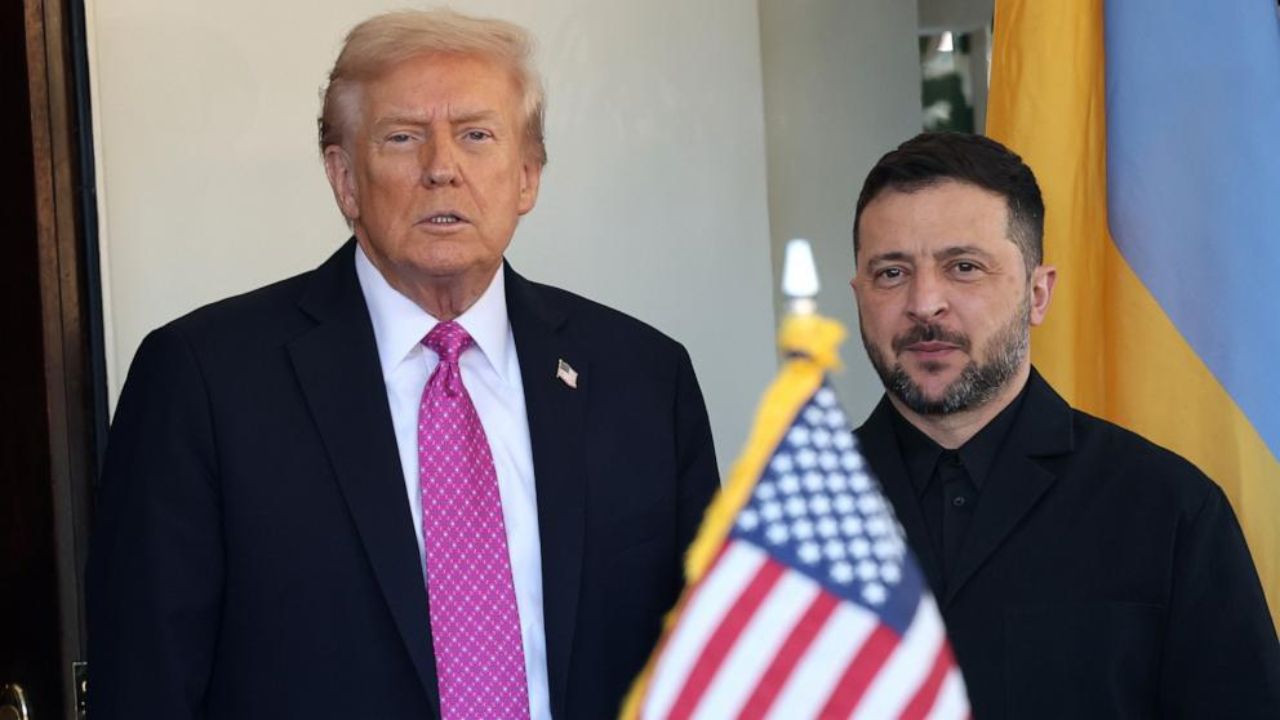
Trump warns delays could affect Ukraine-Russia peace negotiations
It turned out to be the biggest conflict in Europe after World War II. The war has resulted in a refugee crisis, human sufferings and estimated 1.5 million casualties. Several peace proposals have been tabled but unrealistic demands and trust deficit between the two sides have failed to deliver any result. If a peace agreement is reached by the end of this year. This war has full potential of spilling into next year and igniting World War III.
Call it civil war, intercommunal conflict or battle of the war lords to control Chad in Africa. For almost 15 years civilian have suffered atrocities, killings, rape and violence.
Almost 10.2 million people require humanitarian assistance in the Lake Chad Basin, parts of Cameroon, Nigeria, and Niger. According to UN Aid in the year 2024-2025 Chad’s humanitarian needs increased by one million people. Lack of governance and violence leads people to defend their families and plead for understanding and cooperation for basic civil amenities.
The Democratic Republic of the Congo in Africa is in the midst of the worst civil war. The nation has moved from civil war in the late 1990s, to a series of localised conflicts, atrocities by war lords and power conflicts for control of land, power and resources.
Sporadic waves of violence in the eastern provinces of North and South Kivu displaced more than 7 million people in 2025. Throughout the country more than 21.2 million people require humanitarian assistance. The health care system and education sector has collapsed.
Ethiopian civil war is also considered as the deadliest War of the 21st Century. More than 600,000 to 800,000 civilians lost their lives according to High Representative of the European Union for Foreign Affairs Josep Borrell in Ethiopia’s civil war between November 2020 and August 2022.
Tigray People’s Liberation Front challenged Ethiopian Prime Minister Abiy Ahmed Ali’s government in November 2020 leading to civil war.
According to a United Nations report 10 percent of the deaths have were caused by bombings and massacres. Almost 30 percent have died due to lack of medical attention and collapse of the health care system.
What is most tragic is that 60 percent around 360,000 or 469,000 people died of starvation due to humanitarian negligence.
Misfortunes never come alone. In October 2025 church scaffolding collapsed in Amhara, killing dozens during a festival. Landslides in Gofa in July 2024 that buried many families.
The country still faces ongoing humanitarian crises, leading to widespread famine due blocked aid. All these events highlight recurring tragedies induced suffering in Ethiopia due to lack of safety, conflicts and natural disasters.
Islamist insurgencies have led to Burkina Faso's crisis in 2025 leading to displacement of over 2 million people. Government crackdowns, ongoing violence, disrupting essential services is impacting civilians and they suffer from protection risks.
Each day is a survival struggle for the people as the military junta solidifies and fosters regional alliances like the Sahel Confederation continue deadly attacks on civilians and military, causing mass casualties, while the army also commits abuses, leading to a cycle of violence.
New waves of violence in the East and Centre-East regions are straining resources of 2 million local communities. Nearly 5.9 million people, almost a quarter of the population, need assistance to survive, They face acute food insecurity, lack of access to health, water, and shelter.
The military junta is creating new regional dynamics and challenges for justice. Lack of international support is jeopardizing funding and assistance efforts. Insecurity disrupts the economy and working environment.
Some wars start and there is no end of crisis in sight. Violent clashes between the Sudanese Armed Forces (SAF) and the paramilitary Rapid Support Forces (RSF) started on April 15, 2023. The conflict which started in Sudan’s capital of Khartoum spread like wildfire throughout Sudan and became the world’s largest humanitarian crisis.
In the conflict across the country more than 150,000 people lost their lives and 12 million were rendered homeless in what the United Nations called the world's largest humanitarian crisis. Western Darfur region was recently captured by the RSF suffers from famine and claims of a genocide. People unable to work and have no access to food. Healthcare system has collapsed and millions of children are out of school. Violence is leaving a lifetime psychological impact on potential generations. Political and social vacuum make women most vulnerable to violence and exploitation.
South America has very little say in international diplomacy due to persistent poverty, inequality and political instability. Drug trafficking, environmental crisis, social unrest, informal economies, social unrest complicates volatile politics leading to powerful criminal organizations taking control of certain areas.
President Nicolas Maduro, government mismanagement, and political repression forced nearly 8 million people to flee to Latin America and the Caribbean, making it the world's largest displacement crisis. The US sanctions, prolonged recession, fuelled by oil dependence, mismanagement, corruption and ongoing socio-economic and political meltdown has created one of the world's largest humanitarian crises.
Crippling essential services, poverty, lack of food, high mortality rates due to collapse of medical services, and deteriorating infrastructure have created immense suffering in the country.
Allegations of election fraud led to standoff between the government and opposition. Human rights violations have deepened the crisis with continued high levels of poverty, emigration, and humanitarian sufferings. Can Maduro stay in power despite international pressure in 2026?
Asia-Pacific faces intertwined challenges from US-China rivalry. Ongoing territorial conflicts remain a major flashpoint for ASEAN nations. Instability in the region due to conflict of interests in South China Sea, India-China rivalry, Myanmar internal crisis,
China claims Taiwan as an inalienable part of China's territory, which is disputed by the international community. The United States and China’s war or words upped the ante in terms of security, and military issues.
A 29-page document, ‘National Security Strategy of the United States of America maintained to safeguard American economic and technological development in Taiwan, and South China Sea. Washington later approved a $11 billion record-breaking arms sale to Taiwan. Both the moves angered Beijing.
China said that resolving the Taiwan question is solely a matter of the Chinese people. Beijing called it a provocation and serious threat to regional peace and stability. China imposed sanctions on US companies involved in the deal.
The China Taiwan crisis blows hot and cold but it is a major threat to the peace of the region. If not handled with care it can lead to international conflict.
The China-Philippines confrontation in the South China Sea centres on competing sovereignty claims over strategic maritime features, and has significant implications for regional security and international law.
China, Vietnam, Philippines, Malaysia, Brunei and Taiwan have conflicting claims on the South China Sea (SCS). China claims SCS as its "nine-dash line," passes through it.
Bangladesh: Another student leader Motaleb Shikder shot days after Osman Hadi death
Frequent standoffs lead to frequent maritime confrontations. US, China, regional countries Vietnam, Philippines, Malaysia, Brunei and Taiwan risk escalation and maintain readiness on all sides. This is a major flashpoint that may erupt in 2026.
Donald Trump's second term on January 20, 2025 changed geopolitics. Political shifts like "America First" focusing on economic nationalism, potential trade wars, and strained global alliances set the tone of global politics. Escalating friction between the U.S., Canada and Mexico over sovereignty, immigration and trade created regional tension. Deportation, sanctions and tariffs escalated friction between the U.S., Canada, and Mexico. Strict US immigration laws led to talent shortages, rising labour costs, and demand for upskilling.


