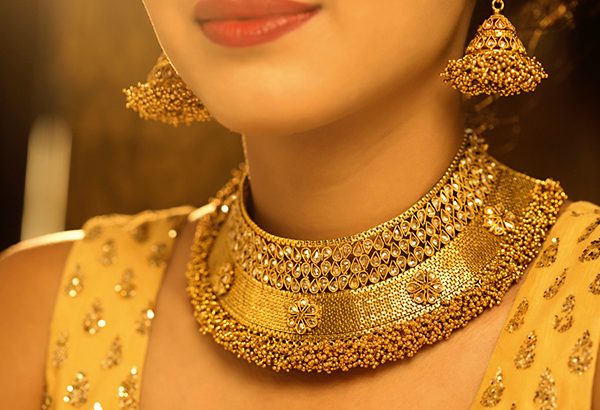
Representational Image
Thiruvananthapuram: The Kerala High Court said that the jewellery and cash gifted to a woman at the time of marriage will be considered her personal property that is 'streedhan' and it will be mandatory to return them after divorce.
The division bench of Justice Devan Ramachandran and Justice MB Snehalatha gave this decision on the petition of a woman, who is a resident of Kalamassery in Ernakulam district.
The woman had challenged the decision of the Family Court, in which her demand for return of jewelry and gifts after divorce was rejected. The court said in its decision that unfortunately in many cases the jewelry and gifts received in marriage are misused by the husband or in-laws.
In such cases, most of the transactions are private and undocumented, which makes it difficult for the woman to prove her rights.
The court also said that to deliver justice in such cases, it becomes necessary to make a decision based on the principle of 'preponderance of probabilities'.
The victim said that she was married in 2010, in which the family gave her 63 gold coins and a chain of two gold coins, while relatives gifted 6 more gold coins. The woman alleges that except for the mangalsutra, a bracelet and two rings, all the jewelry was kept by her in-laws in the name of 'security'.
Later, the relationship soured due to the husband's demand of an additional ₹5 lakh.
The court said that the Streedhan received in marriage is a legitimate right of the woman and it has to be returned, even if there is no legal document for it. This decision confirms the property rights of women and will set an example in such cases in future.
Highlighting the broader implications of such cases, the court observed that gold given to a bride at the time of marriage is often retained by the husband or his family under the guise of safekeeping or as part of family customs.
In most cases, the woman does not receive a written record or receipt for these transfers, and her access to the ornaments can be restricted.
This becomes especially problematic when disputes arise; such as in cases of domestic violence, dowry harassment, or divorce, where the woman may claim that her jewellery was misused or never returned.

