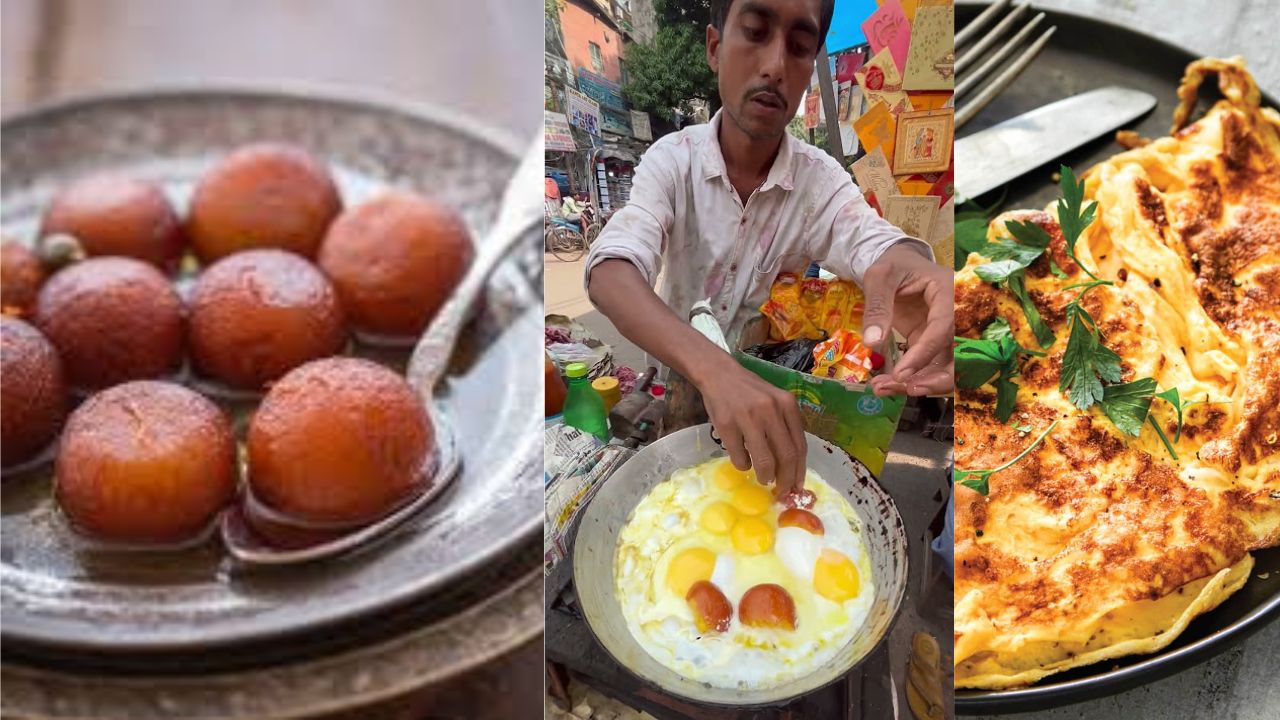
A Kolkata street vendor’s gulab jamun omelette video has gone viral.
Kolkata: The internet has seen its share of strange food experiments, but Kolkata’s newly viral creation has stunned even those used to extreme fusion. A gulab jamun omelette, showcased in a resurfaced Instagram clip, has triggered widespread disbelief and outrage online. The dish combines one of India’s most beloved sweets with a breakfast staple, creating what many have called a “culinary disaster” and “fusion gone wrong.”
The video originally shared earlier this year started gaining fresh traction this week as users across social platforms reacted with shock and humour. In an age where food experimentation often aims to attract views, this dish appears to have crossed a line for many.
The video captured a street vendor preparing the controversial omelette. He begins by cracking six eggs into a steel pan, followed by generous chunks of chopped gulab jamun. He then mixes in onions, green chillies, coriander and salt before cooking the mixture until set. The final touch comes as he plates the omelette and drizzles ketchup on top, which viewers found even more outrageous than the fusion itself.
The preparation seemed earnest, but the end result sparked more confusion than appetite.
Once the video resurfaced, social media erupted. Food enthusiasts, influencers and even major brands joined the commentary. Viewers expressed emotions ranging from disgust to amusement, with many asking why such a combination was attempted in the first place.
One widely shared comment read, “RIP Omelette,” while another user joked, “If you are visiting him, then this is a one way trip.” Swiggy India added to the humour by questioning the ketchup topping, which they said made the situation even worse.
Amid the jokes, many users also criticised the act as irresponsible. One comment urged people not to encourage such experiments, stating that wasting food for viral content trivialises real issues like hunger and poverty.
As the clip spread, a new debate emerged. Several users wondered whether the dish was ever meant to be consumed or if it was simply staged for views. Some insisted that such food combinations exist only because creators know they will shock audiences.
One user wrote, “Just a fake scenario created for virality and wasting food.” Another sarcastically appealed, “Someone bring me the poisonous pudding from Suryavansham,” referencing a popular meme.
Despite the criticism, the clip continues gaining traction, proving that shock value still dominates the viral food space.
This incident has reignited a broader discussion on social media about the rising trend of bizarre food fusions, often created solely to go viral. While some appreciate culinary creativity, many argue that forcing incompatible flavours together neither benefits food culture nor respects ingredients.
The backlash around the gulab jamun omelette highlights how digital platforms sometimes reward outrageous content over thoughtful innovation, raising questions about where the line should be drawn.

