 English
 English

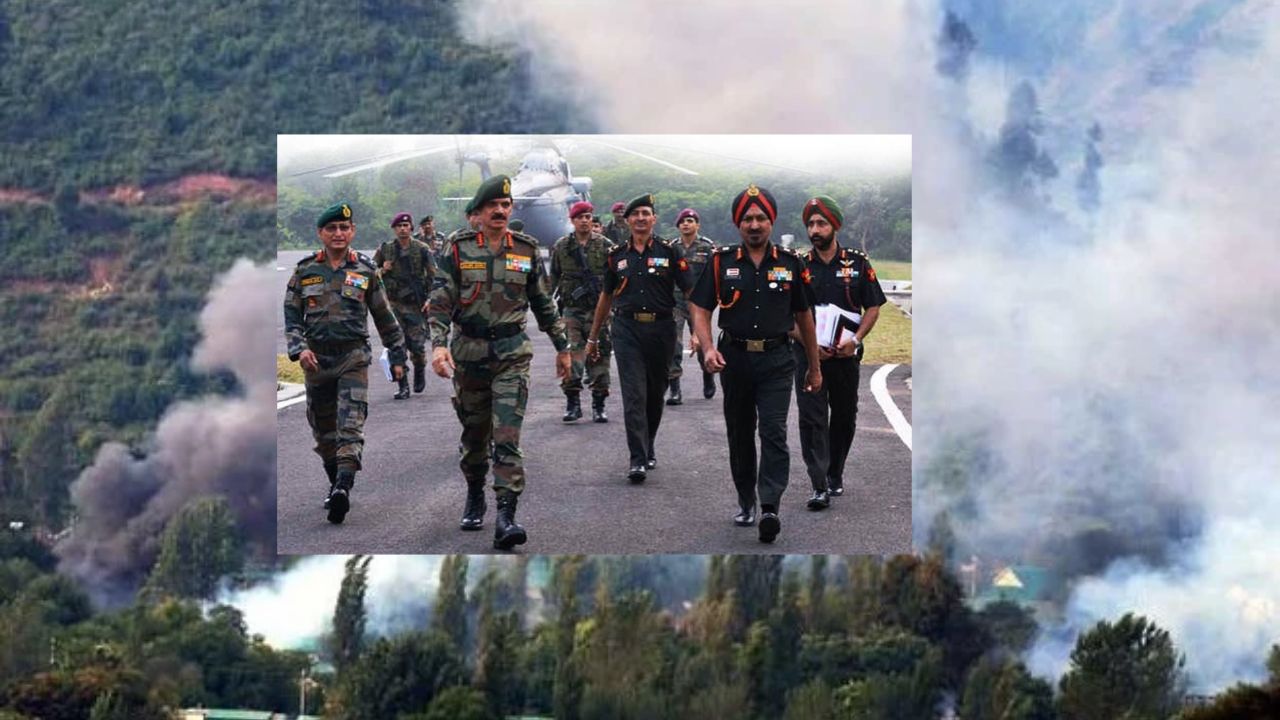
Representational Image(Img: Pinterest)
New Delhi: It began in the darkness before dawn, when most of the Army camp was still asleep. India at the dawn crossed the Line of Control (LoC) with a message that went beyond the battlefield, the “surgical strikes” were launched as a response to the deadly Uri terror attack that had left the nation grieving and demanding action.
On September 18, 2016, four heavily armed militants attacked the Army’s 12 Brigade headquarters in Uri, Jammu and Kashmir’s Baramulla district, a strategically important location close to the LoC. The attackers entered the camp in the early hours and launched an assault using grenades and automatic weapons, targeting soldiers who were resting after extended operational duties.
The attack left 19 Indian soldiers dead. The four militants were later killed by security forces, but the loss created a wave of anger and sorrow across the country. Images of soldiers returning home in coffins draped in the Tricolour became a painful reminder of the human cost of terrorism.
The aftermath of the attack saw widespread mourning across India. From military camps to families of soldiers, the images of flag-draped coffins brought the human cost of terrorism into sharp focus.
The government blamed the Pakistan-based Jaish-e-Mohammed for the attack, while Pakistan denied the allegations. As diplomatic tensions increased, questions grew over how India would respond.
The pressure was not only political but emotional. Across the country, many asked whether there would be a response beyond condemnation.
Eleven days after the Uri attack, on September 29, 2016, the Indian Army announced that it had conducted strikes on terrorist launch pads across the Line of Control (LoC).
The then Director General of Military Operations (DGMO) said the Army had carried out targeted action based on credible intelligence about militant teams preparing to infiltrate into India.
The operation was described by the government as a strike against terror infrastructure. The term “surgical strike” soon became a part of India’s political and security vocabulary.
The operation marked a significant shift in India’s publicly stated approach towards responding to cross-border terror incidents.
While the Indian government highlighted the strikes as a strong counter-terror response, Pakistan rejected India’s claims and said the incident involved only cross-border firing.
The operation also became a subject of political debate within India. Opposition parties questioned aspects of the government’s claims and sought more details, while the government maintained that operational information could not be disclosed publicly.
Ten years later, the discussion continues not only over what happened that night, but also over how nations respond to security threats and how military actions are evaluated.
The Uri operation became a reference point in India’s counter-terror strategy. Later incidents, including the Pulwama attack in 2019, again brought terrorism and national security to the centre of public debate.
Security experts have noted changes in militant tactics and infiltration patterns over the years, particularly with increased activity in difficult terrains of Jammu and Kashmir.
However, repeated terror incidents have also shown that military responses alone cannot end the broader security challenge.
A decade later, the political and strategic debates around Uri continue, but for the families of the 19 soldiers who lost their lives, the date carries a deeply personal meaning.
For them, the anniversary is not about military operations or political arguments. It is about memories, sacrifices and lives forever changed.
Ten years after Uri, the country continues to discuss the operation and its impact. But at the centre of that conversation remain the 19 soldiers whose loss led to one of the most talked-about security responses in recent Indian history.