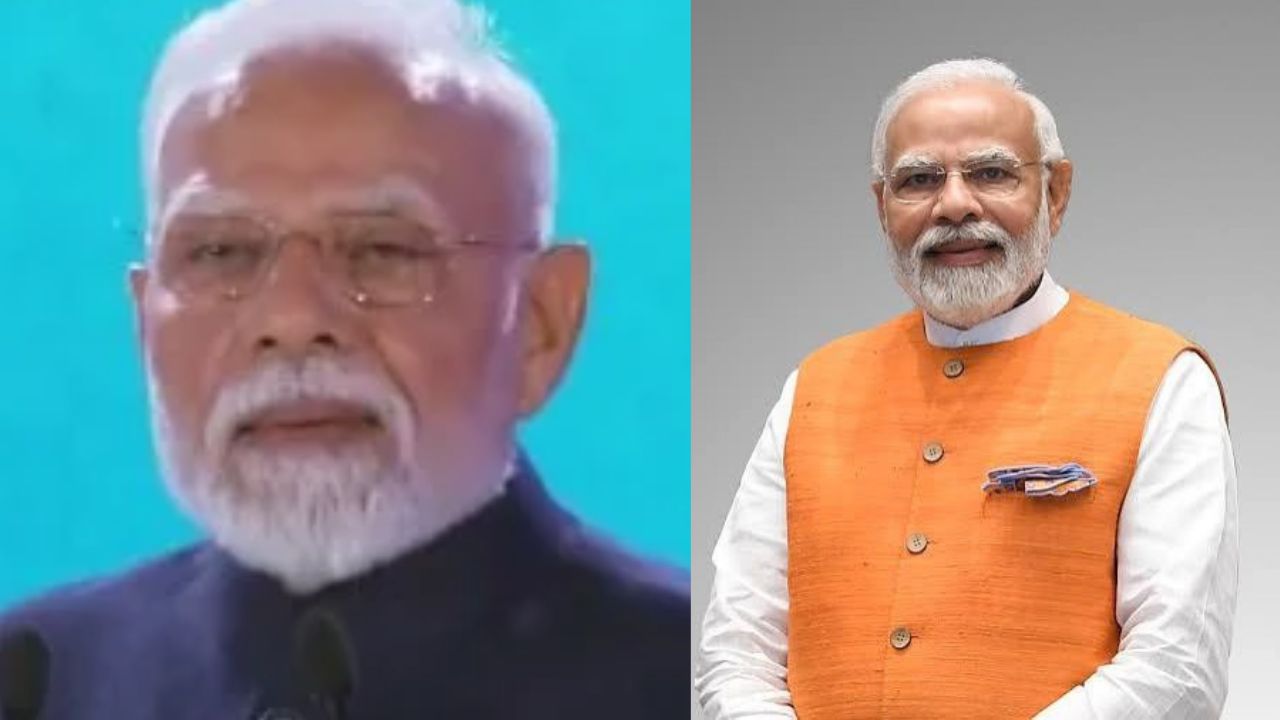
PM Narendra Modi outlines his ‘power to empower’ vision at the Bloomberg New Economy Forum in New Delhi. (Img: X)
New Delhi: Prime Minister Narendra Modi on Tuesday called for a shift from concentrating power to using it for wider social and economic empowerment, arguing that technology, data, knowledge and innovation must create opportunities for millions rather than benefit a privileged few.
Addressing the Bloomberg New Economy Forum in the national capital, he presented India’s digital transformation, affordable mobile internet, expanding startup ecosystem and democratic diversity as examples of how economic and technological progress can be translated into public benefit.
The Prime Minister’s message comes at a time of mounting geopolitical uncertainty, disruptions to global trade and energy supplies, and rapid technological change. He argued that the central question of the emerging global economy is no longer simply who possesses power, but how that power is deployed and whether its benefits reach a wider cross-section of society.
Addressing global public- and private-sector leaders, Modi said technology, data, knowledge and innovation had become defining sources of influence in the third decade of the 21st century. However, their real value depends on their purpose and the outcomes they deliver for people.
His proposed philosophy of power to empower calls for enabling others instead of exercising control, collaboration instead of an exclusive focus on competition, and collective progress instead of individual success alone. The approach, he suggested, requires governments, businesses and institutions to look beyond the accumulation of resources and focus on how those resources can expand opportunity.
The Prime Minister also linked this outlook to India’s longstanding intellectual and cultural traditions, arguing that the responsible use of knowledge, wealth and authority has been a recurring theme in the country’s civilisational experience. He said the principle was reflected in India’s governance and work culture, where the emphasis should be on applying power constructively.
The message carries implications for the future of artificial intelligence, digital public infrastructure, data-driven services and innovation-led growth. As technological capabilities become increasingly concentrated in major corporations and advanced economies, the challenge for policymakers is to ensure that productivity gains, digital access and new economic opportunities are not restricted to a narrow segment of society.
Modi welcomed the decision to host the Bloomberg New Economy Forum in India for the first time, describing it as an opportunity for international delegates to experience the scale and momentum of the country’s economic transformation.
The eighth edition of the forum is being held under the theme, A World in Play: Defining the New Levers of Power. The gathering brings together more than 500 influential leaders from the public and private sectors to discuss changing geopolitical equations, emerging economic risks, investment opportunities and pathways towards future prosperity.
The discussions are taking place against a backdrop of global instability. Modi referred to the challenges that have marked the past six years, including the COVID-19 pandemic, wars in different regions and disruptions affecting trade, critical minerals and energy supplies. Such developments, he indicated, have reshaped the global economic environment and made resilience, reliable partnerships and diversified supply chains increasingly important.
The Prime Minister positioned India as more than an investment destination, presenting it as a potential partner in shaping the global economy. He said the country was working towards Viksit Bharat, or a developed India, while seeking to strengthen its role as a reliable engine of global growth and contribute to a more balanced international economic order.
Highlighting India’s democratic character, Modi described the country as the mother of democracy and pointed to its linguistic, media and digital diversity. He cited more than 100 languages, around 80,000 registered newspapers and publications, over 1,000 satellite television channels and more than 500 million users each on YouTube and Instagram.
According to the Prime Minister, this broad media and digital landscape enables people to debate public issues, exchange competing viewpoints and participate in conversations across society. The scale of India’s information ecosystem, he suggested, illustrates how digital platforms have become an important part of contemporary public life.
The figures also underline the growing significance of India’s digital audience for technology companies, advertisers, content creators and businesses seeking to reach consumers across metropolitan centres, smaller cities and rural markets. At the same time, the expansion of digital communication has increased the importance of access, digital literacy, responsible technology use and the ability to participate meaningfully in the online economy.
Modi recalled that access to mobile internet 12 to 13 years ago represented a significant source of advantage because people with connectivity could obtain information, knowledge and opportunities that remained less accessible to others.
After the government assumed office in 2014, he said, India placed emphasis on making mobile data more affordable. The resulting expansion of connectivity, according to the Prime Minister, helped move digital access beyond a limited section of the population.
He cited the example of a small shopkeeper in a village being able to reach customers through digital channels. The broader point was that connectivity can do more than link people: it can connect businesses with markets, consumers with services, students with learning resources and communities with information.
Affordable internet has become an important foundation for digital payments, e-commerce, online education, government service delivery and the growth of small businesses. Wider connectivity can reduce geographical barriers and help entrepreneurs operate beyond their immediate local markets, although the full benefits depend on reliable networks, digital skills and access to suitable devices.
The Prime Minister also highlighted the potential for students in smaller cities to access digital learning opportunities. The argument reflects the wider role of connectivity in expanding access to educational material and skills development, particularly for learners who may face limitations in accessing specialised institutions or resources locally.
Modi also pointed to the growth of India’s startup ecosystem as an example of expanding entrepreneurial opportunity. He contrasted the roughly 100 startups he said existed before 2014 with more than 2.5 lakh startups today.
He added that half of these startups were based in smaller cities and that more than 45 per cent had at least one woman director or partner. The figures, as cited by the Prime Minister, were presented as evidence that entrepreneurship is spreading beyond established metropolitan hubs and that women are increasingly represented in business leadership and ownership.
The expansion of startups has become a significant part of India’s economic narrative, with young businesses contributing to innovation, employment generation, digital services and new business models. Growth outside major cities can also create opportunities for local talent and help connect regional markets to the national economy.
The representation of women in startup leadership is another dimension of the debate around inclusive growth. Broader participation in entrepreneurship can widen access to capital, professional networks and decision-making, although sustained progress also depends on funding access, business survival, market conditions and the availability of support systems.
Modi’s remarks placed this entrepreneurial expansion within the larger idea of empowerment: economic progress is most meaningful when more people can participate in creating businesses, developing technology and accessing the benefits of growth.
The Prime Minister also asserted that India’s reform process was advancing at a rapid pace, presenting reforms as a matter of conviction rather than compulsion. The message was aimed at reinforcing India’s economic positioning before an international audience of investors, business leaders and policymakers.
By linking reform with innovation, connectivity and entrepreneurship, Modi sought to frame India’s development strategy around long-term growth and wider participation in the economy. His remarks also placed the country’s domestic transformation within a broader discussion about the changing distribution of global economic power.
The emphasis on reform reflects the importance of policy predictability, institutional capacity, infrastructure and a business environment capable of supporting investment and enterprise. For investors, the challenge is to assess not only the pace of policy announcements but also implementation, regulatory clarity and the ability of reforms to translate into productivity, employment and durable economic growth.
The Bloomberg New Economy Forum provides a platform for discussions on the relationship between economic growth, technology, energy security, geopolitical competition and international cooperation. Its focus on new levers of power comes as countries reassess supply-chain vulnerabilities, access to critical minerals, energy dependence and the strategic importance of emerging technologies.
Modi’s address placed India’s development ambitions within this changing landscape. By highlighting digital access, democratic diversity, startup growth and economic reforms, he presented the country’s domestic transformation as part of a broader effort to shape future patterns of global growth.
The central message was that power should not be measured solely by ownership of technology, wealth or knowledge. Its lasting value, the Prime Minister argued, lies in the ability to use those resources to enable others, expand opportunity and deliver wider social and economic benefits.
As governments and businesses navigate an era of technological disruption and geopolitical uncertainty, the idea of power to empower offers a framework for assessing whether innovation and economic growth are creating opportunities across society or concentrating their benefits among a select few.

