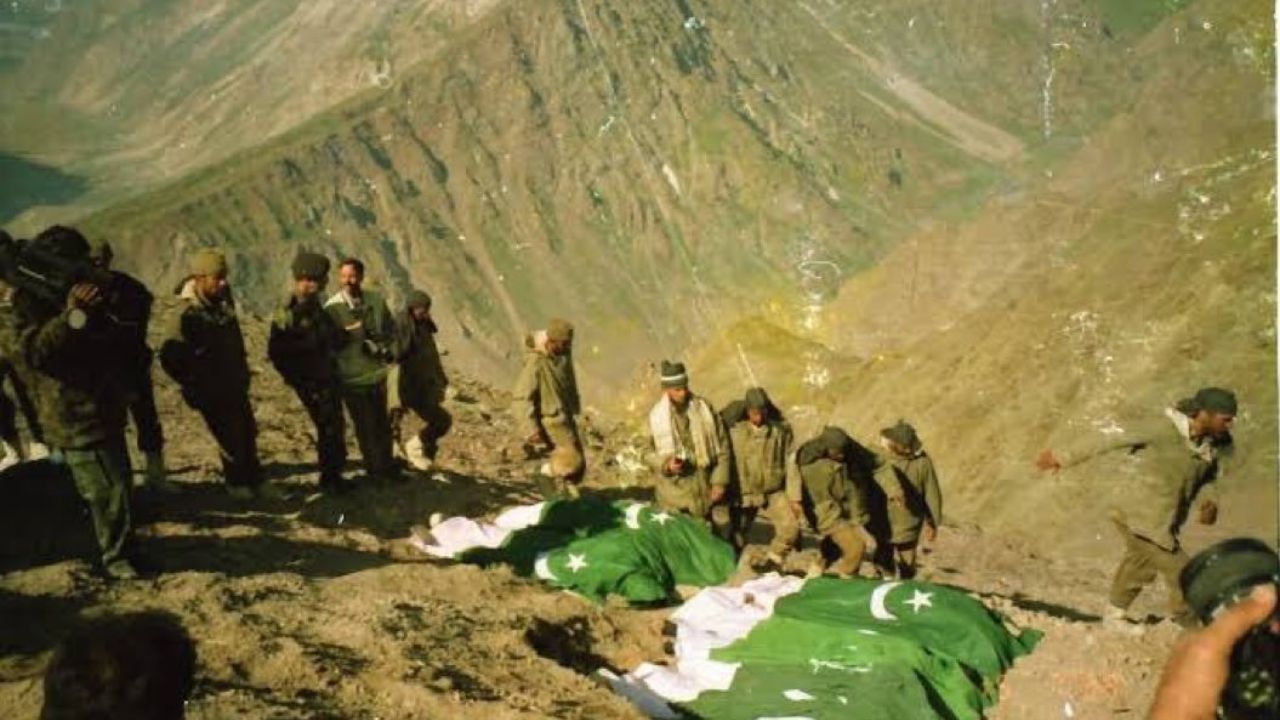
Pakistani soldiers still buried on Indian soil 27 years after Kargil war. (Image: Internet)
New Delhi: In mid-1999 India and Pakistan had a fight in the Kargil region of Jammu and Kashmir. Pakistani forces and militants crossed the Line of Control. Took over strategic heights. This led to a war with intense mountain fighting, international pressure and eventually the withdrawal of intruding forces after Indian military operations.
After the big fighting stopped both sides took care of their soldiers who were hurt or killed in battle. Some Pakistani soldiers were buried where they died or in areas that are now on the Indian side of the Line of Control. The exact number and locations of these burials are recorded,. Not all information has been made public.
Since the conflict ended India and Pakistan have occasionally discussed the issue of soldiers remains through channels and with the help of other countries and humanitarian groups. There have been some exchanges of remains. A complete solution for all cases has not been found.
It's hard to return the remains because of concerns about sovereignty, security and the sensitive nature of the Line of Control. Moving remains across the contested territory requires coordination between authorities, civil administrations and sometimes international observers.
Families of the deceased soldiers want closure. In both India and Pakistan these cases are important to the public and politicians. Veterans groups and civil society sometimes call for renewed efforts to identify and return remains. Media coverage and commemorations on anniversaries keep attention on unresolved wartime losses.
There have been some cases of cooperation on returning remains but a comprehensive agreement has not been announced. Officials on both sides have said they are willing to cooperate on grounds but tensions and occasional ceasefire violations hinder progress.
The best way to resolve cases is through humanitarian efforts like joint forensic teams, neutral mediation and scheduled exchanges. Continued diplomatic engagement and confidence-building measures could enable systematic returns offering long-awaited closure, to affected families and reducing a lingering wartime grievance.

