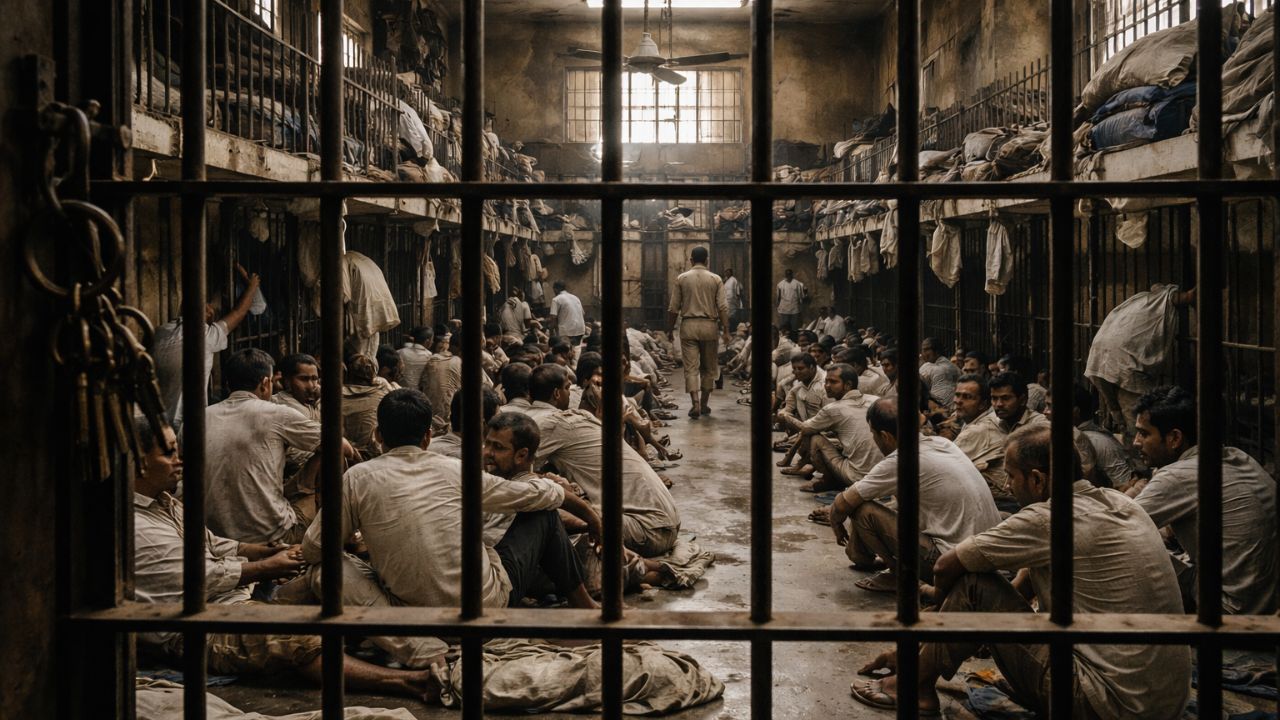
NHRC Issues Notice Over 285 Deaths in Chhattisgarh Jails (Image Source: Internet)
Raipur: The National Human Rights Commission (NHRC) has issued a notice to the Chhattisgarh government. This notice has been issued in connection with the deaths of 285 prisoners across various jails in the state over the past four years.
Treating this matter as a serious human rights issue, the Commission has sought a detailed report from the state government.
According to reports, the highest number of deaths—90 prisoners—occurred in the year 2022. Meanwhile, 66 deaths were recorded between January 2025 and January 31, 2026.
The state government informed the Legislative Assembly that suicide and chronic illnesses were the primary causes behind these deaths.
Citing media reports, the Commission stated that the conditions in several jails across the state are extremely poor.
The most significant problem is the presence of prisoners in excess of capacity—that is, overcrowding. This increases the risk of spreading infections and places immense psychological pressure on the prisoners.
The report also revealed a severe shortage of doctors and psychiatrists in most of the jails.
Consequently, prisoners do not receive timely medical treatment, which can lead to a further deterioration of their health. Mental health-related issues also fail to receive appropriate treatment.
The NHRC asserted that this matter constitutes a violation of human rights.
The Commission has issued notices to the State Chief Secretary and the Director General of Prisons, directing them to submit a comprehensive report within two weeks. This report must provide details regarding the condition of the jails, the number of vacant posts for doctors, and the measures taken for improvement.
The Chhattisgarh government must now provide a response explaining how it intends to resolve these issues.
This matter holds particular significance as it directly concerns the lives and rights of prisoners. If corrective measures are not implemented, even more serious problems could emerge in the future. Conclusion
Simply put, the rising number of deaths and deteriorating conditions within Chhattisgarh's prisons have become a matter of grave concern. The notice issued by the NHRC signals that strict action and systemic reforms are now urgently required to address this issue.

