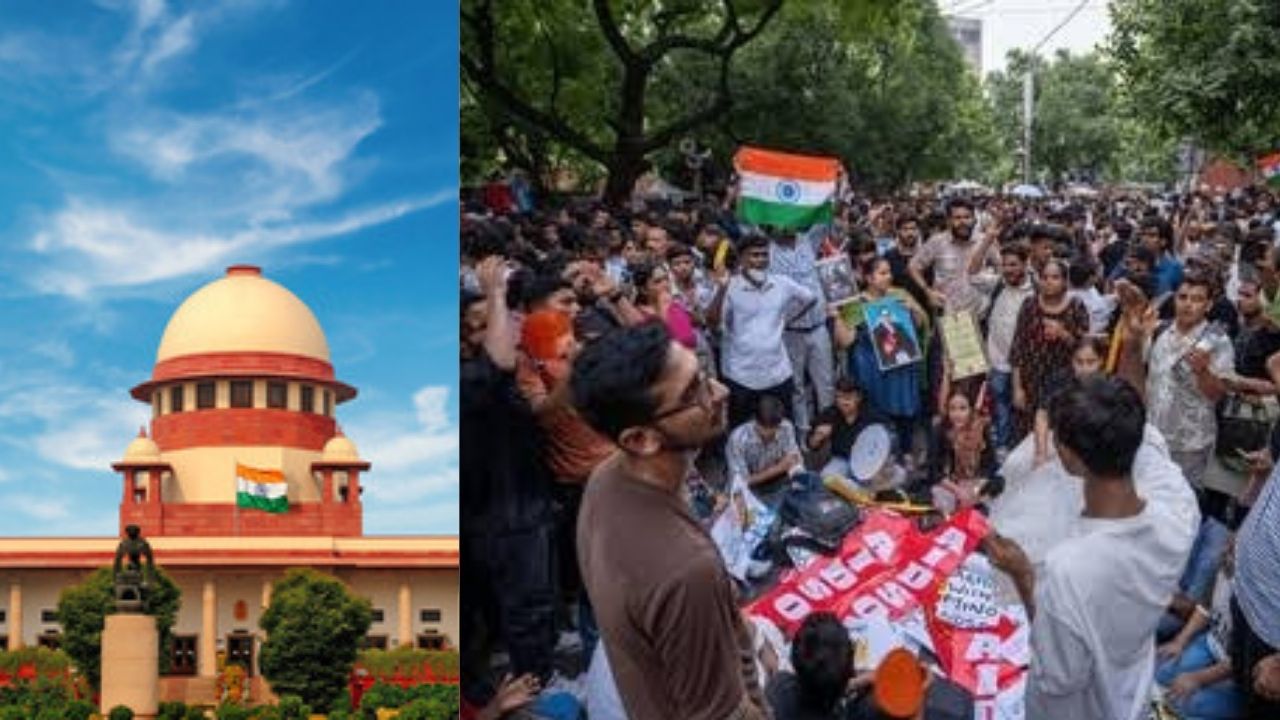
CJP Protest FIR Row Reaches Apex Court Before September 5 March
New Delhi: The controversy surrounding the CJP protest FIRs has reached a crucial stage on Monday, with four more states approaching the Supreme Court seeking the cancellation of criminal cases registered during the NEET protest movement.
After Delhi Police filed a plea before the apex court to quash 13 FIRs connected with the July 20 CJP protest march, Maharashtra, Assam, Bihar and West Bengal have now submitted separate applications seeking similar relief.
The development has intensified the legal and political debate around the protests, coming just days before the CJP’s planned September 5 march from India Gate to the Delhi Police headquarters.
The Supreme Court will now examine multiple petitions linked to the FIRs, with the case raising broader questions about the right to protest, law enforcement procedures and the handling of student-related demonstrations.
The latest applications have been filed on behalf of the four state governments through Solicitor General Tushar Mehta. The petitions seek the quashing of FIRs registered during protests connected with the NEET paper leak controversy. The states have approached the Supreme Court by invoking Article 142 of the Constitution, which gives the court special powers to pass orders required to deliver complete justice.
The move follows the Centre’s earlier application seeking similar relief in cases registered against protesters in Delhi. The Centre has maintained that protesters should not face unnecessary legal action and has encouraged other NDA-ruled states to explore similar steps.
The CJP FIR issue has become a major legal flashpoint because it involves a large number of protesters and cases filed after demonstrations over alleged irregularities linked to the NEET examination process.
For protesters and student groups, the cancellation of FIRs would mean relief from ongoing legal proceedings and concerns over future consequences. For authorities, the issue involves maintaining public order, investigating alleged violations and ensuring that demonstrations remain peaceful and within legal limits. The Supreme Court’s decision could set an important precedent for how protest-related FIRs are handled in similar situations.
The immediate focus of the Supreme Court proceedings is on 13 FIRs registered in connection with the July 20 CJP protest demonstration.
The authorities have sought judicial intervention to remove legal proceedings arising from the protests while keeping the option of action against individuals accused of specific unlawful activities. The court will now have to examine the circumstances surrounding the FIRs and determine whether they should continue or be cancelled.
The timing of the legal developments has attracted significant attention because CJP has announced another protest march on September 5. The organisation has planned a march from India Gate to the Delhi Police headquarters, keeping the issue of student concerns and NEET-related allegations at the centre of its campaign.
Following Delhi Police’s Supreme Court plea, CJP representatives had indicated that similar action from other NDA states could follow. The latest filings have now changed the legal landscape ahead of the planned demonstration.
During a previous hearing, the Supreme Court refused to stop the proposed September 5 protest march. The Bench headed by Chief Justice of India (CJI) Surya Kant observed that issues related to law and order and administrative decisions should be handled by government authorities and concerned stakeholders.
However, the court highlighted the importance of ensuring peace and preventing any disruption during the demonstration. The hearing took place on a Public Interest Litigation filed by retired Delhi Police officer Rajendra Singh through advocate Rizwan Ahmed.
The states and the Centre have relied on Article 142 of the Constitution while approaching the Supreme Court. This constitutional provision allows the apex court to issue special orders and directions to ensure complete justice when existing legal remedies may not be sufficient.
The use of Article 142 in the case has added another important legal dimension to the ongoing FIR controversy.
The CJP protest FIR row has moved beyond a legal dispute and become part of a larger national discussion on student movements, government accountability and citizens’ rights. Student groups argue that protesters should not be burdened with prolonged legal cases, while authorities continue to focus on maintaining security during large gatherings.

