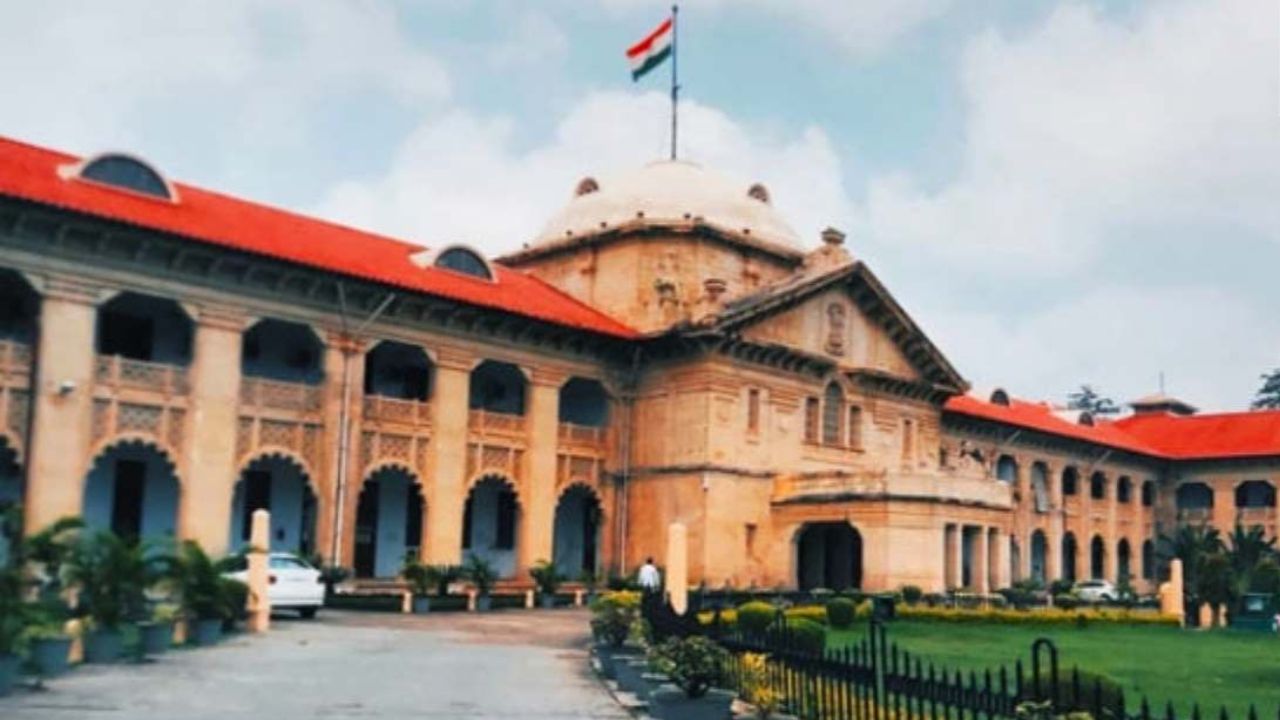
Allahabad High Court (File Photo)
Prayagraj: The Allahabad High Court has delivered a significant verdict regarding cases in Kanpur linked to the 1984 anti-Sikh riots. The court rejected the plea of the accused, in which they had appealed for the cases to be terminated (quashed). The Court explicitly stated that, in crimes of such gravity, the process of justice cannot be halted merely due to the passage of time.
This matter pertained to petitions filed by nine individuals seeking to quash the charge sheets and summons orders issued against them in connection with the 1984 cases. A bench comprising Justice Anish Kumar Gupta dismissed all these petitions.
The court observed that the reinvestigation conducted by the SIT (Special Investigation Team) yielded sufficient prima facie evidence against the accused.
Describing these incidents as extremely grave, the High Court remarked that the situation amounted to a "genocide-like scenario" directed against a specific community. During that period, numerous individuals were killed, homes were set ablaze, and properties were looted.
These riots erupted in the aftermath of the assassination of former Prime Minister Indira Gandhi.
Many cases registered in 1984 had subsequently been closed, and the accused had been given a clean chit. However, these cases were later reopened following the submission of the report by the Justice G.T. Nanavati Commission.
Acting on the orders of the Supreme Court, an SIT was constituted; it investigated 186 cases across Uttar Pradesh, 20 of which originated in Kanpur. New charge sheets were filed in 11 of these cases.
The accused argued before the court that a fair trial was no longer possible after so many years, citing the following reasons:
They contended that this situation constituted a violation of Article 21 of the Constitution (the Right to a Fair Trial). What was the government's stance?
On behalf of the state government, it was argued that the Supreme Court had already ordered a re-investigation, fully aware that many records would not be available.
The government asserted that the statements of witnesses and the investigation conducted by the SIT clearly establish the role of the accused; therefore, a trial is essential.
The High Court observed that the credibility of the evidence would be determined during the trial, not at this stage.
The Court further noted that when a prima facie case is established, the power to quash the proceedings must be exercised with extreme caution.
Following this verdict by the court, the trial in all these cases will now proceed. The Supreme Court, too, had previously emphasized the need for the expeditious disposal of these long-pending cases.
This verdict demonstrates that while there may be delays within the justice system, justice itself cannot be denied. In grave matters such as the 1984 cases, the courts are adopting a firm stance to ensure that the victims receive justice.

