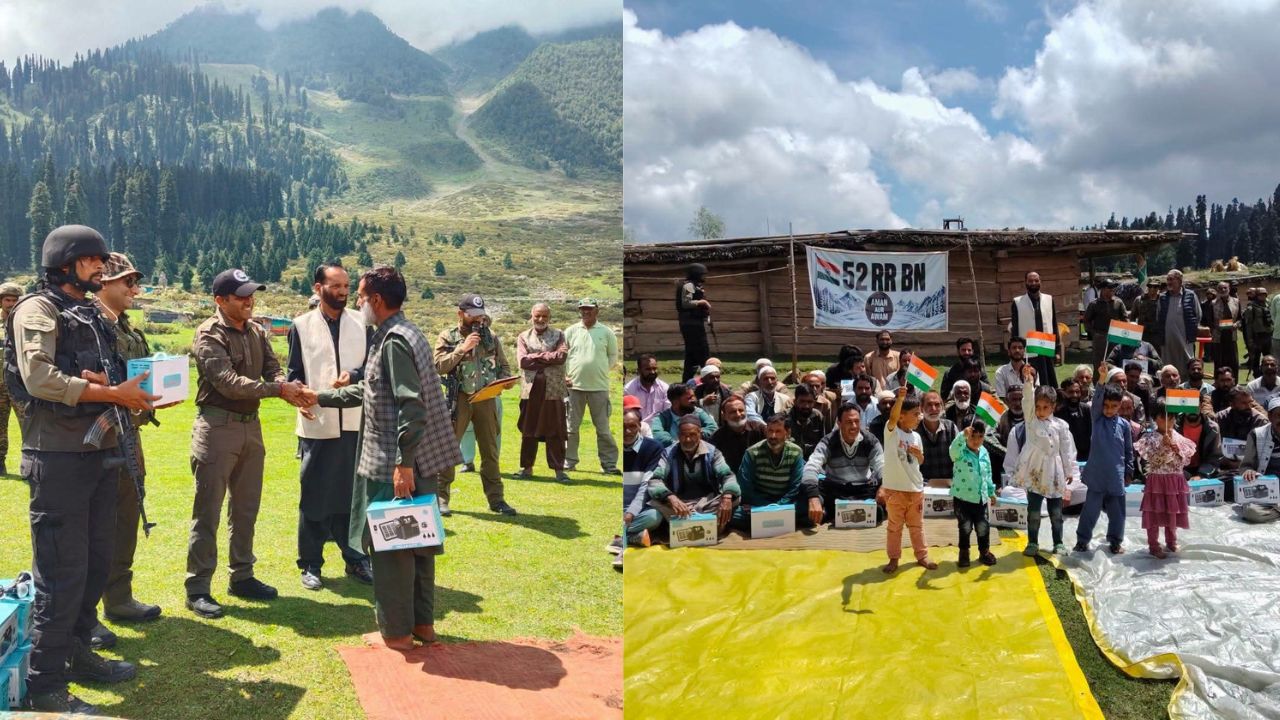
Baramulla: In the silent expanse of Jammu and Kashmir’s high-altitude landscapes, where darkness has long descended early and electricity remains a distant luxury, a new source of hope has emerged. The Indian Army has extended a helping hand to Gujjar-Bakkarwal families living in remote dhoks of Baramulla by distributing solar lighting systems, ensuring that the absence of power does not dim the aspirations of children pursuing education.
The community outreach initiative, organised by the 52 Rashtriya Rifles Battalion under the aegis of Headquarters 10 Sector Rashtriya Rifles and Counter Insurgency Force (Kilo), was designed as a comprehensive welfare programme focusing on education, healthcare, youth empowerment and awareness of government assistance schemes.
Conducted at Bandibala (Sultanpur Kandi) in Baramulla under the guiding philosophy of Aman and Awam, the programme sought to strengthen the delicate bridge of trust, cooperation and dialogue between security forces and local communities. The initiative witnessed participation from around 143 residents of Bandibala and neighbouring areas, including village elders, youth representatives and families belonging to the Gujjar-Bakkarwal community.
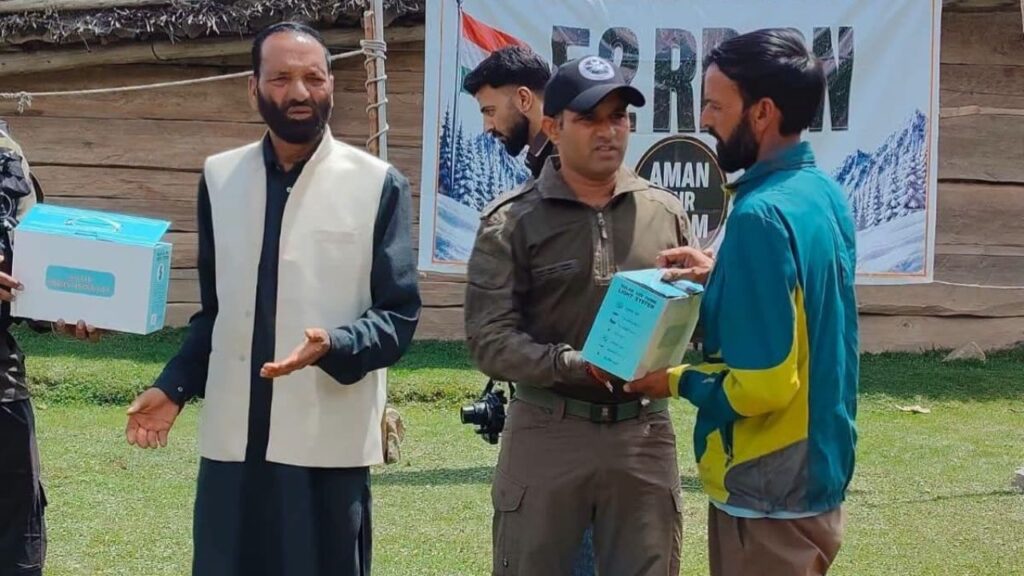
The centrepiece of the outreach programme was the distribution of nearly 100 solar lighting units among families residing in remote seasonal settlements, commonly known as dhoks. Located in challenging mountainous terrain, these settlements often face severe limitations in electricity access due to geographical barriers and inadequate infrastructure. For generations, many households have relied on traditional sources such as kerosene lamps and candles to illuminate their homes after sunset.
The introduction of solar-powered lighting systems marks a significant shift in the daily lives of these families. Equipped with solar panels and efficient lighting units, the systems provide a sustainable and renewable energy solution, offering residents a dependable source of illumination. For children growing up in these isolated regions, the initiative carries a deeper meaning. A simple source of light becomes a gateway to education, enabling students to complete homework, prepare for examinations and continue learning even after daylight fades behind the mountains.
Recognising that energy shortages affect more than just lighting, the Army also distributed power banks to residents to support basic charging requirements. In remote areas where electricity supply remains inconsistent, access to charging facilities can significantly impact communication, connectivity and access to essential services.
The use of solar-based solutions also reflects a broader movement towards clean energy adoption, demonstrating how renewable technologies can provide practical solutions for communities located far from conventional infrastructure networks.
Beyond educational assistance, the programme expanded its focus towards healthcare and social awareness. A free medical camp was organised where Army medical teams provided essential healthcare services and interacted with residents to understand health concerns affecting people living in remote mountainous regions.
The outreach also included awareness sessions on various government welfare schemes, social security programmes and development initiatives aimed at improving access to public services. Residents were informed about opportunities related to education, healthcare benefits, employment support, skill development programmes and youth-oriented initiatives.
A special emphasis was placed on engaging with local youth and encouraging them to explore educational and professional opportunities.
Army personnel interacted with young residents, discussing skill development programmes, career pathways and employment opportunities that could help them build a more secure future.
The initiative highlighted the importance of empowering young people in remote areas, enabling them to become active contributors to social progress and economic development.
The programme also provided a platform for meaningful interaction between Army personnel and community representatives. Discussions with elders and local leaders focused on understanding challenges related to education, healthcare, infrastructure and other welfare concerns faced by the Gujjar-Bakkarwal population.
Such interactions are aimed at creating a stronger partnership between civilians and security forces while ensuring that local voices and community needs remain central to development efforts. The Army has stated that these initiatives are part of its continued commitment towards community welfare, inclusive development and strengthening civil-military relations in Jammu and Kashmir.
The outreach programme forms part of the Indian Army’s broader Operation Sadbhavana initiative, which focuses on improving living conditions and supporting development activities in remote and underserved regions. Through this initiative, the Army undertakes various welfare measures, including medical camps, educational assistance programmes, infrastructure support and awareness campaigns.
While safeguarding national security remains its primary responsibility, such initiatives reflect the Army’s wider role in supporting communities and contributing towards regional development. Operation Sadbhavana seeks to nurture mutual trust, promote peace and create stronger bonds between security forces and residents living in challenging geographical conditions.
For the Gujjar-Bakkarwal families of Baramulla’s remote dhoks, the solar lights represent far more than an alternative source of electricity. They symbolise opportunity, dignity and the possibility of a brighter future for children who have often studied under difficult circumstances.
A beam of light after sunset can transform a household, extend learning hours and open new possibilities for students living in some of the most challenging terrains of Jammu and Kashmir. The initiative also highlights the growing importance of renewable energy solutions in bridging infrastructure gaps and improving access to basic services in remote communities.
The Indian Army is expected to continue similar community engagement initiatives across remote regions of Jammu and Kashmir, with a focus on education, healthcare, youth empowerment and sustainable development. Through continued outreach programmes, the aim remains to improve living conditions, strengthen community partnerships and support inclusive growth in areas where geography often becomes the biggest barrier to progress.


