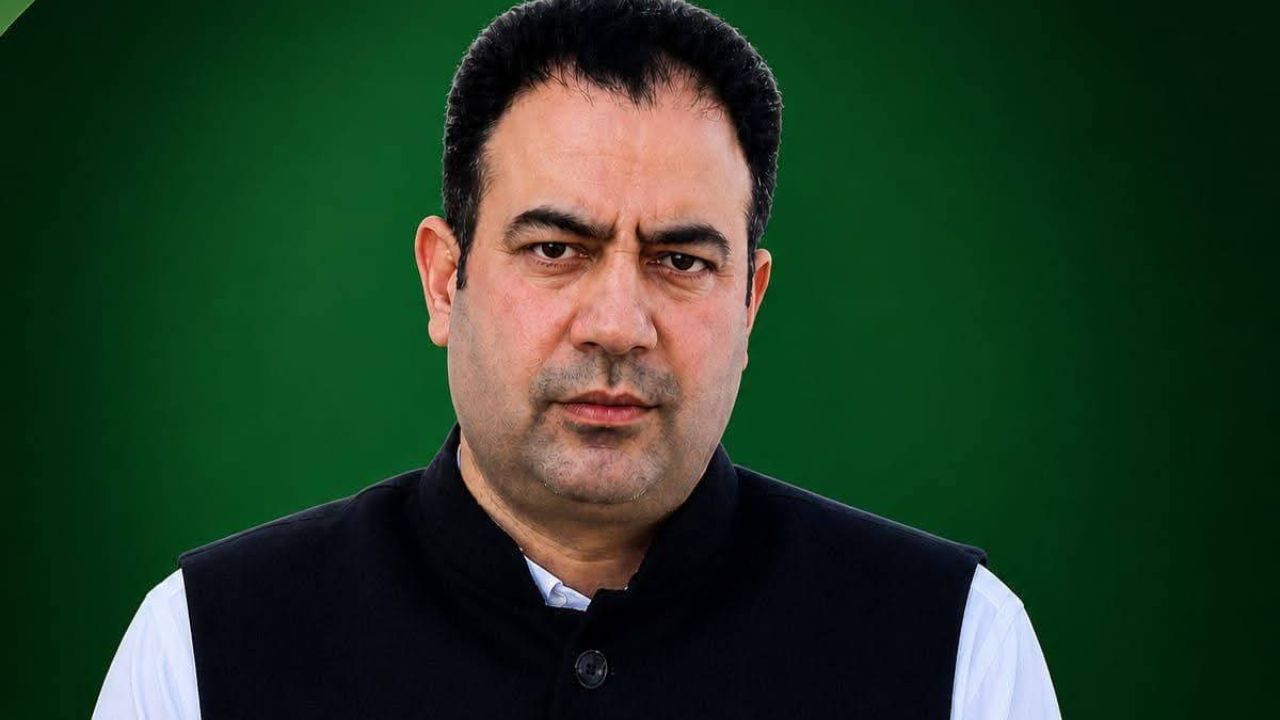
Baramulla: The political debate over Article 370 has once again intensified in Jammu and Kashmir after the Peoples Democratic Party (PDP) criticised the Omar Abdullah-led National Conference government, accusing it of misleading people on the sensitive constitutional issue and failing to focus on governance and development concerns.
The controversy erupted after PDP Baramulla District Coordinator Altaf Malik questioned the National Conference government’s continued political narrative around Article 370 and Article 35A. He alleged that the administration has not delivered on key promises related to employment, infrastructure, public services and youth empowerment.
The BJP has responded sharply, stating that the PDP does not have any legal or constitutional mechanism to reverse the changes made to Article 370 in 2019. The party accused opposition leaders of using emotional issues to influence public sentiment in Jammu and Kashmir.
PDP leader Altaf Malik questioned why the Omar Abdullah government continues to focus on Article 370 and Article 35A while basic issues affecting common people remain unresolved.
Referring to remarks linked to former Research and Analysis Wing (R&AW) chief A.S. Dulat at the Constitution Club of India, Malik raised questions over the political interpretation of Article 370 and the historical developments surrounding the Indira-Sheikh Accord.
He questioned whether major constitutional changes had already taken place during earlier political agreements and alleged that the present government was creating confusion among people by repeatedly raising the issue without providing clear answers.
The PDP leader accused the National Conference government of gaining public support through political promises but failing to bring visible improvements on the ground after coming to power.
PDP leader Altaf Malik seeks Omar Abdullah government's stand on Article 370, accuses it of ignoring public concerns.@BJP4India @OmarAbdullah @jkpdp @BJP4JnK #Article370 #AltafMalik #PDP pic.twitter.com/CSOCOfh4vg
— Dynamite News (@DynamiteNews_) August 9, 2026
Altaf Malik said that people of Jammu and Kashmir are more concerned about employment opportunities, better healthcare facilities, quality education, road connectivity, electricity supply and economic growth rather than political debates. He alleged that the government is focusing more on political narratives while failing to address day-to-day challenges faced by ordinary citizens.
The PDP leader demanded that the Omar Abdullah administration present a clear roadmap for job creation, industrial growth, youth development and improvement of public services. He said that the success of any elected government should be measured through governance performance, policy implementation and tangible benefits reaching people at the grassroots level.
The PDP leader urged the Jammu and Kashmir government to explain its exact political and constitutional position on Article 370 and Article 35A. He said that people deserve transparency on sensitive issues along with concrete action plans for economic development and employment generation.
According to Malik, constitutional debates should not replace governance responsibilities, and the government must focus on delivering results instead of only making political statements. He maintained that public trust in an elected government depends on accountability, transparency and the ability to solve problems affecting citizens.
Responding to the PDP’s allegations, BJP leader Altaf Thakur said that the PDP cannot undo the constitutional changes related to Article 370. The BJP claimed that the decision taken in 2019 was implemented through constitutional procedures, parliamentary approval and legal processes, and cannot be changed through political statements.
The party accused the PDP and other opposition groups of attempting to revive emotional issues for political advantage instead of focusing on development and governance. The BJP reiterated its stand that the Article 370 changes were aimed at bringing greater integration, uniform laws and development opportunities in Jammu and Kashmir.
Article 370 remained one of the most significant constitutional provisions connected with Jammu and Kashmir’s special status. On August 5, 2019, the Union government introduced major constitutional changes related to Article 370, removing the special status provisions previously available to the former state. The move was followed by the Jammu and Kashmir Reorganisation Act, under which the state was divided into two Union Territories - Jammu and Kashmir and Ladakh.
The decision triggered strong political reactions across the country. While the BJP and its supporters welcomed the move as a step towards national integration, several regional parties opposed it and demanded restoration of earlier constitutional arrangements. The Supreme Court later upheld the constitutional validity of the 2019 decision related to Article 370, while directing steps for restoring the democratic process in Jammu and Kashmir.
Even years after the constitutional changes, Article 370 continues to remain a major political issue in Jammu and Kashmir. Regional parties including the National Conference and PDP have continued to raise concerns related to political rights, statehood restoration and constitutional issues, while the BJP has focused on security, development and integration.
The latest political exchange between PDP, National Conference and BJP shows that Article 370 remains a central issue in the region’s political landscape. With future elections and political realignments expected to shape Jammu and Kashmir’s direction, debates over constitutional status, governance, employment and development are likely to remain key issues among political parties and voters.

