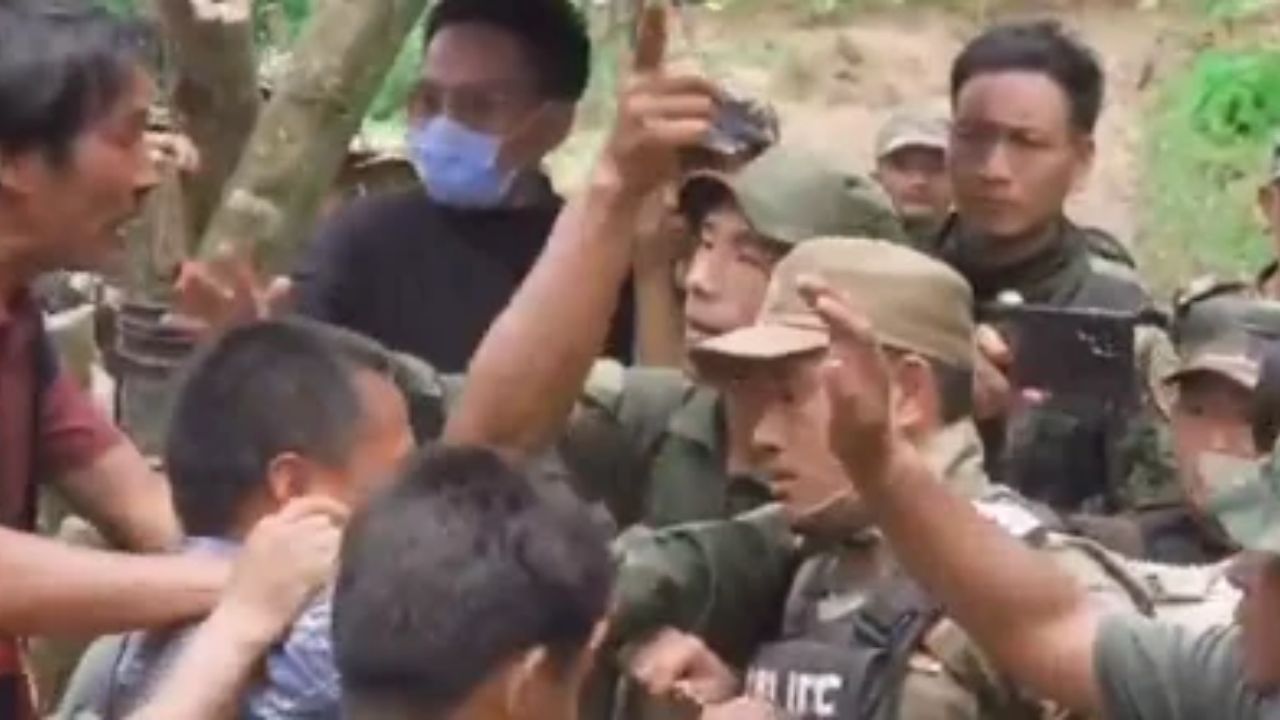
The proposed 11,200-MW hydropower project, titled Siang Upper Multipurpose Project, has triggered concerns over displacement, environmental impact and the future of indigenous communities. (Img: X)
New Delhi: The Centre is reinforcing security in Arunachal Pradesh after violent protests against the proposed Siang Upper Multipurpose Project escalated in Pasighat and adjoining areas of East Siang district. Around 250 personnel of the Rapid Action Force (RAF), a specialised anti-riot unit of the Central Reserve Police Force (CRPF), are being mobilised from Navi Mumbai to Pasighat, with Indian Air Force transport support sought to expedite their deployment.
The move follows a bandh opposing the proposed 11,200-megawatt hydropower project, after which incidents of arson, vandalism and attacks on public and private property were reported. Authorities have imposed restrictions on gatherings and public processions in affected areas, while further deployment of security personnel remains possible depending on the evolving law-and-order situation.
The deployment is intended to strengthen crowd-control operations, support local police and central security personnel, and prevent further escalation as the administration works to restore normalcy.
The Ministry of Home Affairs has directed the deployment of two RAF companies, comprising approximately 250 personnel, to Arunachal Pradesh. The Ministry of Defence has been approached to facilitate priority airlift arrangements using suitable Indian Air Force aircraft.
The personnel are being moved from Navi Mumbai Airport to Pasighat Airport to reduce travel time and enable a rapid operational response. Further deployment will depend on the security assessment and operational requirements on the ground.
The RAF operates under the CRPF, which functions under the Union Ministry of Home Affairs. Established in October 1992, the specialised force is trained to handle riots, violent crowd situations and other public-order emergencies. Its deployment is expected to supplement the existing security presence in the affected districts.
CRPF personnel are already operating in the region, with several units deployed in violence-affected areas. Security personnel have been working to contain the unrest, although clashes reportedly left several police and security personnel injured.
The reinforcement comes as authorities seek to prevent further attacks on government infrastructure, police establishments and the residences of public representatives.
The latest escalation followed a 12-hour bandh on October 23 across Siang, Upper Siang and East Siang districts against the proposed hydropower project. Although the bandh was reported to have remained largely peaceful during the day, violence erupted in Pasighat after it ended and continued into the early hours of Saturday.
According to police reports, a mob allegedly set fire to a National Hydroelectric Power Corporation (NHPC) office and a police station. Police vehicles and other properties were also reportedly attacked or damaged during the unrest.
The residences of Arunachal Pradesh BJP president Kaling Moyong and legislators Ninong Ering and Oni Panyang were targeted. The office of Adi Baane Kebang, a prominent organisation representing the Adi community, was also vandalised.
Police said the violence unfolded in multiple waves and continued for several hours. Reports indicated that more than 40 police personnel were injured in stone-pelting, while a protester sustained a leg injury after being hit by a tear-gas shell and was taken to hospital.
The incidents have intensified concerns about public safety and the protection of critical infrastructure. The administration is attempting to prevent further violence while maintaining security around government buildings, police facilities and sensitive locations.
Following the clashes, the East Siang district administration imposed prohibitory restrictions in Pasighat, Mebo and Ruksin. The measures prohibit gatherings of more than five people and restrict rallies, marches and public meetings without prior written permission.
The administration has also prohibited the carrying of weapons and objects that could potentially be used as weapons. The restrictions are intended to limit the possibility of fresh clashes, prevent further damage to property and give security agencies greater control over crowd movement.
The deployment of additional RAF personnel is expected to strengthen the response to any further public-order incidents. Authorities are also monitoring neighbouring districts, where opposition to the project has prompted protests and bandh-related activities.
Arunachal Pradesh Chief Minister Pema Khandu has appealed for calm, stressing that peaceful protest is a democratic right but must remain within the law. He condemned the reported damage to property and urged all sections of society to help maintain peace and public order. The administration faces the dual challenge of restoring normalcy and addressing the concerns driving opposition to the proposed project.
The proposed Siang Upper Multipurpose Project, with a planned capacity of around 11,200 megawatts, is among the major hydropower developments being considered in Arunachal Pradesh. Planned along the Siang River, the project has generated significant concern among sections of the local population, particularly indigenous communities who fear its potential impact on villages, ancestral lands, livelihoods and the surrounding ecosystem.
Opponents have raised concerns about the possible submergence of inhabited areas, displacement, environmental consequences and the disruption of cultural and community ties to the river. Questions have also been raised about preliminary survey activities associated with the project, with protest groups demanding the release of arrested activists and a review of the process.
For many communities, the Siang is more than a waterway. It is closely connected to local livelihoods, cultural identity and the ecological systems that sustain life across the region. The prospect of a major reservoir and large-scale infrastructure development has become a focal point of public opposition. The dispute reflects the wider challenge of balancing hydropower development, energy security, environmental safeguards and the rights and concerns of indigenous populations.
The project also carries a broader strategic dimension. The Siang River enters India from Tibet, where it is known as the Yarlung Tsangpo, before flowing through Arunachal Pradesh and joining the Dibang and Lohit rivers near Sadiya in Assam to form the Brahmaputra.
India’s proposed hydropower development has been discussed in the context of China’s major dam-building plans upstream. The project is viewed as strategically significant because of the river’s transboundary character and the importance of water resources in the eastern Himalayas.
However, strategic considerations do not remove the environmental, social and rehabilitation concerns raised by communities in the project area. The challenge for policymakers is to address these concerns through credible consultations, transparent assessments and appropriate safeguards while evaluating the project’s long-term benefits.
As the security situation in Pasighat remains a priority, the immediate focus is on preventing further violence and restoring public order. The larger dispute over the Siang Upper Multipurpose Project is likely to remain a significant issue for Arunachal Pradesh, with the response to local concerns playing a crucial role in determining the path ahead.

