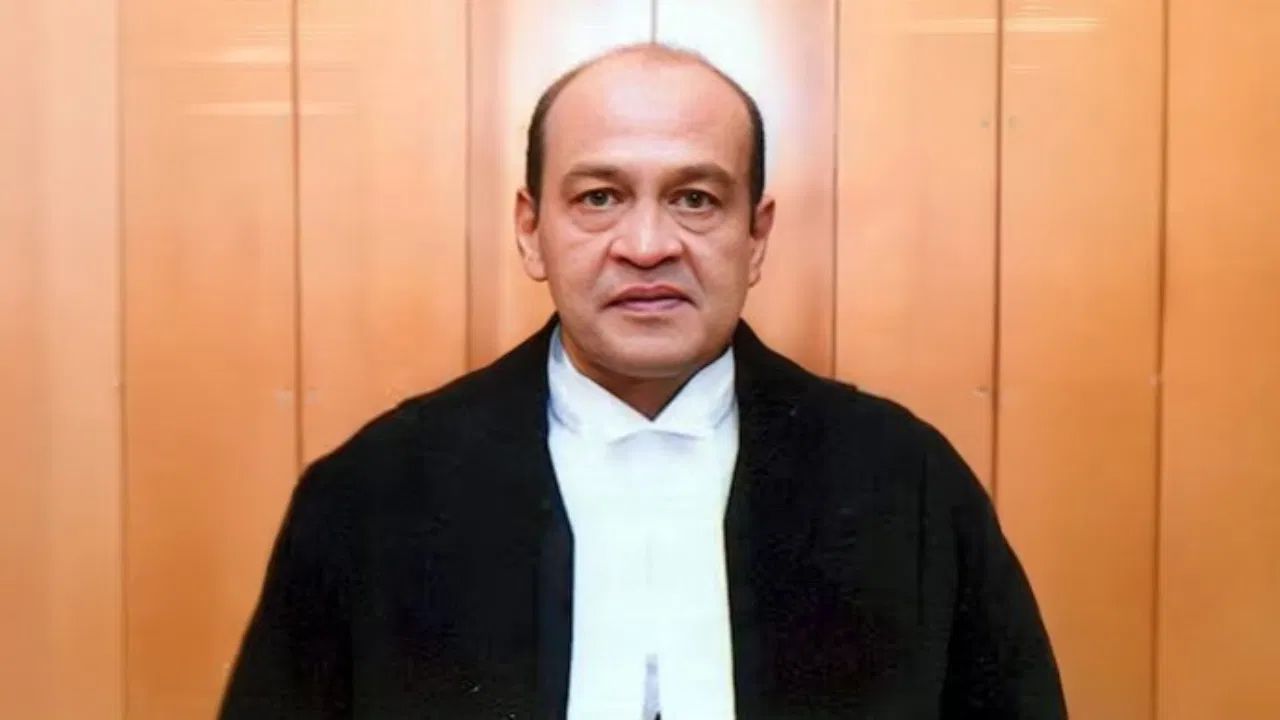
Justice Yashwant Varma Resigns as Inquiry Continues Over Cash Discovery
New Delhi: A Lok Sabha inquiry committee has found former Delhi High Court judge Justice Yashwant Varma responsible in the controversial cash-at-home case involving the discovery of burnt currency at his official residence in New Delhi. The report has reignited a major debate over judicial accountability, transparency and the process of action against judges.
The committee’s findings, submitted under the Judges (Inquiry) Act, 1968, stated that Justice Varma failed to provide a satisfactory explanation about the source and ownership of a large amount of unexplained cash recovered after a fire at his residence in March 2025.
The high-profile case came back into focus after the inquiry report was tabled in both Houses of Parliament on Wednesday. The three-member panel examined allegations related to the discovery of partially burnt currency notes from Justice Varma’s official residence at 30 Tughlaq Crescent in New Delhi.
The report examined evidence, statements and documents collected during the proceedings and concluded that the explanation provided by Justice Varma did not meet the standards of transparency and institutional responsibility expected from a judicial officer.
The findings have triggered renewed discussions about how allegations involving constitutional authorities should be investigated and what accountability mechanisms should apply to senior members of the judiciary.
The controversy began on the night of March 14, 2025, when a fire broke out at Justice Yashwant Varma’s official residence in New Delhi. During the firefighting operation, authorities allegedly discovered a large quantity of partially burnt currency notes inside a storeroom located on the premises.
The discovery immediately raised questions about the origin of the money, its ownership and how such a large amount of cash was present inside the official residence of a serving judge. At that time, Justice Varma was serving at the Delhi High Court. Following the controversy, he was transferred back to his parent court, the Allahabad High Court. Justice Varma denied allegations of wrongdoing and maintained that he had no connection with the cash found at the residence.
An inquiry committee was constituted by Lok Sabha Speaker Om Birla under the Judges (Inquiry) Act, 1968, after Parliament members supported proceedings seeking Justice Varma’s removal. The panel was headed by Supreme Court Justice Aravind Kumar. The other members included former Bombay High Court Chief Justice Shree Chandrashekhar, who was later elevated to the Supreme Court, and senior advocate BV Acharya.
After examining oral testimony, documentary records and other evidence, the committee found that Justice Varma could not provide a convincing explanation regarding the presence of the cash. The report stated that the explanation regarding the discovery, source and ownership of the currency was not satisfactory and raised concerns about accountability.
The committee noted that a substantial amount in the denomination of Rs 500 was recovered from the storeroom located inside the official residential premises. The panel observed that the circumstances surrounding the cash discovery required a credible explanation, particularly because such a large quantity of currency would normally be difficult to remain unnoticed.
The report also highlighted that the condition of the storeroom was disturbed before legal sealing and inspection could take place. The subsequent non-availability of some currency notes was also described as unexplained.
While the inquiry committee raised concerns over Justice Varma’s conduct, it reportedly found no evidence of any larger conspiracy behind the incident. The panel’s findings shifted attention towards the responsibility of the former judge and the standards expected from individuals holding constitutional positions. The report also indicated that Justice Varma’s responses during the inquiry proceedings were not considered satisfactory.
The controversy escalated after more than 200 Members of Parliament supported a motion seeking Justice Varma’s removal. Following this, the Lok Sabha Speaker formed the inquiry committee in August 2025 to examine the allegations.
However, Justice Varma resigned from judicial office during the inquiry process, making the removal proceedings practically ineffective. His resignation has not yet been formally notified by the Ministry of Law and Justice, adding another legal dimension to the matter. The development has raised questions among legal experts about whether proceedings under the Judges (Inquiry) Act can continue after the resignation of a judge.
The Justice Yashwant Varma cash case has emerged as one of the most significant controversies involving a member of the higher judiciary in recent years. The case has intensified discussions about judicial ethics, internal investigation systems and the need to maintain public confidence in constitutional institutions. The controversy also highlights the difficult balance between protecting judicial independence and ensuring accountability when serious allegations emerge against judges.
With the inquiry report now officially placed before Parliament, the next steps will depend on constitutional authorities, lawmakers and legal interpretations. The findings may continue to be examined in the context of judicial reforms, accountability mechanisms and procedures governing allegations against judges. The case, which began with a fire incident at a judge’s residence in March 2025, has now become a major test of India’s institutional framework for handling allegations involving members of the higher judiciary.

