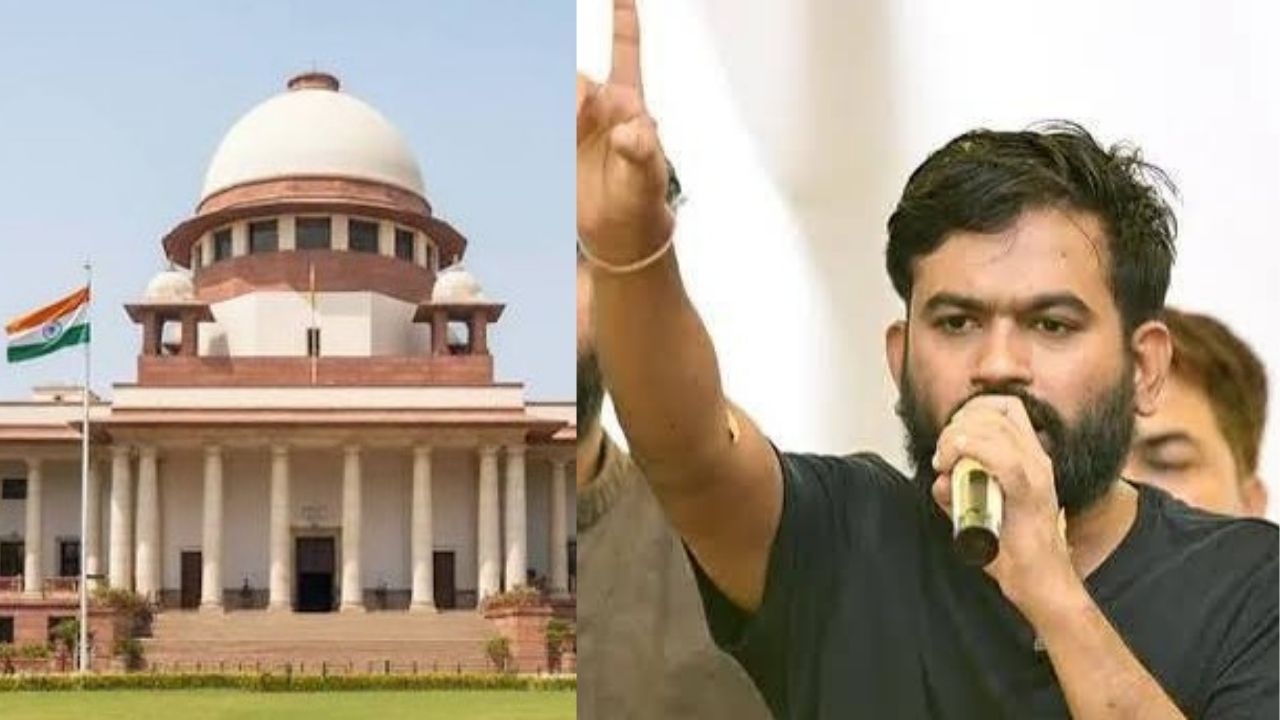
Student Protesters Await Supreme Court Verdict On FIR Relief
New Delhi: A major legal development unfolded ahead of the Cockroach Janata Party’s September 5 march in the national capital, with the Centre moving the Supreme Court over FIRs registered against students who participated in protests linked to the NEET paper leak controversy.
The government filed an application before the apex court on Monday seeking the cancellation of eligible protest-related FIRs and invoked Article 142 of the Constitution, a special power that allows the Supreme Court to pass orders necessary to ensure complete justice.
The move has intensified attention around the ongoing dispute between student protesters and authorities, with the fate of several cases now dependent on the Supreme Court’s decision.
The development comes days before the CJP’s planned march in Delhi, where the organisation has raised concerns over pending FIRs, alleged police action during earlier demonstrations and demands connected with the NEET controversy.
The FIRs at the centre of the dispute were registered during protests that erupted following allegations of irregularities and paper leak issues related to the NEET examination. Student groups and activists had been demanding withdrawal of cases filed against protesters, arguing that many young demonstrators were facing legal challenges because of their participation in the agitation.
The issue became one of the key demands raised during the earlier CJP protests. The organisation had sought removal of cases against protesters as part of the broader resolution of the dispute. However, concerns over the pending FIRs continued, leading to renewed mobilisation and the announcement of the September 5 march in the national capital.
The Centre’s application is based on Article 142 of the Indian Constitution, which gives the Supreme Court extraordinary authority to pass orders required to deliver complete justice in matters before it. The provision allows the apex court to provide solutions in exceptional situations where existing legal mechanisms may not offer an immediate resolution.
In the case of protest-related FIRs, the government’s move is significant because withdrawing a large number of criminal cases through the normal process can involve lengthy legal procedures.
Once an FIR is registered, authorities generally have to complete investigation and submit a closure report before the concerned court. The final decision rests with the judicial process, making mass withdrawal of cases a complicated legal exercise. The Supreme Court had earlier examined these challenges and indicated that Article 142 could potentially provide a constitutional route to resolve the issue.
While the Centre has sought relief for eligible student protesters, the move does not automatically mean that every FIR will be removed. The government has maintained that individuals accused of serious criminal offences should not receive the benefit of any blanket relief.
Cases involving allegations of grave crimes, including murder, rape, kidnapping and other serious offences, are expected to remain outside the scope of any possible cancellation.
The Supreme Court is likely to examine the nature of allegations, evidence available, investigation status and circumstances surrounding each category of cases before reaching a decision.
The top court of the country has already been dealing with multiple matters related to the NEET protest controversy and subsequent demonstrations. During earlier hearings, the court considered the issue of FIRs registered against protesters and observed the legal difficulties involved in withdrawing cases through standard procedures.
The Bench had also clarified that relief should not extend to individuals facing serious criminal allegations and that genuine offences must continue to be investigated. The court’s approach has focused on balancing the rights of protesters with the need to ensure that criminal acts committed during demonstrations are not ignored.
The Centre’s Supreme Court move comes at a crucial time as CJP prepares for its September 5 march from India Gate to the Delhi Police Headquarters. The organisation has stated that the demonstration will highlight unresolved issues related to protest FIRs, alleged police action and demands emerging from the NEET paper leak controversy.
The timing of the government’s application has added further significance to the upcoming hearing, as any decision by the Supreme Court could directly impact the protest movement and the legal position of affected students.
The FIR controversy has grown beyond a single protest issue and has sparked a wider debate over how authorities handle large-scale student movements. For many students, the removal of criminal cases could affect future opportunities, including education, employment and professional prospects.
At the same time, authorities have emphasised the importance of separating peaceful demonstrators from individuals accused of violence or serious criminal activity. The Supreme Court’s decision could become an important reference point for handling similar protest-related cases in the future.

