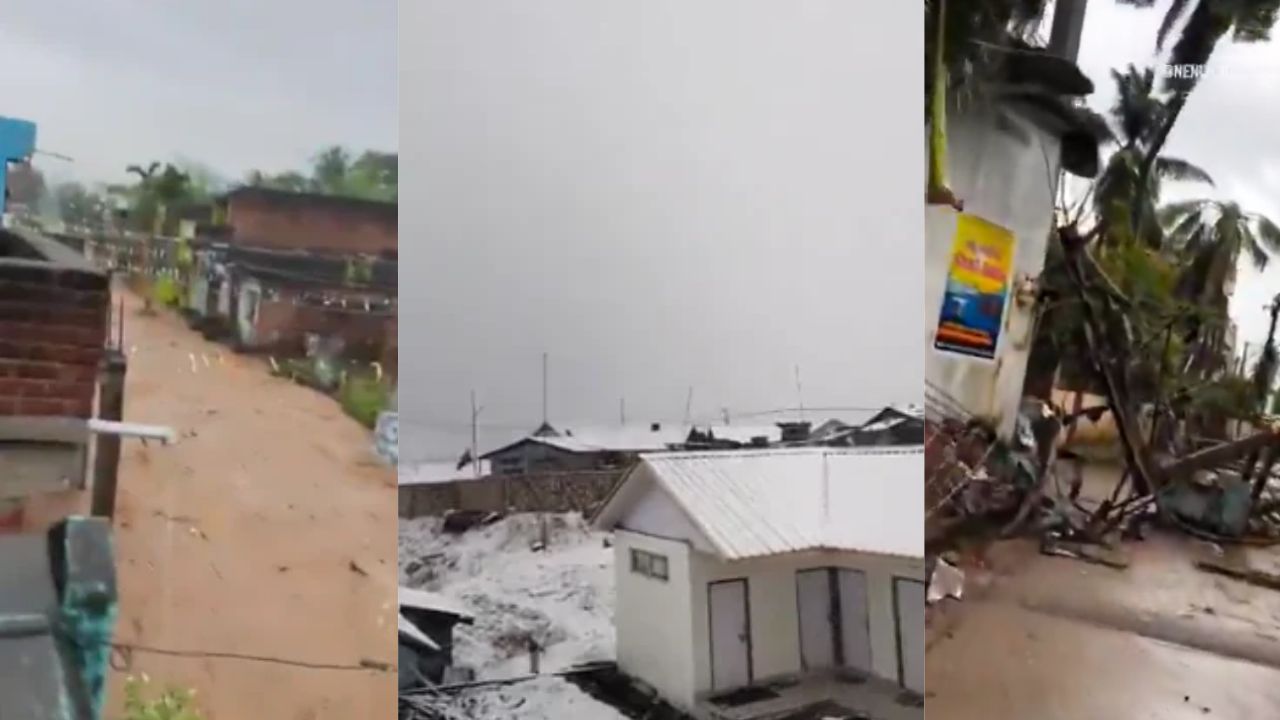
Cyclone Arnab aftermath: Commuters navigate waterlogged roads as heavy rain disrupts daily life in eastern India. (Img: X)
New Delhi: Cyclone Arnab, which crossed the Andhra Pradesh and Yanam coasts as a very severe cyclonic storm, has weakened significantly after triggering torrential rainfall, damaging critical infrastructure, uprooting trees and electric poles, disrupting power supply and claiming five lives across Andhra Pradesh. The India Meteorological Department (IMD) has forecast further weakening into a depression later in the day, followed by a well-marked low-pressure area later in the day.
The storm’s impact has extended across coastal Andhra Pradesh and southern Odisha, with widespread waterlogging, road damage, agricultural losses and interruptions to essential services. Authorities have mobilised emergency response teams, evacuated vulnerable populations and initiated large-scale restoration operations to minimise further damage and accelerate the return to normalcy.
According to the IMD’s latest bulletin issued on Thursday morning, Cyclone Arnab has weakened into a deep depression and is very likely to deteriorate further into a depression during the morning hours. The weather system is subsequently expected to weaken into a well-marked low-pressure area by the evening.
The cyclone completed its landfall along the Andhra Pradesh and Yanam coasts during the early hours of Wednesday, October 28. The landfall process extended over approximately six hours, with the storm’s central region moving completely over land.
At the time of landfall, Arnab was classified as a very severe cyclonic storm, with maximum sustained wind speeds of 125–135 kmph and gusts reaching 150 kmph. The system subsequently weakened into a severe cyclonic storm at around 8:30 am on Wednesday as it continued moving inland.
Although the cyclone has weakened considerably, the residual weather system continues to pose risks through intense rainfall, localised flooding, waterlogging, unstable trees, damaged electrical infrastructure and hazardous road conditions. Residents in vulnerable areas are advised to follow official weather bulletins and local administration advisories.
Andhra Pradesh has reported five deaths associated with separate cyclone-related incidents, including electrocution and injuries caused by falling trees. The fatalities were reported across Vizag, Anakapalle, Kakinada, Konaseema and West Godavari, according to the available reports.
Two electrocution incidents were reported in the initial assessments. A 53-year-old man died in Visakhapatnam district after coming into contact with a live electrical wire that had snapped across an agricultural field channel. In a separate incident, a woman died after accidentally stepping on an exposed live wire outside her residence in Yellamanchili town in Anakapalle district.
The incidents underscore the serious post-cyclone hazards associated with damaged power lines, submerged electrical equipment and fallen utility infrastructure. Residents have been urged to maintain a safe distance from downed wires, flooded electrical installations and unstable structures until authorised personnel complete inspections and repairs.
Andhra Pradesh Chief Minister N. Chandrababu Naidu has announced relief and compensation measures for affected families, farmers, fishermen and businesses. He has also approached Union Home Minister Amit Shah to seek central assistance for addressing the extensive damage to crops, homes, roads and electricity infrastructure across several coastal districts.
The state government is undertaking preliminary damage assessments to establish the scale of losses and identify priority areas for emergency assistance and rehabilitation.
Anticipating the cyclone’s landfall and the threat posed by destructive winds, storm-related flooding and torrential rainfall, authorities in Andhra Pradesh and Odisha evacuated more than 1.8 lakh people from vulnerable and low-lying locations.
In Andhra Pradesh, district administrations shifted residents from exposed coastal settlements and flood-prone areas to cyclone shelters and temporary relief centres. Officials arranged essential supplies and deployed police personnel, disaster response teams and local administration staff to support evacuation, emergency response and infrastructure restoration.
Preliminary information from Konaseema district indicated that more than 10,000 people had been moved from low-lying areas, with approximately 495 cyclone shelters and temporary relief centres established in the district.
The wider evacuation effort was intended to reduce casualties, protect vulnerable communities and ensure that residents remained away from dangerous coastal stretches during the period of maximum cyclone intensity.
Relief operations have also prioritised the availability of food, safe drinking water, medical assistance and temporary accommodation for displaced households.
Several coastal districts experienced exceptionally heavy rainfall as Cyclone Arnab approached and crossed the coastline. Rainfall totals reported in the initial assessments highlighted the intensity of precipitation across northern and central coastal Andhra Pradesh.
Visakhapatnam recorded 315 mm of rainfall in the reported observation period, followed by Vizianagaram at 301 mm, Anakapalli at 275 mm, Srikakulam at 257 mm and Krishna district at 223 mm.
In a separate set of IMD observations covering the period from 8:30 am on October 27 to 4 am on October 28, Kannuripalem in Anakapalli recorded 261.5 mm of rainfall. KVBR School in Vizianagaram recorded 259.74 mm, while the 16th Police Battalion area in Visakhapatnam received 259.06 mm.
The varying totals reflect different reporting locations and observation windows. Collectively, the data demonstrate the intensity of rainfall associated with the cyclone and the potential for waterlogging, localised flooding, agricultural damage and disruption to road connectivity.
The IMD had forecast continued heavy rainfall during Wednesday and Thursday as the storm moved inland and weakened. Even as wind speeds decline, persistent rainfall can sustain flooding risks, particularly in low-lying settlements, agricultural fields and locations near rivers, streams and drainage channels.
Cyclone Arnab caused extensive damage to roadside trees, electric poles, local roads and utility networks across several districts of Andhra Pradesh. Strong winds and heavy precipitation disrupted electricity supply and mobile connectivity, while fallen trees obstructed traffic and delayed access to some localities.
In Kakinada district, Superintendent of Police G. Bindu Madhav reported that the storm had uprooted hundreds of trees and fewer than 100 electric poles. Although no major damage was identified in the preliminary assessment, the coastal Uppada road was reported to have been washed away.
In Alluri Sitaramaraju district, authorities reported uprooted trees, damaged electric poles and inundated roads. An old bridge in Tadiguda village in Anantagiri mandal was washed away, temporarily isolating a hamlet. Officials said alternative arrangements were being made while restoration work continued.
In Konaseema district, gusty winds reaching approximately 130 kmph uprooted trees and electrical poles, blocking roads and disrupting power supply. Police authorities indicated that clearance operations were being conducted to restore connectivity, with major highways prioritised.
Visakhapatnam district also sustained significant damage to its green cover. District Collector M. Abhishikth Kishore reported that approximately 400 trees had fallen across the district. Roads and Buildings Department teams and Greater Visakhapatnam Municipal Corporation personnel were engaged in removing debris and reopening affected roads.
Most major roads had been cleared in the initial assessment, while work continued to remove remaining fallen trees and restore electricity. Approximately 100 families were reported to be staying at two relief centres, while some other evacuated residents had returned home.
Officials also reported that Anakapalle had not experienced major issues in the initial district assessment, although continued monitoring remained necessary because of the possibility of additional rainfall and localised flooding.
Chief Minister N. Chandrababu Naidu reviewed the cyclone situation on Wednesday morning and instructed officials to expedite restoration work, minimise property losses and ensure uninterrupted access to essential services wherever possible.
During a teleconference involving approximately 32,000 personnel, including district collectors, the Chief Minister directed departments to clear roads obstructed by fallen trees within two hours and prioritise the removal of debris from national highways.
He instructed electricity officials to restore power supply once strong winds subsided and conditions were considered safe for repair crews. The administration was also directed to maintain adequate stocks of food, drinking water and medical supplies at cyclone shelters and temporary relief centres.
Special attention was given to protecting agricultural and horticultural assets, preventing excess water from entering cultivated fields and reducing the risk of breaches in tanks and canals. Officials were instructed to prepare preliminary estimates of crop damage and keep National Disaster Response Force and State Disaster Response Force personnel on standby.
The government’s response has focused on emergency access, electricity restoration, public safety, relief distribution and the preliminary assessment of losses suffered by farmers, fishing communities, households and commercial establishments.
The Chief Minister has also sought assistance from the Union government to support recovery efforts in districts affected by the cyclone.
Southern Odisha has experienced substantial rainfall associated with Cyclone Arnab, with at least 17 districts affected, according to Chief Minister Mohan Charan Majhi.
The storm’s passage along the neighbouring Andhra Pradesh coast brought persistent rainfall to parts of Odisha, disrupting normal movement and increasing concerns over localised flooding and damage to infrastructure.
Koraput recorded 188 mm of rainfall in the reported observations, followed by Ganjam at 161 mm and Gajapati at 135 mm.
The Odisha government has been monitoring the evolving weather situation and assessing the impact on affected communities. Continued rainfall can create additional challenges for rural road connectivity, agricultural operations, drainage systems and access to essential services.
The storm’s influence has also been associated with fresh snowfall in high-altitude areas of Sikkim, including Kupup village and Gnathang Valley, highlighting the wider atmospheric effects reported during the cyclone’s passage.
Cyclone Arnab has brought back difficult memories of Cyclone Hudhud, which devastated Visakhapatnam and surrounding areas in October 2014.
Although Arnab was less severe in its direct impact on the city and did not make landfall there, its powerful overnight winds, uprooted trees, damaged electric poles, prolonged power cuts and disrupted mobile network connectivity reminded residents of the earlier disaster.
Residents took to social media to compare the two weather events, recalling sleepless nights, electricity outages and the need to remain indoors in accordance with instructions issued by the district administration.
The comparisons reflect the lasting public memory of Hudhud and the heightened sensitivity of coastal communities to severe cyclonic weather. They also highlight the importance of early warnings, evacuation planning, resilient electricity networks, emergency communications and rapid post-disaster restoration.
While the two cyclones differed in their intensity and impact on Visakhapatnam, Arnab’s passage once again demonstrated the vulnerability of urban infrastructure to strong winds, falling trees and extended interruptions to essential services.
The cyclone disrupted transport and connectivity in several affected areas. Airlines cancelled flights to Visakhapatnam and Vijayawada on Wednesday as severe weather affected operations and passenger safety.
Some train services were also cancelled, while fallen trees, waterlogged roads and damaged infrastructure affected surface transport in parts of the coastal region.
Road clearance and restoration of transport links have emerged as key priorities for district administrations. Officials have been working to remove debris, reopen major routes and ensure emergency vehicles can reach affected communities.
Residents and travellers should verify the latest flight, railway and road advisories before beginning their journeys, particularly in areas where restoration work or continuing rainfall may affect normal operations.
As Cyclone Arnab weakens, rainfall activity is expected to ease considerably across Kerala, while daytime temperatures are forecast to rise noticeably.
In Telangana, isolated locations across 12 districts are likely to experience thunderstorms accompanied by lightning and gusty winds on Thursday, October 29. Residents have been advised to remain alert to changing weather conditions and avoid exposed areas during lightning activity.
Delhi-NCR may also experience rainfall linked to the broader weather system, with forecasts indicating the possibility of rain through November 1. Local conditions may vary, and residents should consult the latest IMD updates for location-specific information.
The changing weather pattern highlights the need for continued monitoring even after the cyclone’s landfall and subsequent weakening, as associated rain bands and atmospheric disturbances can influence weather conditions well beyond the immediate coastal impact zone.
Cyclone Arnab was named by Bangladesh and forms part of the official tropical cyclone naming list adopted under the World Meteorological Organization and United Nations Economic and Social Commission for Asia and the Pacific framework for the North Indian Ocean region.
The name is commonly associated with the Bengali word for the ocean or sea.
The regional naming system includes contributions from 13 countries: Bangladesh, India, Iran, the Maldives, Myanmar, Oman, Pakistan, Qatar, Saudi Arabia, Sri Lanka, Thailand, the United Arab Emirates and Yemen. Each country contributed 13 names, resulting in a list of 169 names used in sequence as tropical cyclones develop over the North Indian Ocean, encompassing the Bay of Bengal and the Arabian Sea.
Cyclone naming is an important component of meteorological communication and disaster preparedness. Assigning a distinct name to each system helps meteorological agencies, governments, media organisations and the public identify and track individual storms without confusion, particularly when multiple weather systems are active.
The naming convention does not itself indicate a cyclone’s intensity or potential damage. Those characteristics are determined through meteorological observations, wind-speed classifications, forecast tracks and associated hazard assessments.
With Cyclone Arnab forecast to weaken into a depression on October 29 and subsequently become a well-marked low-pressure area, the immediate focus is shifting from landfall preparedness to post-cyclone recovery.
Electricity restoration, clearance of fallen trees, repair of damaged roads, assessment of agricultural losses and delivery of relief to affected households will remain central to the response across Andhra Pradesh and Odisha.
The weakening of the cyclone is an encouraging development, but it does not automatically eliminate the risks associated with residual rainfall, waterlogged roads, unstable trees, exposed electrical wires and damaged bridges.
Authorities are expected to continue monitoring vulnerable areas, conducting damage assessments and coordinating restoration work. Residents should follow official advisories, avoid unnecessary travel through affected locations and report hazardous infrastructure to the relevant local authorities.
Cyclone Arnab has underscored the importance of timely evacuation, coordinated disaster management and resilient public infrastructure. As coastal communities begin the recovery process, the speed and effectiveness of relief distribution and restoration efforts will be critical to helping affected families, farmers, fishermen and businesses return to normal life.
The IMD’s latest bulletin remains the key reference for changes in the system’s intensity, rainfall forecast and associated weather warnings.

