English
 English

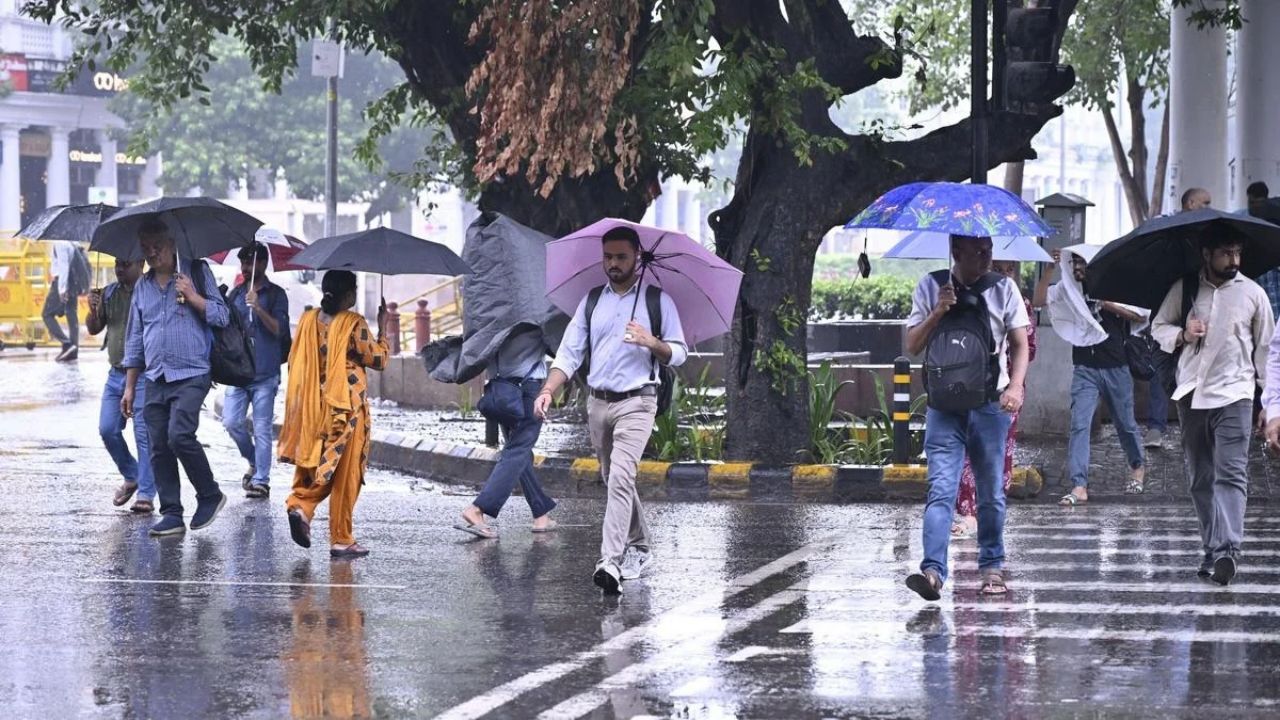
Delhi AQI rises as monsoon retreats, winter approaches (Img: IANS)
New Delhi: Delhi’s air quality has begun to worsen as the southwest monsoon retreats, with the city’s Air Quality Index (AQI) rising to 169 on Monday.
The reading is at the higher end of the Central Pollution Control Board’s (CPCB) ‘moderate’ category, with dry conditions, weak winds and local emissions contributing to the deterioration.
The India Meteorological Department (IMD) said conditions are becoming favourable for the further withdrawal of the southwest monsoon. The monsoon is expected to retreat from Delhi over the next two to three days, with no significant rain activity forecast this week.
Delhi’s AQI has risen sharply from 88 on Friday to 118 on Saturday, 160 on Sunday and 169 on Monday. PM2.5 and ozone have emerged as the dominant pollutants during the recent deterioration.
Monsoon rainfall had helped keep Delhi’s air relatively cleaner by removing pollutants from the atmosphere. With little or no rain expected, dust and vehicle emissions can remain suspended for longer periods.
Weak winds are also limiting the dispersion of pollutants, allowing emissions to build up over the city. Traffic, road dust, construction activity and other local urban sources are adding to the pollution burden.
The expected withdrawal of the monsoon is likely to bring drier and clearer weather, conditions that could push AQI levels higher.
Delhi had enjoyed relatively cleaner air over the past month because of monsoon showers and stronger winds. In September, the city recorded 12 ‘satisfactory’ and eight ‘moderate’ air quality days.
Despite the recent deterioration, Delhi’s current pollution levels are still below the winter peak. The most severe phase usually arrives later, when falling night-time temperatures, a shallower atmospheric mixing layer and weaker, variable winds restrict the movement of pollutants.
Crop-residue burning in Punjab and Haryana is another seasonal factor. It generally starts around September and intensifies from mid-October through November.
Delhi’s pollution typically rises sharply from October and remains elevated through February as winter conditions increasingly trap pollutants close to the ground.