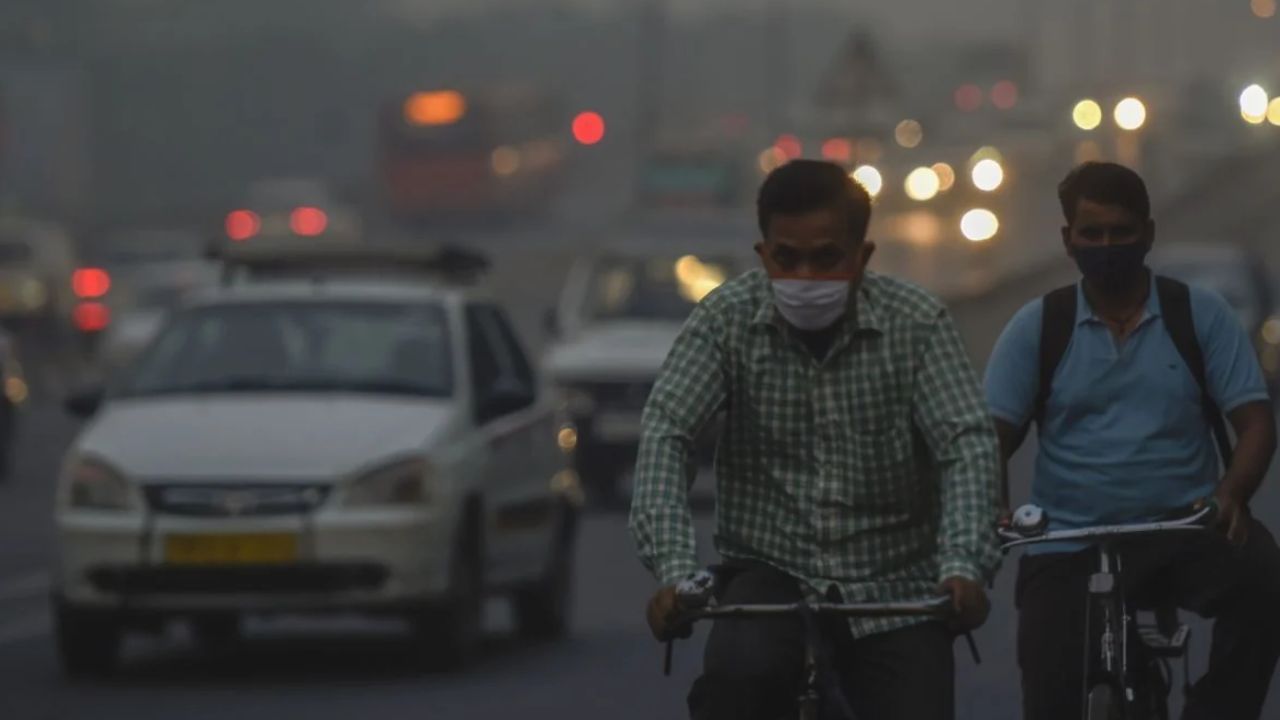
Thick smog and rising pollution levels continue to affect Delhi as the AQI crosses the 450 mark. (Img: Pinterest)
New Delhi: Air pollution levels in the national capital worsened sharply on November 28, with the Air Quality Index (AQI) touching 454 at around 6:50 AM, placing the city in the hazardous category under the AQI scale. Vehicular emissions continued to be the largest estimated source of PM2.5 pollution, according to source apportionment data.
Delhi's air quality deteriorated through Friday evening and overnight after recording a temporary improvement during the afternoon. The AQI dropped to 144 at around 3:00 PM on Friday, down from 273 in the morning.
Also Read: Tata Trusts Get No Urgent Relief As HC Allows Tata Sons Board Meeting On November 30
However, pollution levels began rising again after 7:30 PM, with readings crossing 300. The AQI remained between 300 and 400 before midnight before moving beyond the 400 mark in the early hours of Saturday.
The latest reading of 454 was close to the seven-day high of 449 recorded on November 21. During the seven-day period ending November 27, the lowest AQI stood at 170 at noon on November 26.
Around 6:07 AM on Saturday, Delhi's PM10 concentration was recorded at 428 micrograms per cubic metre, substantially exceeding the World Health Organization's recommended 24 hour guideline of 45 micrograms per cubic metre.
Other recorded pollutant levels included carbon monoxide at 3,395 parts per billion, nitrogen dioxide at 25 ppb, sulphur dioxide at 9 ppb and ozone at 2 ppb. The temperature was 25°C, with 30% humidity and wind speeds of 3.6 kmph.
Vehicular emissions were the biggest estimated contributor to Delhi's PM2.5 pollution accounting for 32% of the total pollution load.
Biomass burning contributed 22.8%, followed by secondary organic aerosols at 14% and secondary inorganic pollutants at 12.3%. Waste burning accounted for another 10.7%, while industrial emissions contributed 4.2%.
Mineral dust and ash, coal combustion and mixed combustion contributed 1.8%, 1.5% and 0.8%, respectively.
AQI.in uses the US AQI scale, under which readings above 300 are classified as hazardous. The CPCB follows India's national classification system, where AQI readings between 401 and 500 fall under the severe category.
Among other cities, Bettiah in Bihar recorded an AQI of 682, followed by Ghazipur at 558, Saharsa at 488 and Srinagar at 480, according to the reports.

