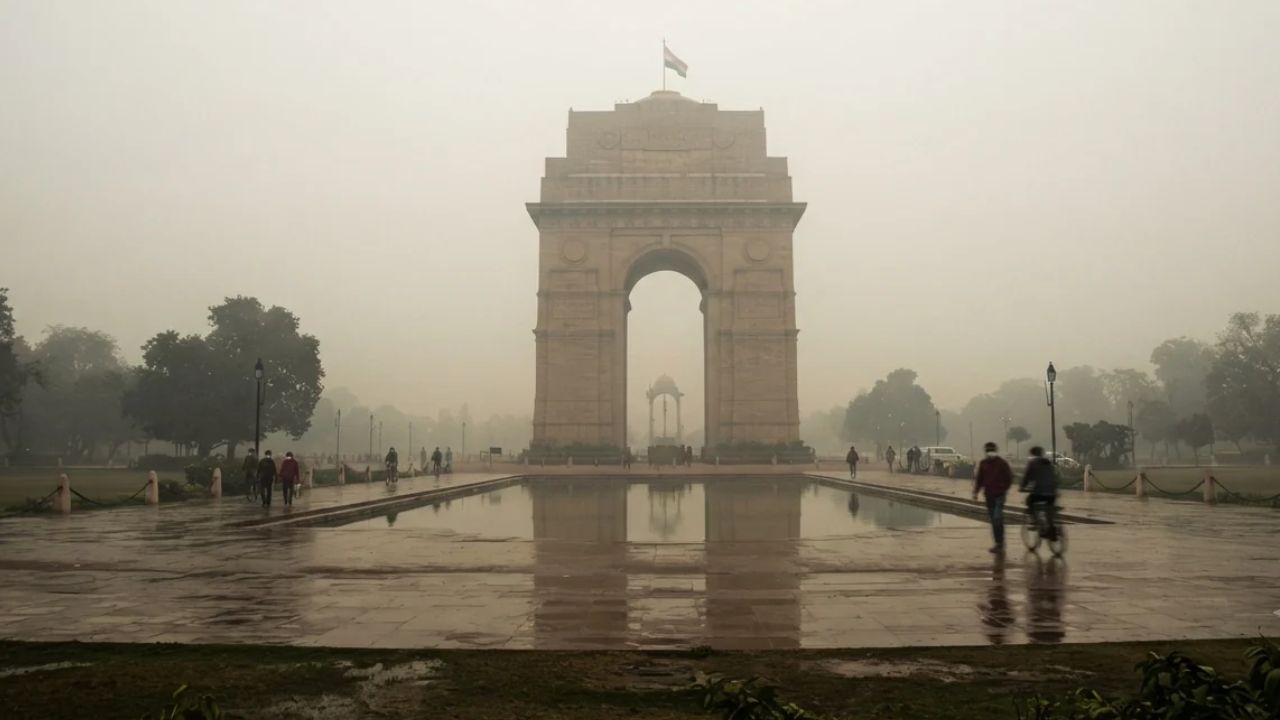
Delhi gets a breather as pollution levels ease (IMG: AI Generated)
New Delhi: Delhi residents have received some relief from rising air pollution as the national capital's Air Quality Index (AQI) has dropped to 222 early this morning. The improvement in air quality over recent days has brought some respite, particularly for children, senior citizens and people suffering from respiratory illnesses. However, pollution levels in several parts of Delhi-NCR continue to remain a concern.
Delhi's air quality has shown a gradual improvement after remaining at unhealthy levels for an extended period. The latest AQI reading of 222 indicates better conditions compared to the more severe pollution levels recorded earlier.
Also Read: Yogi Adityanath Launches Rs 2,900-Crore Ball Corporation Plant In Meerut
While the decline is encouraging, the situation is far from satisfactory. According to the Central Pollution Control Board's AQI classification, a reading between 201 and 300 falls under the 'Poor' category. This means residents may still experience breathing discomfort, particularly those with existing respiratory or heart-related conditions.
According to the reported readings, Anand Vihar recorded an AQI of 327, placing it in the Very Poor category, while Noida Sector 62 also reported a high AQI of 319. Chandni Chowk registered an AQI of 277, followed by IGI Airport at 258, Bawana at 245, Gurugram Sector 51 at 233 and Ashok Vihar at 224. Indirapuram in Ghaziabad recorded an AQI of 207. Meanwhile, Hapur reported a comparatively better AQI of 114, falling under the Moderate category. These figures show that despite an overall improvement in Delhi's air quality, several areas across the NCR continue to experience considerable pollution.
The readings indicate that Anand Vihar and Noida Sector 62 remain among the more polluted locations in the region. Meanwhile, Hapur has recorded comparatively better air quality.
Several factors contribute to Delhi's persistent air pollution problem. Stubble burning in neighbouring states, particularly Punjab and Haryana, is one of the seasonal contributors. However, local sources such as vehicle emissions, construction dust, industrial activities and road dust also add to the pollution burden.
The situation generally becomes more challenging during winter when low temperatures, calm winds and atmospheric conditions can trap pollutants close to the ground.
Authorities have been implementing various measures to reduce pollution levels and prevent air quality from deteriorating further. These include monitoring pollution sources, controlling dust emissions and taking action against activities contributing to poor air quality.
Although the recent decline in AQI is encouraging, sustained efforts will be necessary to ensure cleaner air across Delhi-NCR.

