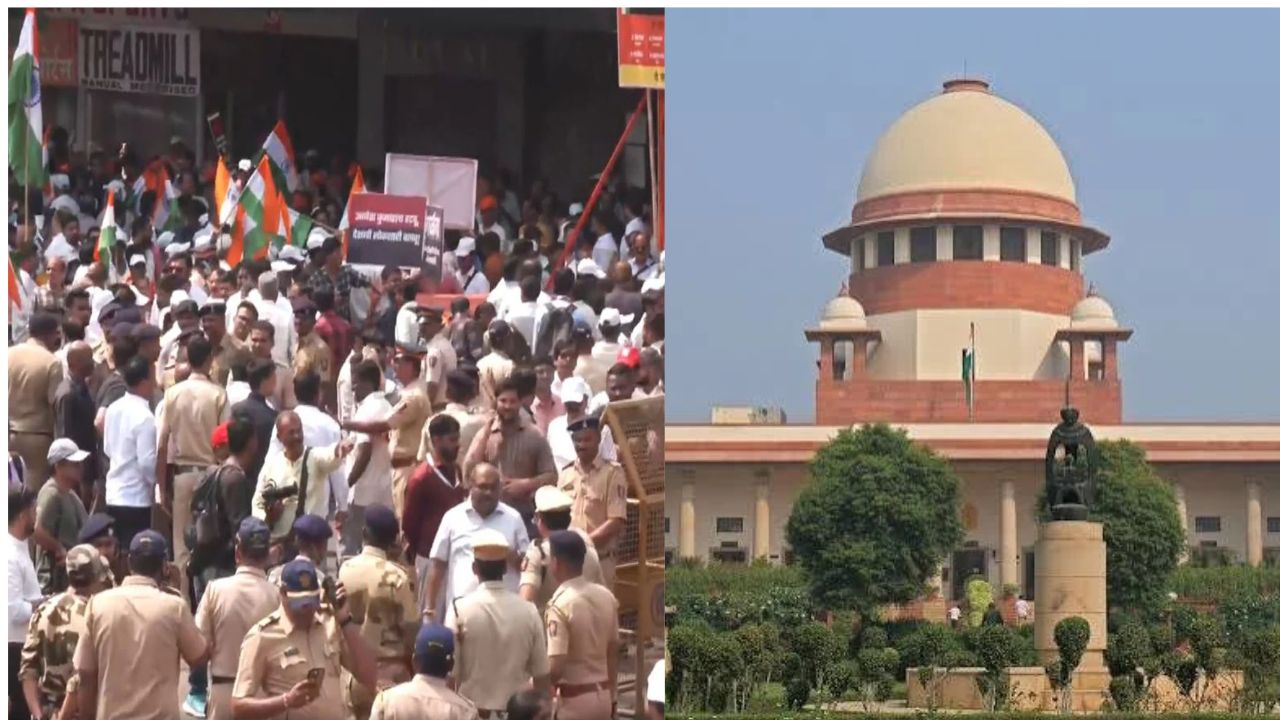
The Supreme Court is hearing two petitions linked to alleged detentions and public transport restrictions during protests in Delhi. (Img: X)
New Delhi: The Supreme Court is holding a special sitting on Sunday to examine two petitions linked to the protests against Chief Election Commissioner Gyanesh Kumar in Delhi. The proceedings will focus on the alleged detention of opposition leaders, students, journalists and other demonstrators, as well as claims that Metro stations and public transport services were restricted despite earlier court directions.
The Bench of Justice Joymalya Bagchi and Justice V Mohana started hearing the matters raising questions about the limits of police powers, preventive detention, freedom of expression and the right to peaceful assembly at 10:30 am today.
Senior advocate and Trinamool Congress Rajya Sabha MP Menaka Guruswamy has approached the Supreme Court challenging the alleged preventive detention of opposition leaders and other protesters during demonstrations in the national capital.
The petition concerns the detention of political leaders, including four former chief ministers, as well as students, young people, journalists, lawyers and other citizens. The demonstrations took place at Jantar Mantar, where activists associated with the Cockroach Janta Party (CJP) and members of other political parties gathered to protest against Chief Election Commissioner Gyanesh Kumar and demand his resignation.
The plea questions whether preventive detention was justified in the circumstances and raises concerns about protesters allegedly being picked up from public places and opposition leaders being detained at their residences.
At the centre of the legal challenge is the balance between maintaining public order and protecting citizens' fundamental rights. Peaceful assembly and freedom of expression are constitutionally protected, although they remain subject to lawful and reasonable restrictions. The petition places the legality and proportionality of the police action before the Supreme Court for consideration.
The second matter concerns a contempt petition filed by advocate Shailendra Mani Tripathi. It alleges that restrictions on Metro stations and public transport services were inconsistent with the Supreme Court's October 9 directions issued ahead of the protests.
The petition names Union Home Secretary Govind Mohan, Delhi Police Commissioner Anurag Kumar and Delhi Metro Rail Corporation Chairperson D. Thara in connection with the alleged non-compliance.
The plea challenges the reported closure of Metro stations and disruption of train services, arguing that restrictions on public transport could affect protesters' ability to reach demonstration venues.
The allegations have brought transport access into the wider debate surrounding protest management in Delhi. Metro services are a major mode of travel for residents, office-goers and visitors, meaning service restrictions can have consequences beyond the immediate protest area. However, the precise circumstances of the reported restrictions and whether they violated the court's directions remain matters for judicial examination.
The petitions raise issues that extend beyond the political dispute surrounding the Chief Election Commissioner. They concern how authorities manage demonstrations, when preventive detention may be justified and what safeguards should apply when police take action against political leaders and ordinary citizens.
For protesters, the central concern is whether lawful dissent can take place without disproportionate restrictions. For commuters, the dispute highlights how security measures around demonstrations can affect everyday mobility and access to public transport.
The case also brings judicial oversight into focus. When a petition alleges that official action has breached a court's directions, the court can examine the allegations and determine what further proceedings or remedies may be appropriate.
The Supreme Court's special sitting is considering both the challenge to the alleged detentions and the contempt plea concerning public transport restrictions. The outcome will depend on the submissions made before the bench and the court's assessment of the relevant facts, legal provisions and earlier directions.

