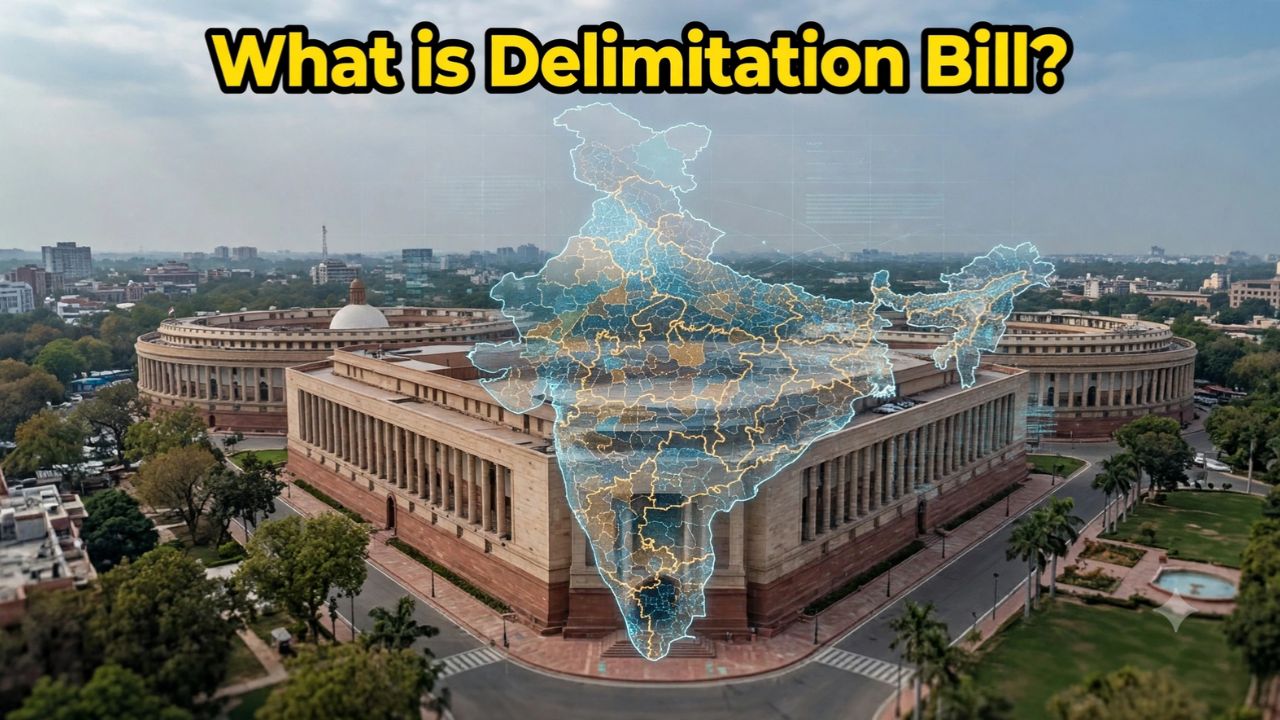
Lok Sabha Seats May Rise to 815 (Image Source: AI Generated)
New Delhi: Preparations are underway for a major change in country's electoral map. Central government has approved Constitutional Amendment Bill related to delimitation through the Cabinet. A special session of Parliament is scheduled to begin on 30 November, during which the revised delimitation bill is expected to be introduced in Lok Sabha. Under the new proposal, the existing number of seats in Lok Sabha and all state legislative asqsemblies could be increased by up to 50 percent. Government claims that this formula will not reduce the current proportional share of any state.
Currently, Lok Sabha has 543 seats. The proposed 50 percent increase would increase this number to approximately 815, meaning 272 new seats could be added to the House. However, the maximum number of members in the Lok Sabha is proposed to be fixed at 850. Government plans to maintain the current seat ratio between states for the next 25 years, until 2051. This could also reduce the potential for a decline in the representation of South Indian states.
Delimitation Bill 2026: EC May Redraw 24 PoK Seats Once Pakistan Occupation Ends
Delimitation will impact not only the Lok Sabha but also the state legislative assemblies. The proposal calls for increasing the constitutional maximum number of assembly seats from 500 to 650. Under this, the current 403 seats in Uttar Pradesh could increase to 605.
State Existing seats Potential new seats
Uttar Pradesh 403 605
West Bengal 294 441
Maharashtra 288 432
Bihar 243 365
Tamil Nadu 234 351
Madhya Pradesh 230 345
Karnataka 224 336
Rajasthan 200 300
Gujarat 182 273
Andhra Pradesh 175 263
These figures are based on the proposed increase. The final number will be determined after the delimitation process is completed.
Delimitation means setting or changing the boundaries of constituencies for Lok Sabha and Assembly elections. Simply put, it determines which area falls under the constituency of which MP or MLA.
Due to population changes over time, the voter ratio in constituencies can become uneven. The purpose of delimitation is to maintain balance in regional representation. Reserved seats for Scheduled Castes (SC) and Scheduled Tribes (ST) are also determined under this process.
In India, delimitation is carried out by the independent Delimitation Commission, which is constituted by the President. It typically consists of retired Supreme Court or High Court judges, the Chief Election Commissioner or his representative, and the Election Commissioner of the relevant state. Under Article 82 of the Constitution, Parliament enacts the Delimitation Act. Articles 330 and 332 provide for SC-ST reservation in the Lok Sabha and Legislative Assemblies.
According to the proposal, the 1971 Census will be used to determine the number of seats, and the 2011 Census will be used to determine the boundaries of constituencies. The government intends to keep the new system in place until 2051. The previous bill, introduced on April 16, planned to allocate seats based on population. The new proposal calls for a uniform 50 percent increase in all states.
Delimitation process is also linked to the Nari Shakti Vandan Act. The government plans to provide 33 percent reservation to women in the 2029 Lok Sabha elections. The proposed system could reserve approximately 272 seats for women.
Population-based delimitation could have increased the seats of more populous states like Uttar Pradesh and Bihar. This was expected to reduce the share of the southern states. The new formula proposes to increase seats for all states in equal proportion. Andhra Pradesh Chief Minister Chandrababu Naidu also expressed satisfaction with the new proposal. He said that the southern states have done considerable work in the field of family planning and it is important to protect their representation.

