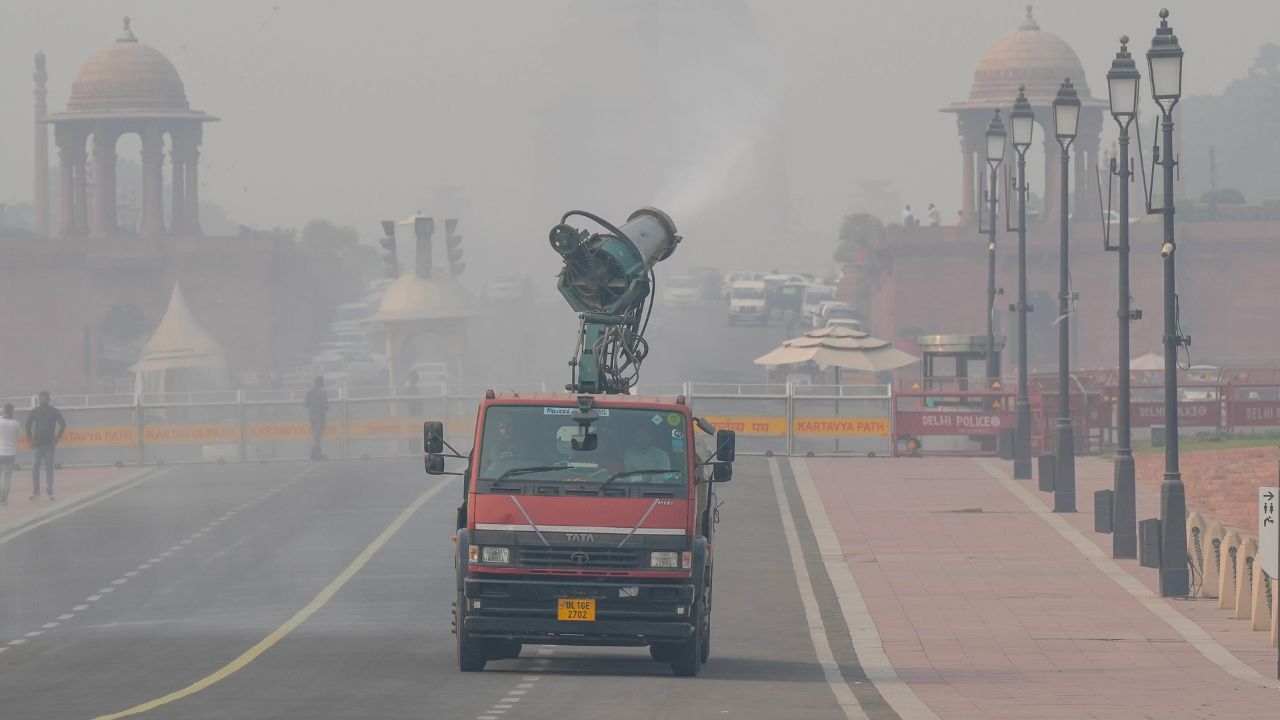
Toxic Smog Chokes Delhi, Health Risks Rise for Residents
New Delhi: Air pollution in Delhi continues to remain at dangerous levels. Despite the government implementing GRAP-4 restrictions, no significant improvement is visible. On Monday morning, almost all areas of the capital were recorded in the red zone, with AQI levels exceeding 300 to 400. In several areas, the level crossed 400, which falls under the 'severe' category.
According to data from the Sameer app, at 6 AM, the AQI in Anand Vihar was recorded at 402, Bawana at 408, Mundka at 400, Narela at 418, and Rohini at 400. Additionally, the AQI reached 403 in Wazirpur and 400 in Jahangirpuri. The air in these areas remains extremely toxic, causing breathing difficulties for residents.
Delhi's overall AQI was recorded at 366, which falls under the 'very poor' category. Readings at most AQI monitoring stations were between 300 and 400. The situation in other NCR cities also remains worrying. Noida's AQI was recorded at 352, Ghaziabad at 348, and Gurugram at 325. All these areas are also in the red zone.
This severe level of pollution is directly impacting people's health. According to doctors, such conditions can lead to an increase in respiratory illnesses, eye irritation, headaches, and sore throats. Children, the elderly, and those with pre-existing health conditions are advised to stay indoors. People are urged to wear masks when going outside and avoid unnecessary travel.
Delhi plans to install air purifiers in 10,000 classrooms amid rising pollution; Read more
The thick blanket of pollution has also slowed down the pace of life in Delhi. Visibility has been significantly reduced due to smog and fog. The situation becomes even more severe during the morning and evening hours. Buildings and historical monuments that were visible from a distance are now disappearing into the smog, affecting road traffic as well.
The fourth phase of the Graded Response Action Plan (GRAP) has been implemented in the capital. Under this plan, vehicles that do not meet BS-6 emission standards are prohibited from entering Delhi. Measures such as a ban on construction and demolition activities, restrictions on industrial activities, and promotion of public transport have been implemented. However, the impact of these measures appears insufficient so far.
The cold weather in Delhi is also intensifying. A yellow alert for cold weather has been issued for the past two days. The Meteorological Department has also issued a yellow alert for fog on Monday. The maximum temperature is expected to be 21 degrees Celsius and the minimum temperature 9 degrees Celsius. The cold and fog could further aggravate the pollution, potentially worsening the situation in the coming days.

