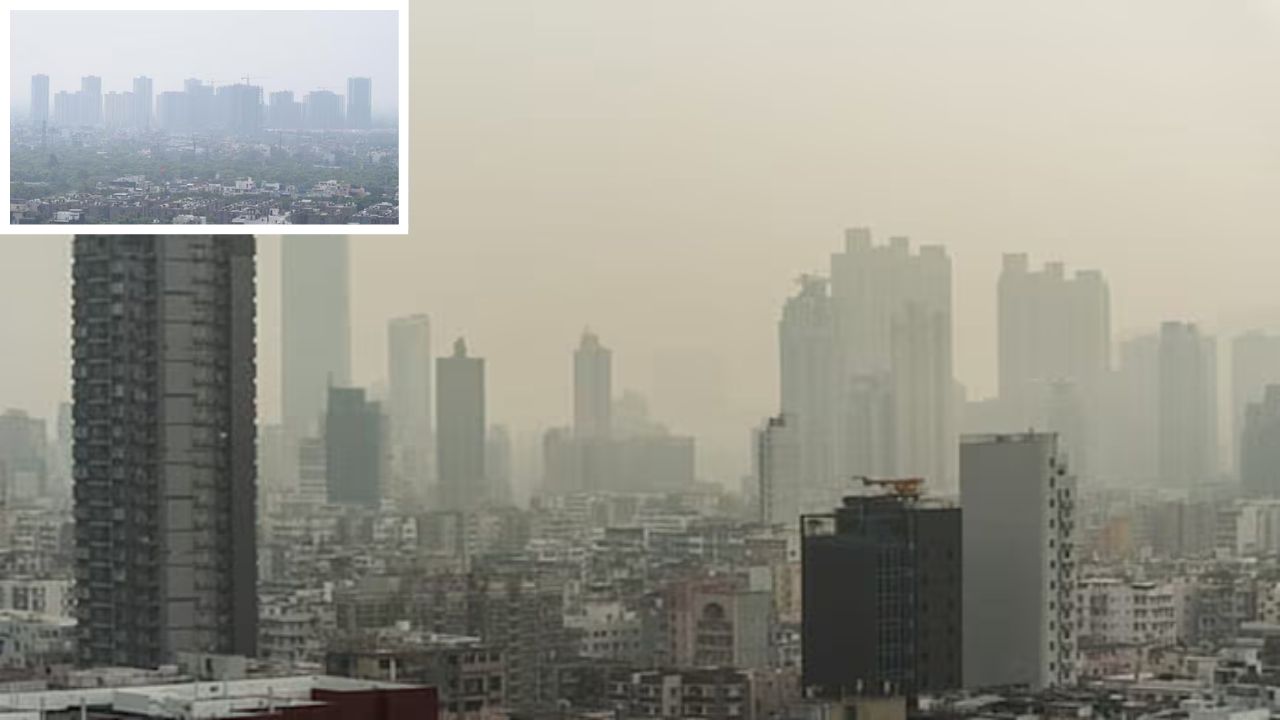
Greater Noida has emerged as the most polluted city in India
New Delhi: Greater Noida has emerged as the most polluted city in India on Monday, followed closely by Ghaziabad and Noida, according to data from the Central Pollution Control Board (CPCB). Residents faced another day of breathing difficulties, itchy eyes, and heavy smog blanketing the region.
CPCB’s 4 pm national bulletin recorded Greater Noida’s 24-hour average Air Quality Index (AQI) at 447, categorised as ‘severe’. Ghaziabad followed at 444 and Noida at 437, both also in the severe range. On Sunday, Noida had the highest AQI at 466, followed by Ghaziabad at 459 and Greater Noida at 435.
Delhi Fog: What is CAT III and how it helps flights land safely in zero visibility? Explained
For context, an AQI of 51-100 is “satisfactory,” 101-200 is “moderate,” 201-300 is “poor,” 301-400 is “very poor,” and above 400 is considered “severe,” per CPCB standards.
Social media posts from residents revealed thick layers of smog covering Noida and Greater Noida. Videos showed a dark haze engulfing high-rise buildings, drastically reducing visibility, with neighbouring structures barely visible. The extent of the pollution left many residents shocked and concerned.
In response to the worsening air quality, district administrations in Gautam Budh Nagar and Ghaziabad directed online classes for pre-nursery to Class 5 students, and hybrid learning for Classes 6 to 12. This came a day after the Graded Response Action Plan (GRAP) Stage-4 was invoked across Delhi-NCR to curb health risks associated with extreme pollution.
GRAP 4 In Delhi-NCR As AQI Worsens: What does it mean for schools, metros, buses? Explained
Experts have cited unfavourable meteorological conditions as a major factor in the sustained hazardous pollution levels. A western disturbance and low wind speeds since Friday have limited pollutant dispersion. Mahesh Palawat, Vice President (Meteorology and Climate Change) at Skymet, explained that easterly winds over December 13-14 increased humidity, creating dense fog and trapping pollutants near the surface.
Palawat added that wind direction is expected to shift to the west from Tuesday, with stronger winds likely to improve fog conditions and aid the dispersion of pollutants. Until then, residents are advised to take precautions and avoid outdoor exposure as much as possible.

