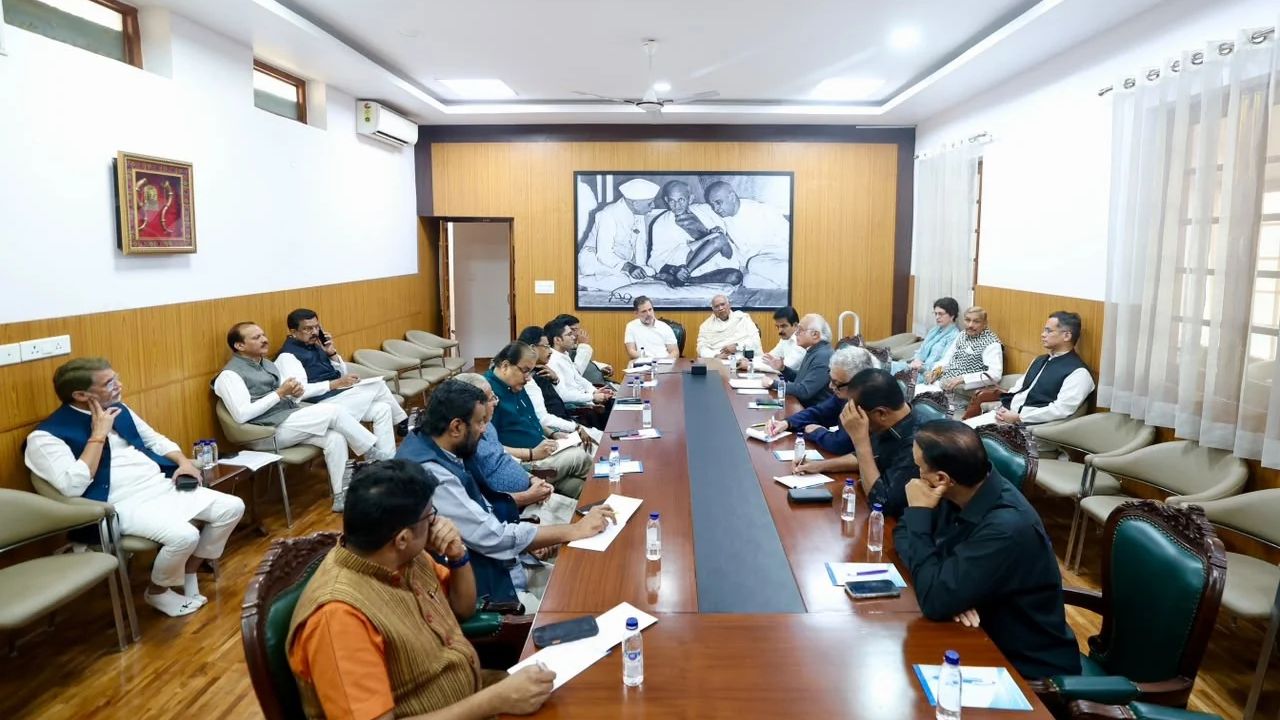
INDIA bloc leaders discuss strategy on delimitation and reservation. (Img: Dynamite News)
New Delhi: The INDIA bloc and other opposition parties have stepped up political consultations ahead of the special session of Parliament, with senior leaders gathering at Congress president Mallikarjun Kharge's residence in New Delhi on Saturday to discuss a coordinated response to the Centre's proposed delimitation and women's reservation legislation.
The meeting assumes significance as Parliament prepares to reconvene from November 30 amid sharp political differences over constituency restructuring, parliamentary representation and the proposed expansion of legislative strength. While several opposition parties are seeking a common position, differing approaches among regional allies have added another dimension to the unfolding political debate.
The meeting at Kharge's residence comes after the Union Cabinet cleared the proposed legislative measures and the government announced a special sitting of Parliament. The opposition leadership is examining the implications of the proposed Bills and discussing its parliamentary strategy ahead of their expected introduction.
Congress president Mallikarjun Kharge is leading the consultations, with senior party figures Rahul Gandhi, Priyanka Gandhi Vadra, K.C. Venugopal, Pawan Khera, Pramod Tiwari and Nasir Hussain attending.
The gathering is intended to facilitate coordination among opposition floor leaders, assess the political and constitutional implications of the proposed changes and explore the possibility of presenting a common position during parliamentary proceedings.
Also Read: Who Is Raul John Aju? Kerala Teen, 16, Meets Putin After AI Startup Success
Several prominent regional and national opposition parties have participated in the meeting. The Trinamool Congress is represented by Abhishek Banerjee, while the Rashtriya Janata Dal has sent Manoj Jha and Abhay Kushwaha.
The Samajwadi Party is represented by Ramji Lal Suman. Other participants include P. Santosh of the Communist Party of India, A. Rahim of the CPI(M), N.K. Premachandran of the Revolutionary Socialist Party and E.T. Mohammed Basheer of the Indian Union Muslim League.
National Conference leader Mohammad Ramzan and Shiv Sena (UBT) leader Arvind Sawant are also attending the consultations. Independent Rajya Sabha MP Kapil Sibal has joined the meeting as well. Jharkhand Mukti Morcha representative Baidyanath Ram is expected to participate through an online connection.
The participation of parties with distinct regional interests reflects the opposition's effort to widen consultations beyond the INDIA bloc's core constituents and develop a broader understanding of the proposed legislative changes.
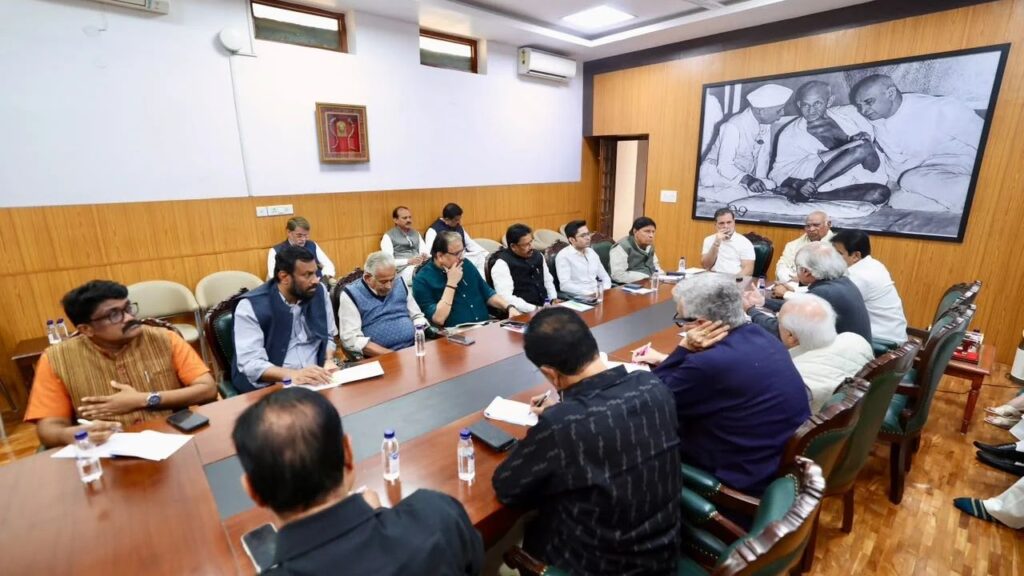
Kharge brings opposition leaders together ahead of Parliament session. (Img: Dynamite News)
The Dravida Munnetra Kazhagam's position on the proposed delimitation legislation has emerged as a significant development ahead of the parliamentary session. The party has decided to support the proposed Bills, adding complexity to efforts to establish a uniform opposition position.
The DMK's approach is closely linked to concerns over the representation of southern states in Parliament. The party's position reflects an emphasis on protecting Tamil Nadu's parliamentary representation while considering the proposed expansion of legislative strength.
The development has exposed differences in how opposition parties are approaching the delimitation question. While some parties have raised objections to the proposed exercise, others are examining whether an expansion in the total number of seats could address concerns about the redistribution of parliamentary representation.
The Nationalist Congress Party (Sharadchandra Pawar) has also attracted attention amid discussions over the proposed legislation. Party working president and Baramati MP Supriya Sule could not attend the meeting in New Delhi.
Her absence is linked to the health of party president Sharad Pawar, who is unwell. Sule is expected to travel to Delhi on Monday to attend the parliamentary session.
The party's position on the legislation has also become a subject of political discussion. NCP(SP) spokesperson Jitendra Awhad has indicated that the party supports the proposed delimitation exercise, subject to a uniform 50 per cent increase in Lok Sabha seats across states.
However, the party's parliamentary leadership has maintained that the detailed provisions of the legislation need to be examined before its final position is determined. The distinction between support for the principle of delimitation and scrutiny of the Bill's specific provisions remains important.
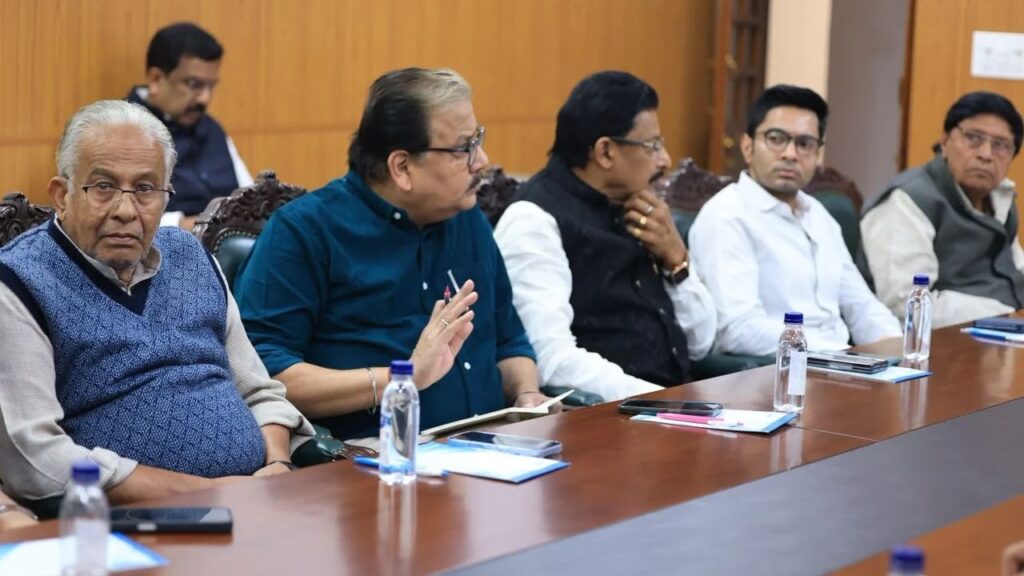
Supriya Sule's absence puts NCP's position under scrutiny. (Img: Dynamite News)
The government's special parliamentary sitting is scheduled to begin in the Lok Sabha on November 30, while the Rajya Sabha is due to reconvene on December 2. The proceedings are scheduled to continue until December 3, subject to parliamentary business.
The proposed legislation has brought several contentious issues to the forefront, including the delimitation of parliamentary constituencies, the expansion of the Lok Sabha, the representation of states and the implementation of 33 per cent reservation for women in legislatures.
The opposition's discussions are expected to focus on the constitutional implications of the proposals, their impact on the federal balance and the safeguards required to protect the political representation of individual states.
With regional parties adopting different positions and the special session approaching, the extent of opposition coordination will become clearer during the parliamentary debate. The deliberations at Kharge's residence mark an important attempt to reconcile these differences before the government takes up the proposed legislation in Parliament.


