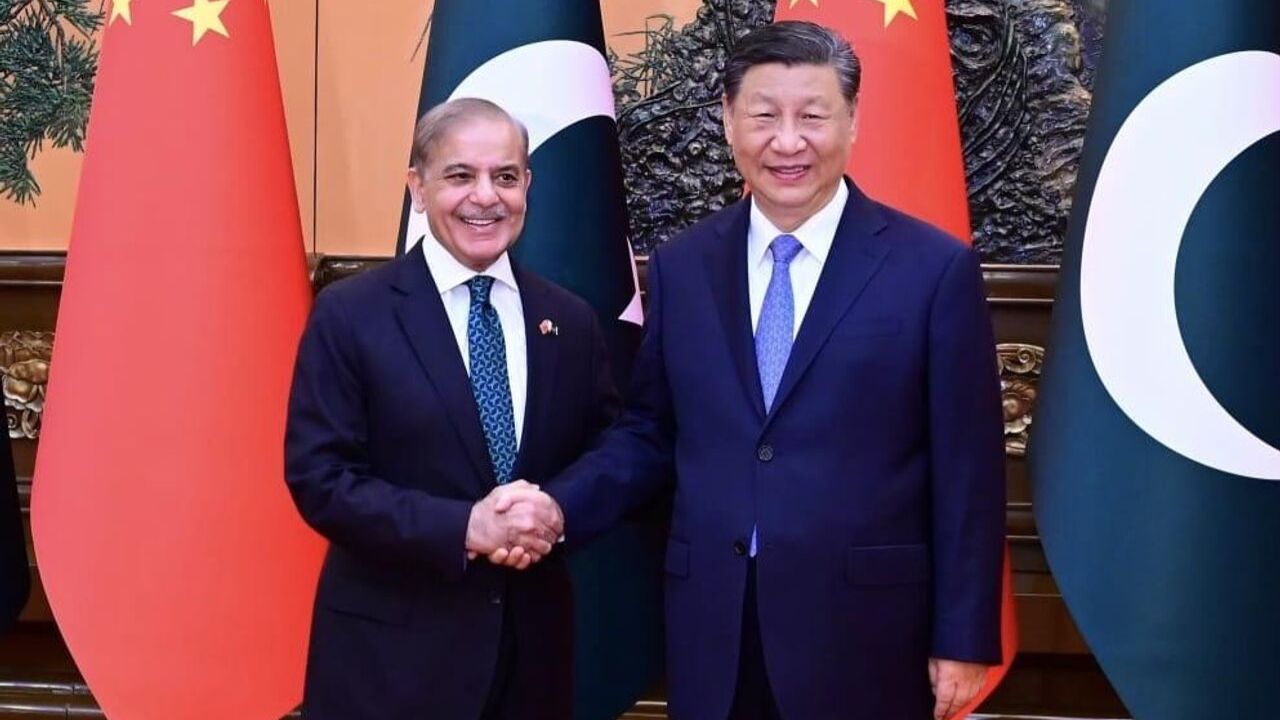
India rejects China-Pakistan remarks on J&K (Img: Internet)
New Delhi: India on Tuesday firmly rejected references to Jammu and Kashmir made in a joint statement issued by China and Pakistan after high-level talks between Chinese President Xi Jinping and Pakistan Prime Minister Shehbaz Sharif.
The Ministry of External Affairs (MEA) said Jammu and Kashmir and Ladakh are integral and inalienable parts of India and no external country has any authority to comment on the matter.
MEA spokesperson Randhir Jaiswal said India had taken note of the “unwarranted references” to Jammu and Kashmir in the China-Pakistan statement and reiterated New Delhi’s long-standing position on the issue.
China-Russia relations grow stronger as Xi Jinping hosts Vladimir Putin in Beijing
The MEA also strongly objected to the China-Pakistan Economic Corridor (CPEC), especially projects being developed in territories claimed by India.
Jaiswal stated that India opposes any attempt by other nations to legitimise Pakistan’s “illegal and forcible occupation” of Indian territory. He said India has repeatedly conveyed its concerns to both Chinese and Pakistani authorities.
CPEC is a major infrastructure and connectivity initiative linking western China to Pakistan’s Gwadar Port. India has consistently opposed parts of the corridor passing through Pakistan-occupied Kashmir (PoK).
India also rejected references made in the joint statement regarding “trans-boundary water resources cooperation” between China and Pakistan.
The MEA said the two countries do not share a direct boundary that would justify such cooperation claims. India also reiterated that it has never recognised the 1963 boundary agreement signed between Pakistan and China.
No Degree, No Advice: China tightens rules for Influencers, cracks down ‘fake experts’ online
The controversy emerged after Pakistan and China issued a statement following talks held during Prime Minister Shehbaz Sharif’s visit to Beijing. The statement described the Kashmir issue as “left over from history” and called for a peaceful resolution under the framework of United Nations Security Council resolutions and bilateral agreements.
China also reiterated its traditional stance that the dispute should be resolved through dialogue and diplomacy while maintaining peace and stability in South Asia.
India, however, maintained that Jammu and Kashmir remains an internal matter and rejected all external references to the issue.
Location : New Delhi
Published : 26 May 2026, 10:07 PM IST
Topics : Abhijeet Dipke CJP registration Cockroach Janta Party Election Commission India Sudhir Jakhar

