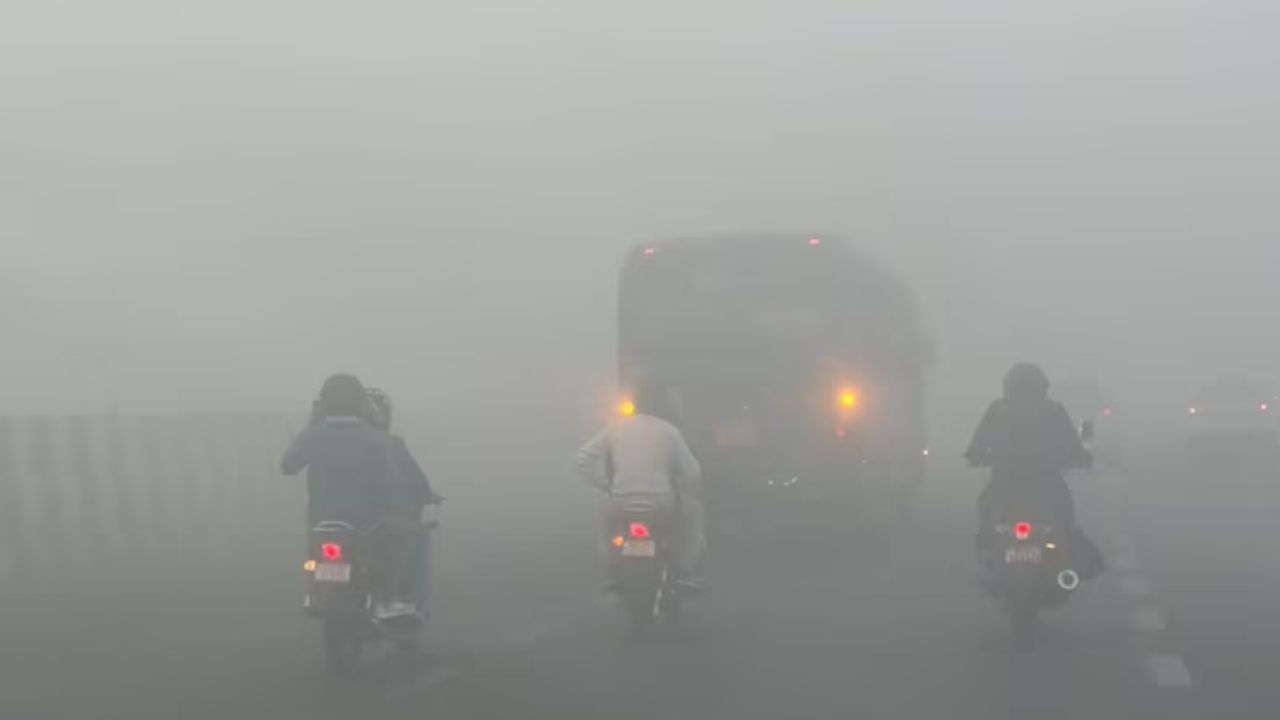
Avoid lane changes and overtaking during winter fog.
New Delhi: Delhi is experiencing a dense mix of fog and pollution that lowers visibility. Smog diffuses light and creates glare, while fog limits depth perception. Drivers often misjudge speed, distance and road width. Moisture settles on the road surface, reducing tyre grip and making braking unpredictable, especially during early morning and late night hours.
Speed should match how far you can clearly see. If visibility drops to a few metres, slow down to a crawl if necessary. Avoid sudden acceleration, even on empty roads. Gradual movement allows more time to spot pedestrians, parked vehicles or sudden traffic jams. Many winter crashes happen because drivers continue at normal speed despite limited sight.
In foggy conditions, double or even triple the usual distance from the vehicle ahead. Sudden braking is common when drivers encounter unexpected obstacles. A longer gap allows smooth braking instead of panic stops, reducing rear end collisions and multi vehicle pile ups.
Consider suspending toll booths at Delhi borders to curb air pollution: Supreme Court
Always use low beam headlights in fog. High beams bounce back off fog particles and create a white wall effect. Fog lamps should be angled low to light the road surface. Keep headlights, brake lights and indicators clean, even a thin layer of dust can reduce visibility for others in smog.
Frequent lane changes increase risk in low visibility. Stick to one lane and avoid overtaking unless absolutely necessary. Vehicles may appear suddenly from blind spots. Abrupt swerves can cause chain reactions, especially on highways and flyovers.
WFH, No Fuel Rule: Full list of anti-pollution curbs in Delhi from Thursday
When surroundings disappear, lane markings, road studs and reflective dividers become essential guides. Align your vehicle using these cues instead of following tail lights blindly, which can lead you off course if the vehicle ahead changes direction suddenly.
Internal fogging can be as dangerous as external fog. Use defogger settings properly and keep windshields clean. Slightly lowering a window helps balance temperature and reduce condensation. Ensure wipers are working well and washer fluid is filled to clear grime and smog residue.
Crossings, school zones and bus stops are accident prone in fog. Pedestrians, cyclists and animals often appear suddenly. Slow down well before intersections and use horn briefly to alert others of your presence without creating panic.
If visibility becomes extremely poor, turn on hazard lights only when stopped or moving very slowly due to traffic buildup. Never use hazard lights while driving normally as it confuses other drivers. If stranded, park safely off the road and keep hazards on.
Check brake responsiveness, tyre tread depth and tyre pressure regularly. Under inflated tyres reduce control on damp roads. Make sure mirrors are adjusted correctly and clean. A well maintained car responds better in emergencies.

