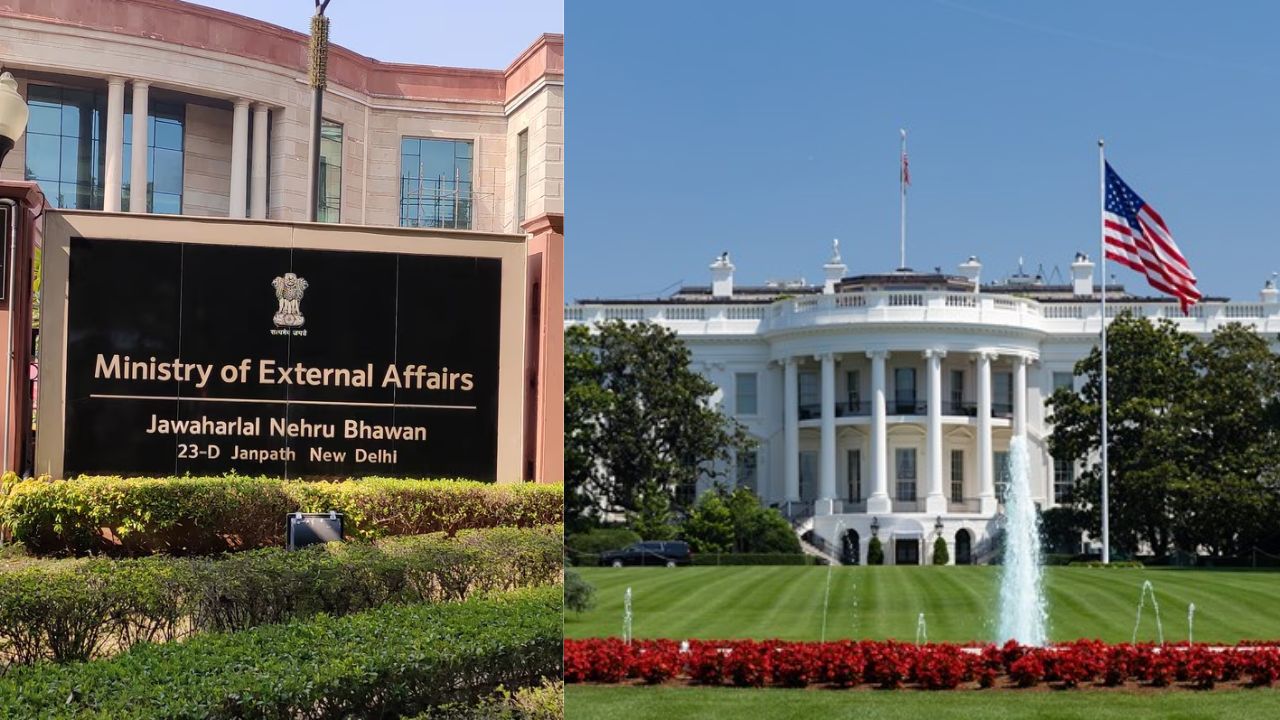
MEA: U.S. trade factsheet revisions align with joint statement
New Delhi: The Ministry of External Affairs (MEA) has clarified that recent amendments made by the United States to a White House factsheet on the proposed India-U.S. interim trade agreement are consistent with the joint statement issued by both countries earlier this month. The clarification comes after the U.S. administration rolled back certain additions that had triggered political debate in India.
Earlier, the White House factsheet had included references to items such as pulses, agricultural purchases, the digital services tax, and a purported Indian “commitment” to invest $500 billion in U.S. goods. These references were not part of the original joint statement released on February 7, 2026.
Addressing the issue during the weekly media briefing on February 12, 2026, MEA spokesperson Randhir Jaiswal emphasized that the February 7 joint statement remains the authoritative framework governing the interim trade agreement.
He stated that the amendments made in the U.S. factsheet now reflect the “shared understandings contained in the joint statement.” According to the MEA, both sides are aligned on the framework and will proceed with implementing it while working toward finalizing the interim agreement on reciprocal and mutually beneficial trade.
The government’s position indicates that any earlier discrepancies in the U.S. document have now been corrected to match what was mutually agreed upon.
The earlier references in the White House document had raised concerns, particularly among opposition parties in India. Questions were asked about whether sensitive agricultural products such as pulses were included in the trade framework and whether India had committed to large-scale purchases of American agricultural goods.
Additionally, the mention of a $500 billion Indian investment in American products over five years drew scrutiny. Indian officials clarified that while there was an “intention” to expand trade volumes, no binding commitment had been made regarding such a massive investment.
Government sources reiterated that sensitive agricultural sectors were not included in the current framework and that India had not entered into any mandatory agreement on specific purchase targets.
The U.S. administration amended the online factsheet and related documents but did not issue a separate public statement explaining the changes. The removal of the contested references has now aligned the U.S. documentation more closely with the jointly issued framework.
With clarifications in place, both countries are expected to move ahead with negotiations aimed at finalizing the interim trade agreement, which is designed to promote reciprocal and mutually beneficial economic engagement.

