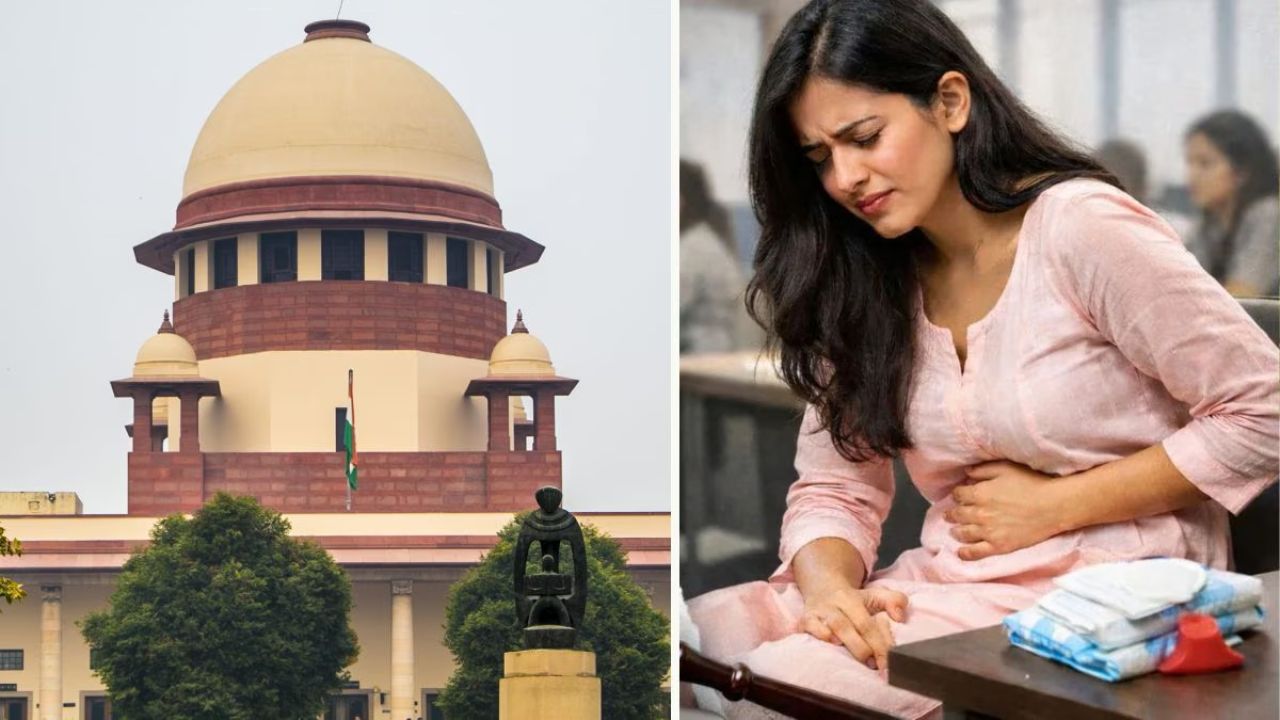
Supreme Court turns down plea on mandating menstrual leaves
New Delhi: The Supreme Court of India on Friday declined to entertain a plea seeking mandatory menstrual leave for women across workplaces and educational institutions. The court expressed concern that enforcing such a law could unintentionally harm women’s employment prospects.
The petition had asked the court to direct all states to frame policies allowing women—both students and working professionals—to take leave during menstruation.
While hearing the matter, Chief Justice Surya Kant cautioned that making menstrual leave compulsory through legislation might backfire. According to the Chief Justice, employers could develop a mindset of avoiding hiring women if such a rule becomes legally binding.
He said that introducing a mandatory provision might create a perception that women are “less capable” than men, adding that the move could generate unnecessary psychological pressure on working women. The court also noted that the petitioner might be overlooking the practical implications of such a policy on the job market.
The plea, filed by advocate Shailendra Mani Tripathi, urged the court to ensure that women are granted menstrual leave during their monthly cycle. The petition argued that menstruation can cause discomfort and health issues, making rest necessary for many women.
However, the bench emphasised that such proposals, if imposed through law, could lead employers to view women as a liability in professional spaces.
During the hearing, senior advocate M. R. Shamshad pointed out that some governments and private organisations have already introduced menstrual leave voluntarily.
Supreme Court permits euthanasia in Harish Rana case after 13 years in coma
For instance, the government in Kerala had earlier allowed menstrual leave for female students in state-run universities. The decision was announced by Chief Minister Pinarayi Vijayan as part of efforts to promote a more gender-just society. The Supreme Court acknowledged such initiatives but noted that they are voluntary policies rather than legal mandates.
Earlier this year, the Supreme Court recognised menstrual hygiene as an essential aspect of dignity and health under Article 21 of the Constitution of India. The court directed governments to ensure access to free sanitary napkins, proper sanitation facilities, and awareness campaigns on menstrual health.
The bench reiterated that awareness and sensitisation are crucial, but imposing a compulsory law on menstrual leave may not be the most effective approach.

