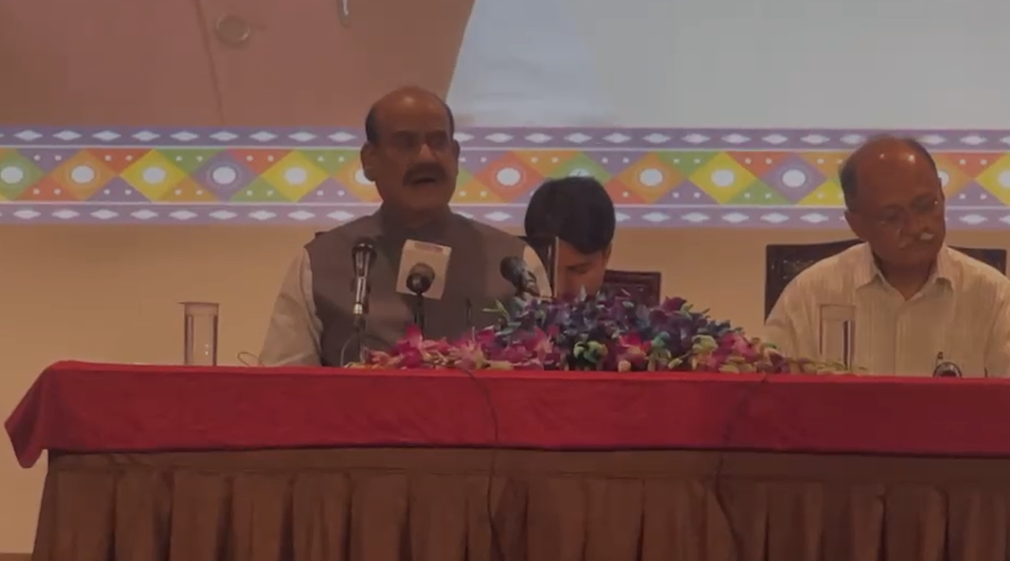
Lok Sabha Speaker Om Birla addresses a press conference in New Delhi ahead of the 12th BRICS Parliamentary Forum. (Img: Dynamite News)Lok Sabha Speaker Om Birla addresses a press conference in New Delhi ahead of the 12th BRICS Parliamentary Forum. (Img: Dynamite News)
New Delhi: Lok Sabha Speaker Om Birla has declined to comment on the proposed motion seeking the removal of Chief Election Commissioner Gyanesh Kumar, saying he would examine the matter if it formally comes before him. His remarks come amid a political confrontation over the Election Commission’s functioning, electoral processes and demands for greater accountability.
Separately, Birla indicated that members of the Nationalist Citizens Party of India (NCPI) would not receive another extension after seeking additional time on four occasions. The two developments have brought parliamentary procedure and the Speaker’s role in handling constitutionally significant matters into focus.
Addressing a press conference in New Delhi ahead of the 12th BRICS Parliamentary Forum, Birla was asked about the proposed motion against Chief Election Commissioner Gyanesh Kumar. He declined to comment on its merits, indicating that he would consider the matter at the appropriate stage if it formally reached him.
His response does not establish whether the motion has been formally submitted or whether it would be admitted for consideration. The next steps would depend on the motion’s status and the applicable parliamentary rules.
The issue has emerged against the backdrop of opposition criticism of the Election Commission of India, particularly concerning electoral processes, voter-list revision and allegations about the poll body’s impartiality. Opposition parties have called for greater accountability and have sought action against the CEC.
The proposed move has therefore become part of a wider political and institutional debate over the independence of the election machinery and the mechanisms available to Parliament to examine allegations against constitutional functionaries.
The removal of the Chief Election Commissioner is governed by stringent constitutional safeguards. Article 324(5) of the Constitution provides that the CEC cannot be removed except in the same manner and on the same grounds as a judge of the Supreme Court. The procedure is designed to protect the independence of the office and prevent removal through a simple political decision. \<Cite refs={["turn325148search23","turn325148search3"]}/>
Under the applicable constitutional framework, removal requires a parliamentary process involving the prescribed grounds and special-majority requirements in both Houses. A proposed motion would therefore have to meet the relevant procedural requirements before the question of removal could advance. \<Cite refs={["turn325148search3","turn325148search10"]}/>
Birla’s remarks did not signal a decision on the motion’s admissibility or predict its outcome. Instead, he indicated that he would address the matter if and when it formally came before him.
This distinction is significant because a political demand for the CEC’s removal and a motion that proceeds through the formal parliamentary process are separate stages. Any further development will depend on the steps taken by the members concerned and the applicable rules.
In a separate development, Birla indicated that members of the Nationalist Citizens Party of India would not be granted any further extension after requesting additional time on four occasions.
The Speaker’s remarks signal that repeated requests for more time would not lead to another extension in this matter. However, the precise procedural consequences and the next steps concerning the members were not detailed in the information available.
The issue highlights the importance of parliamentary deadlines and procedural discipline, particularly when repeated extensions have already been sought. Any further action will depend on the relevant rules and the formal proceedings involved.
The two issues concern different parliamentary matters, but both underline the responsibility of the Lok Sabha Speaker in ensuring that proceedings are handled according to established rules. The proposed motion against the CEC carries wider constitutional and political implications because it concerns the removal mechanism for the head of India’s election administration.
Meanwhile, the NCPI extension issue concerns the management of parliamentary procedure and requests for additional time.
Birla’s comments leave the immediate status of the proposed CEC motion unresolved. They also make clear that the Speaker intends to consider the matter at the appropriate procedural stage rather than offer a premature assessment.

