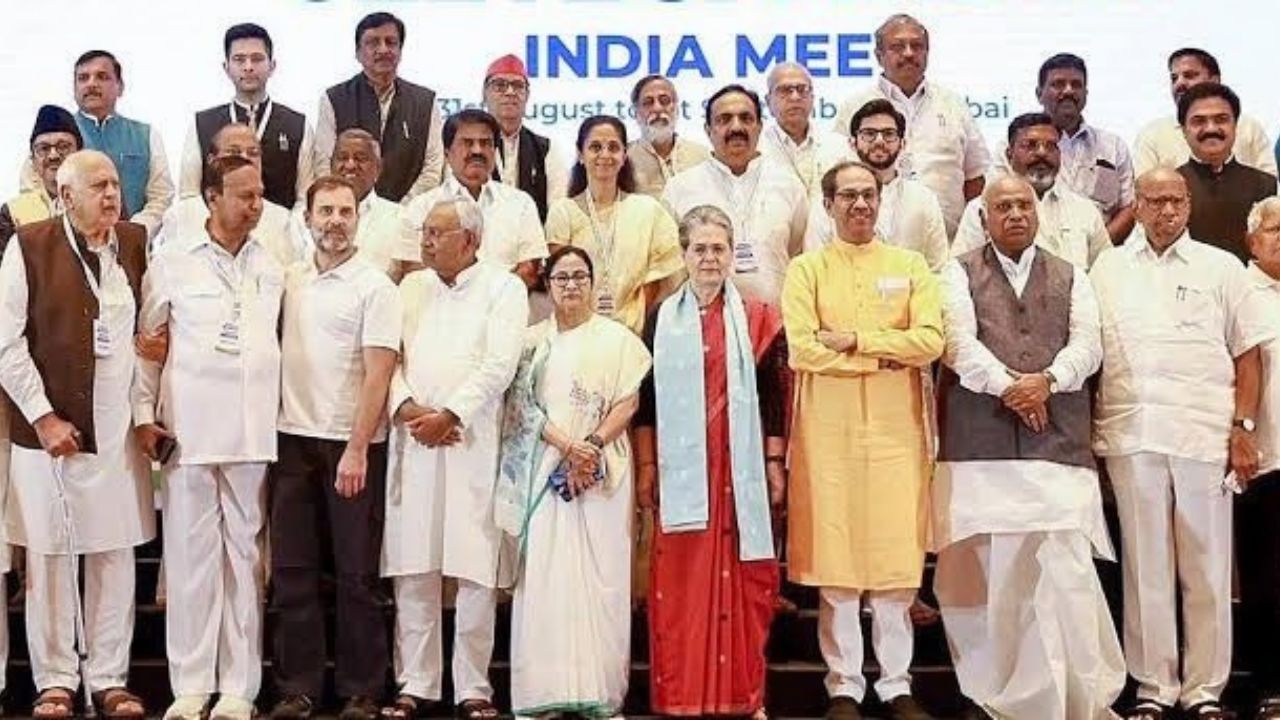
The Opposition intensifies its campaign against Chief Election Commissioner Gyanesh Kumar as the NDA reportedly weighs a legislative push on delimitation and women’s reservation. (Img: X)
New Delhi: The political confrontation over the Special Intensive Revision (SIR) of electoral rolls is gathering momentum, with the Opposition intensifying protests against Chief Election Commissioner Gyanesh Kumar while the ruling National Democratic Alliance (NDA) is reportedly weighing a special session of Parliament to advance the long-pending agendas of delimitation and women’s reservation.
The possible parliamentary move could open a new front in the political battle, placing electoral-roll revision, the independence of election-related institutions, representation of states and women’s political participation at the centre of a wider national debate. According to the political assessment outlined by NDA sources, the government is preparing to counter the Opposition’s street campaign with a legislative and political strategy of its own.
The latest phase of protests gained momentum after the Cockroach Janata Party (CJP), led by Abhijeet Dipke, called for an agitation at Jantar Mantar on October 10. The campaign was followed by the October 16 “Lehra Do Tiranga” mobilisation, which brought further attention to the Opposition-aligned protest movement and the police response to demonstrations in the national capital.
According to the account of the recent developments, preventive detentions and substantial security deployments were used to manage the two protest campaigns. Delhi Police maintained that gatherings without the required permission would not be allowed to proceed, while permitted political marches were treated differently.
The distinction between authorised demonstrations and gatherings lacking permission has become an important part of the dispute. For the Opposition and its supporters, the wider question concerns the ability to mobilise against decisions they oppose. For the authorities, the stated emphasis has been on maintaining public order and enforcing the requirements governing demonstrations.
The protests have also brought the role of Chief Election Commissioner Gyanesh Kumar into sharper political focus. Opposition leaders and activists have linked their criticism of the election machinery to concerns surrounding the revision of electoral rolls, making the SIR issue a focal point of the confrontation between the government and its critics.
The protest strategy is unfolding alongside other Opposition initiatives. A march led by Rahul Gandhi in central Delhi was permitted this week, according to the supplied account, while a Congress-led INDIA bloc rally against SIR has been scheduled for November 1 at Ramlila Maidan.
The contrast between permitted political programmes and demonstrations stopped by police has added another dimension to the debate. It also illustrates that the anti-SIR campaign is not confined to one organisation or one protest site: it spans street mobilisation, political messaging and demands for accountability from the election machinery.
For the Congress-led Opposition, the challenge is to turn public demonstrations into a sustained political argument over electoral rolls and institutional accountability. For the government, the challenge is to prevent the agitation from dictating its legislative priorities while defending its position on the election-related controversy.
The proposed November 1 rally could provide another test of the Opposition’s ability to bring together its constituent parties and supporters around a common demand. Its political impact will depend not only on turnout but also on whether the alliance can maintain a coherent message across different states and political constituencies.
Despite the continuing protests, the government is not expected to yield to political pressure against Chief Election Commissioner Gyanesh Kumar, according to the account of the political developments. BJP leaders have reportedly argued that the Congress-led INDIA bloc can pursue a formal removal motion if it believes it has sufficient grounds, allowing the proposal to be tested in Parliament.
Such a course would move the dispute from street demonstrations into the constitutional and parliamentary process. Any attempt to remove a Chief Election Commissioner would have to follow the applicable constitutional procedure and secure the required support in Parliament. Political statements about the Opposition’s numbers, however, do not by themselves determine the outcome of a motion that has not been brought forward.
The government’s position, as described by NDA sources, reflects its assessment that the Opposition does not currently possess the parliamentary strength needed to force a change in the leadership of the Election Commission. The Opposition, meanwhile, appears intent on sustaining public pressure through protests and political mobilisation.
The emerging contest is therefore being fought on two fronts: the legitimacy and implementation of electoral-roll revision, and the political response to criticism of the country’s top election official.
While the Opposition continues to focus on SIR and Gyanesh Kumar, NDA strategists are reportedly examining a broader legislative counter-strategy centred on delimitation and the implementation of 33% reservation for women in legislative bodies.
Senior government leaders have reportedly indicated that a special session of Parliament could be convened towards the end of October. The possibility has not been confirmed through a formal government announcement, and the precise legislative agenda, if such a session is called, remains to be established.
The reported plan would bring two politically consequential issues back into focus. Delimitation concerns the redrawing of constituency boundaries and can affect the distribution of political representation. Women’s reservation concerns the implementation of a constitutional framework intended to increase women’s representation in elected legislatures.
The two issues are linked in the political debate because the implementation of women’s reservation is tied to the relevant constitutional provisions governing the delimitation exercise and the subsequent census process. Any move to advance the agenda would therefore require clarity on the proposed legislative framework, the timetable and the implications for representation across states.
According to NDA sources, the government believes it is approaching the parliamentary numbers required to secure the constitutional amendments under consideration. Constitutional amendment bills generally require a special majority in each House: a majority of the total membership of the House and at least two-thirds of members present and voting. The precise support required would depend on the legislation and the constitutional provisions being amended.
A special session, if convened, could consequently become a major test of the government’s ability to assemble support beyond its own political alliance. It would also force the Opposition to decide whether to contest the proposals on their substance, negotiate changes or oppose the legislative strategy as part of its wider political confrontation with the NDA.
Delimitation carries implications that extend well beyond constituency boundaries. Any future exercise involving the allocation or redistribution of parliamentary representation is likely to generate debate over population, federal balance and the relative political weight of different states.
Southern states have historically raised concerns about the possibility that population-based changes could affect their share of representation, particularly after years of efforts to control population growth. Any proposal intended to address those concerns would therefore be central to building political consensus around the delimitation agenda.
NDA sources have indicated that senior leaders are in touch with the DMK, which has 22 members in Parliament according to the supplied account, as well as smaller parties. The reported outreach suggests that the government recognises the importance of addressing regional concerns if it wants to build wider support for the proposed constitutional changes.
The outcome will depend on the details of any proposal, the safeguards offered to states and the ability of the government to secure the necessary support in both Houses. Without a publicly confirmed legislative text, however, the precise contours of a possible compromise remain unclear.
The timing of the reported parliamentary discussions is also significant because the BJP and its allies are preparing for crucial Assembly elections in Uttar Pradesh, Punjab, Uttarakhand and Goa.
These contests will test the parties’ organisational strength, leadership choices and ability to build narratives around governance and representation. The BJP’s preparations are reportedly progressing alongside a wider effort to shape the national political agenda, rather than allowing the anti-SIR agitation to dominate the political conversation.
For the Congress-led INDIA bloc, the immediate task is to sustain momentum around electoral-roll revision, build public support and maintain coordination among its constituent parties. For the NDA, the challenge is to defend its position on SIR while demonstrating progress on legislative commitments, including women’s reservation.
The two sides are therefore approaching the coming weeks with different priorities. The Opposition is seeking to turn concerns about electoral processes into a sustained public movement, while the ruling alliance is reportedly considering whether a legislative initiative could redirect the debate towards representation, constitutional reform and its own policy agenda.
The November 1 INDIA bloc rally at Ramlila Maidan will provide another opportunity for the Opposition to demonstrate its mobilisation capacity and sharpen its demands over SIR. Any further action concerning Gyanesh Kumar would also need to be assessed against the constitutional process and the actual parliamentary support available.

